
Resume Writing Guides: Summaries, Skills, Bullets and More
Good resume writing is mostly about clarity. Recruiters often give a resume a quick first look, and software may parse your document before a person ever sees it, so the words you choose and the order you put them in matter. These guides cover the building blocks of a strong resume: how to write a short professional summary or objective, which skills to list and how to word them, how to open bullets with strong action verbs, and what else belongs on the page.
You will also find guides on common questions, such as how many pages a resume should be, how to list certifications, how to show a promotion, how to add references or a LinkedIn link, and how to turn duties into results with the STAR method. Each article uses plain language, before and after examples, and checklists you can apply in one sitting.
When you are ready to put the advice to work, the resume builder and the AI bullet enhancer can help you rewrite weak lines and keep your formatting clean, and the resume checker can review the result. Begin with the first guide below if you are not sure where to start.
Start here
- 1Things to Put on a Resume: What Should Be on a Resume and What to Leave OffEvery resume needs your name and contact details, work experience, education, and skills. Many also benefit from a short summary, certifications, and a few extras. This checklist shows what to include, what to skip, and how to decide.
- 2What Is a Resume Summary? 20+ Examples You Can Copy and AdaptA resume summary is a short block of two to four sentences at the top of your resume. It tells the reader who you are, what you do well, and what you can offer this job. This guide shows how to write one and gives examples to copy.
- 3What Are Some Skills to Put on a Resume? Hard Skills, Soft Skills, and How to ChooseThe best skills to put on a resume are the ones the job asks for and you can honestly show. This guide explains the difference between hard and personal skills, lists examples in tables, and gives a three-step way to choose.
- 4Action Verbs for Resume Bullets: 150+ Strong Words and How to Use ThemAction verbs are strong, specific words that start your resume bullet points, such as led, built, reduced, or trained. This guide gives more than 150 of them, grouped by skill, with examples and tips for using them honestly.
- 5Resume Keywords: How to Find Them in a Job Posting and Use Them WellKeywords are the skills, tools, titles and phrases an employer uses in a job posting. Find them by reading the posting closely, then use them naturally in your summary, skills and bullets, but only where they are true.
Free tools for this topic
All resume writing guides
Resume Bullet Points: A Simple Formula, 40+ Examples, and How Many to Use
Good resume bullet points follow one pattern: an action verb, what you did, how you did it, and what changed as a result. Use three to six bullets for recent jobs, fewer for older ones, and keep each to one or two lines.
Resume Dos and Don'ts: A Section-by-Section Checklist
Do keep your resume clear, specific, and matched to the job; don't fill it with vague claims, personal details, or fancy layouts. This checklist goes section by section so you can scan each table and fix the most common resume mistakes in one sitting.
Action Verbs for Resume Bullets: 150+ Strong Words and How to Use Them
Action verbs are strong, specific words that start your resume bullet points, such as led, built, reduced, or trained. This guide gives more than 150 of them, grouped by skill, with examples and tips for using them honestly.
Bad Resume Examples: Common Problems and How to Fix Them
Most weak resumes fail in a few predictable ways: vague wording, cluttered layout, missing results and no match with the job post. Here are real-world style bad resume examples, each next to a better version you can copy.
Career Change Resume: How to Write One That Gets Interviews
A career change resume leads with a clear target, shows skills that carry over and proves them with real results. This guide gives layouts, summary examples, bullet rewrites and mistakes to avoid.
PC Skills Resume Guide: How to List Computer Skills and Microsoft Office
List computer skills by name, group them, and say your level honestly. Replace vague lines like 'good with computers' with tools such as Excel, Outlook, or a CRM. This guide shows how, with level definitions and copyable examples.
Curriculum Vitae Objective Example: 25+ Career Objectives for a CV
A CV objective is a one or two sentence statement at the top of your CV that names the role you want and what you offer. This guide gives a template, more than 25 samples for different situations, and mistakes to avoid.
Entry Level Resume Examples: Samples for Different Fields
An entry-level resume shows you can learn and do the basics of a job. This page gives four short samples for different fields, a plain template, and a clear way to choose what goes first.
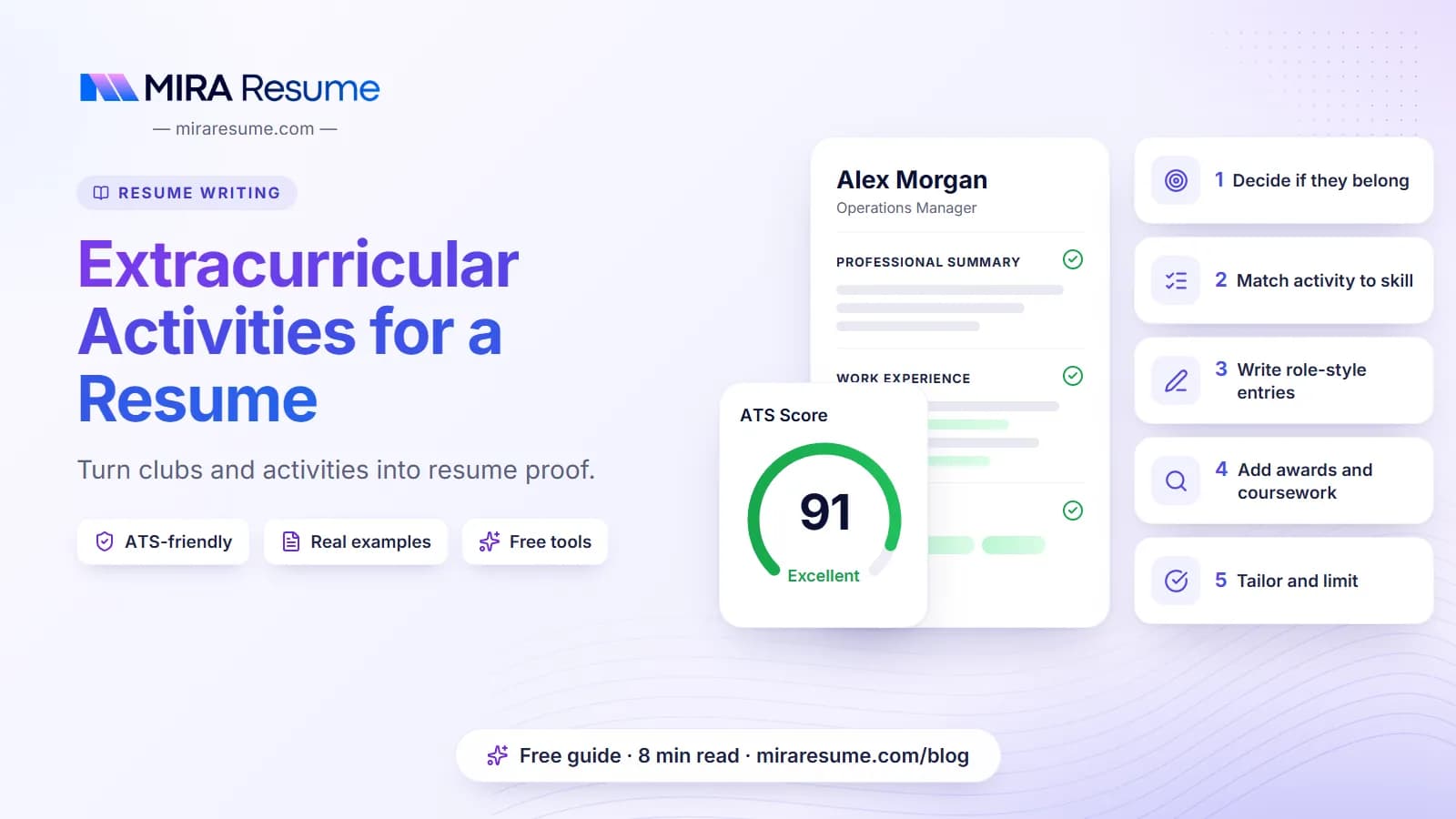
Extracurricular Activities for a Resume: What to List and How
List extracurricular activities that show skills the job wants: leadership, teamwork, organization or service. Give each a role, dates and a result. Awards and relevant coursework can sit in their own short sections.
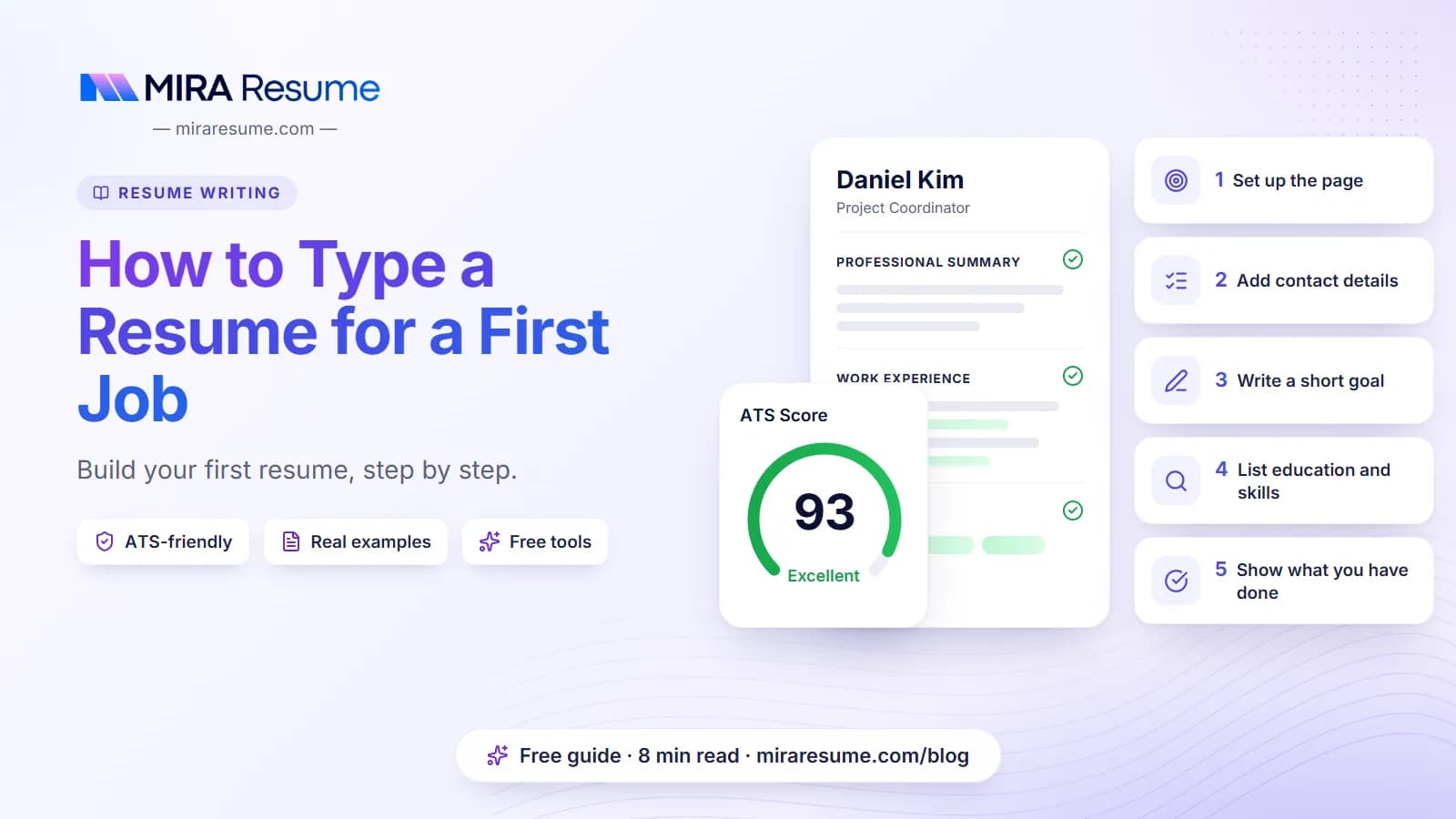
How to Type a Resume for a First Job: A Step-by-Step Guide
To type a first resume, set up a plain one-page document, write your contact details, then add a short goal, your education, skills and anything you have done that shows you are reliable. Here is each step, with examples.
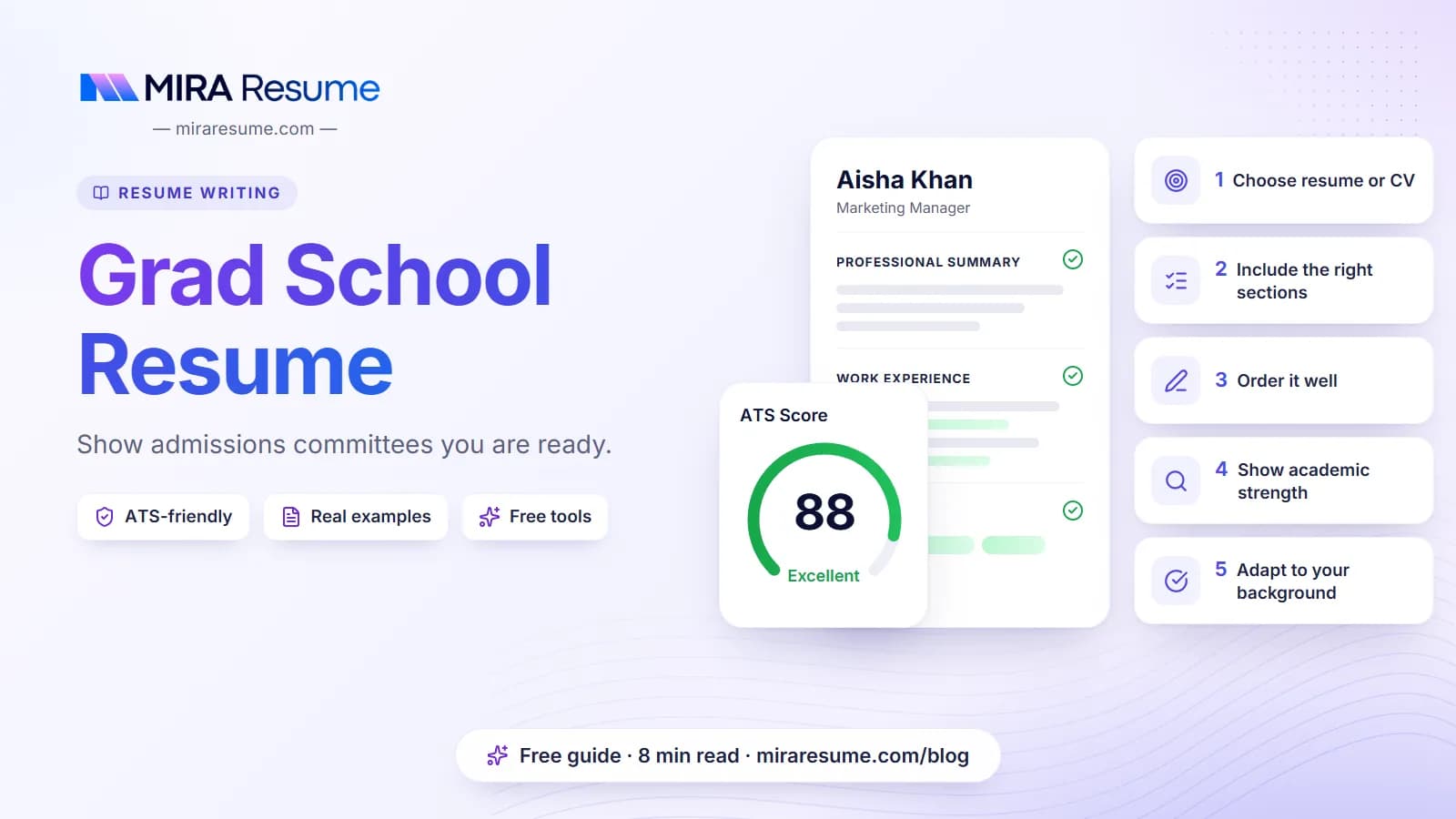
Grad School Resume: How to Write a Resume for Graduate Studies
A grad school resume shows the admissions committee that you are ready for advanced study. Lead with education, research and relevant experience, keep it to one or two pages, and check whether the program wants a resume or a CV.
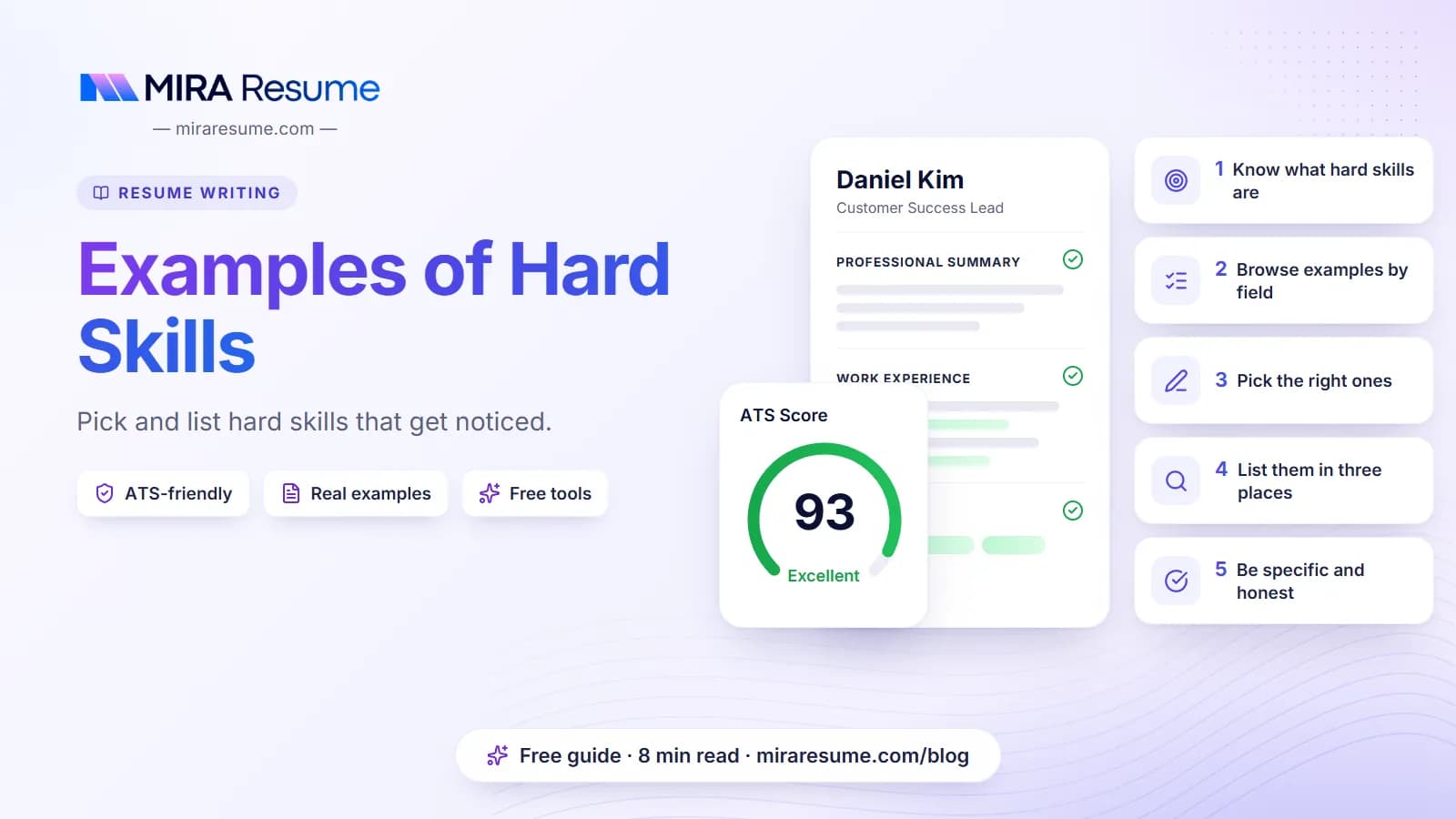
Examples of Hard Skills: A List of 60+ by Job Type
Hard skills are teachable, measurable abilities such as using software, speaking a language, or operating equipment. This guide lists examples by field, explains how they differ from soft skills, and shows how to put them on a resume.
Should I Put My High School on My Resume? Rules, Formats, and Examples
Put your high school on your resume if it is your highest level of education or you are still a student. Once you have a college degree or years of work history, you can usually remove it. This guide shows how to list it and gives examples.
How Many Pages Should a Resume Be? A Clear Guide for Every Career Stage
Most resumes should be one page. Two pages are fine if you have many years of relevant experience. More than two pages is rare outside academic and some technical fields. This guide shows how to decide and how to cut down to one page.
How to Format a Resume: Fonts, Margins, Spacing and File Type
Use one clean column, a plain font at 10 to 12 points, margins of about one inch, clear headings, and a PDF file unless the employer asks for Word. This guide gives exact settings and a layout you can copy.
How to List Certifications on a Resume (With Formats and Examples)
List each certification with its full name, the issuing group, and the date earned or expected. Place a short list in its own section, or in your summary and next to your name if it is required for the job. This guide shows formats you can copy.
Resume Education Section: How to List Your Education the Right Way
List your degree, school, location and graduation date, newest first. Put the section on top if you are a student or recent graduate, and lower down once you have solid work history. Below are exact formats for every common case.
How to Turn Your Resume Into 1 Page: 10 Steps and Examples
To fit a resume on one page, cut jobs that do not help, shorten bullets, tighten spacing a little, and keep only the strongest facts. This guide gives 10 steps, a one-page layout, and before-and-after examples you can copy.
How to Put LinkedIn on a Resume: Where, How and What to Check First
Put a short LinkedIn link in the contact line at the top of your resume, next to your phone and email. Clean up your custom URL first, then make sure the profile matches your resume. This guide shows the steps and the exact format.
How to Show a Promotion on a Resume: 4 Formats With Examples
To show a promotion on a resume, list the company once, then list each job title below it with its own dates and bullets, newest first. This guide shows four formats, plus examples and tips for tricky cases.
How to Update Your Resume in 10 Steps (Without Starting Over)
To update your resume, add your newest job and results, refresh the summary and skills, trim older or weaker items, tailor the wording to the job, and check the layout. This guide gives a 10-step plan you can finish in under an hour.
Internship Resume: How to Write One, With Examples
An internship resume proves you can learn fast and contribute. Lead with education and relevant courses, add projects and any work, and match your skills to the posting. Here are three examples and a simple build order.
References on a Resume: Should You Include Them and How to Format Them
In most cases, do not put references on your resume. Keep them on a separate page and share them when an employer asks. This guide shows when to make an exception, who to choose, and how to format the list.
Resume Keywords: How to Find Them in a Job Posting and Use Them Well
Keywords are the skills, tools, titles and phrases an employer uses in a job posting. Find them by reading the posting closely, then use them naturally in your summary, skills and bullets, but only where they are true.
Resume Objective: How to Write One (With 25 Examples)
A resume objective is one or two sentences at the top of your resume that state the job you want and what you bring. It works best for students, first-time job seekers, and career changers. This guide gives a formula and 25 examples.
What Is a Resume Summary? 20+ Examples You Can Copy and Adapt
A resume summary is a short block of two to four sentences at the top of your resume. It tells the reader who you are, what you do well, and what you can offer this job. This guide shows how to write one and gives examples to copy.
Resume With No Job Experience: What to Write, a Summary and a Template
You can write a strong resume without paid work. Lead with a summary, group your proof under skills, and use school, volunteering, family duties and self-taught learning as evidence. Here is a template and the exact wording to start with.
What Are Some Skills to Put on a Resume? Hard Skills, Soft Skills, and How to Choose
The best skills to put on a resume are the ones the job asks for and you can honestly show. This guide explains the difference between hard and personal skills, lists examples in tables, and gives a three-step way to choose.
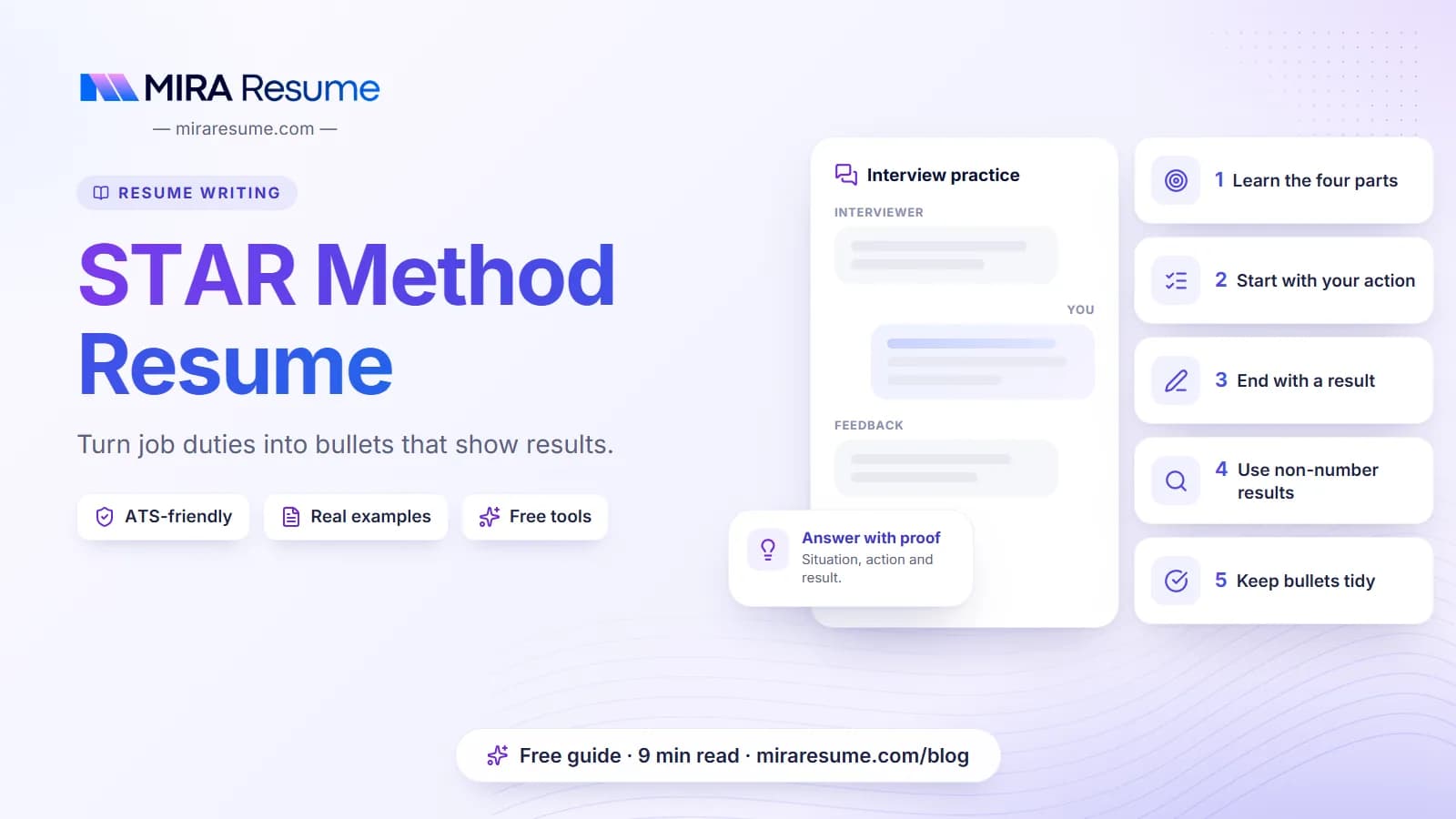
STAR Method Resume: How to Turn Duties Into Strong Bullets
STAR stands for Situation, Task, Action, Result. On a resume you squeeze those four parts into one short bullet that starts with what you did and ends with what changed. This guide shows how, with before and after examples.
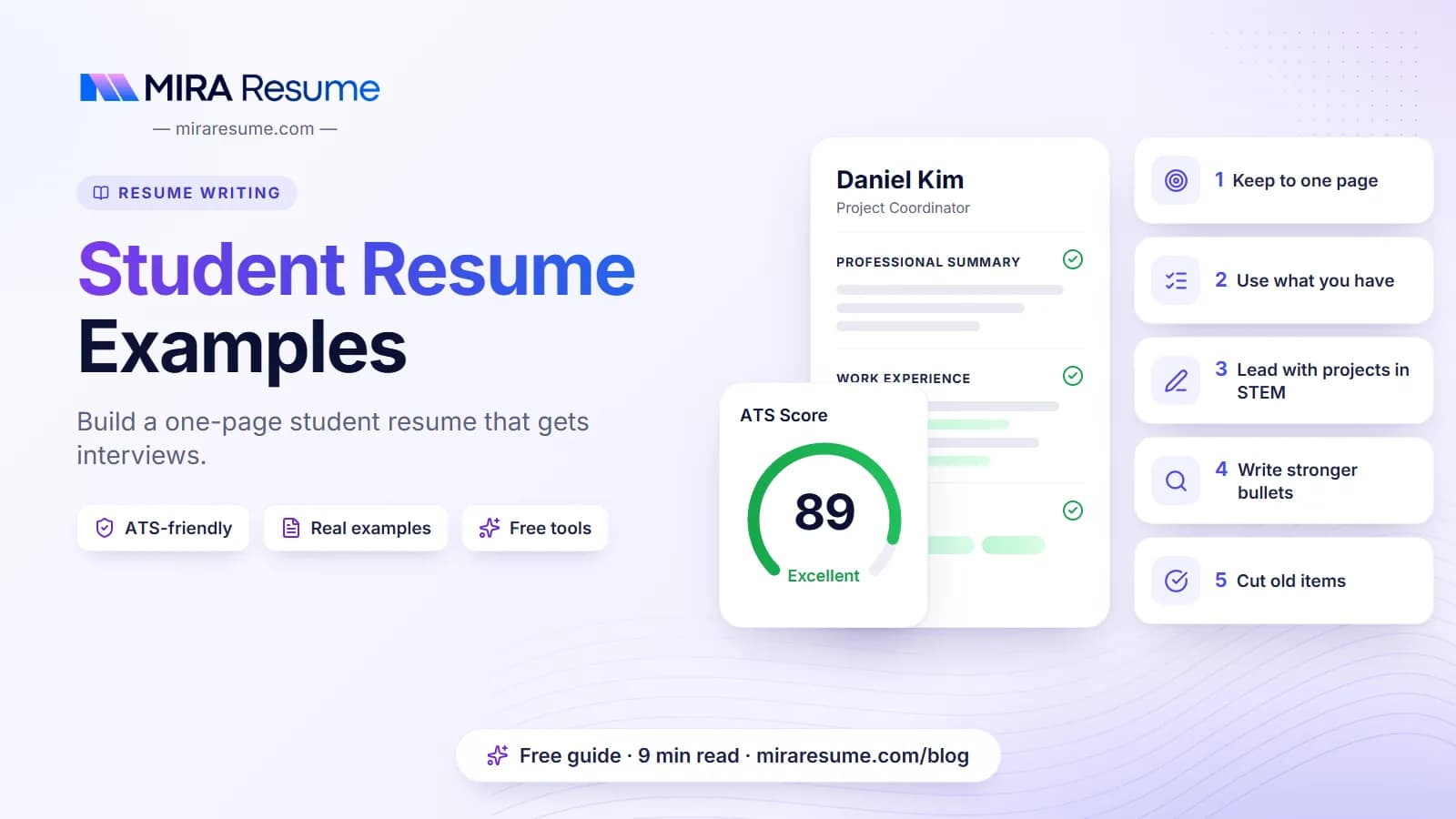
Student Resume Examples: How to Build a College Student Resume
A good student resume puts education first, then proof from projects, part-time work, clubs and skills. This guide shows a clear format, three college examples for different majors, and the mistakes that waste space.
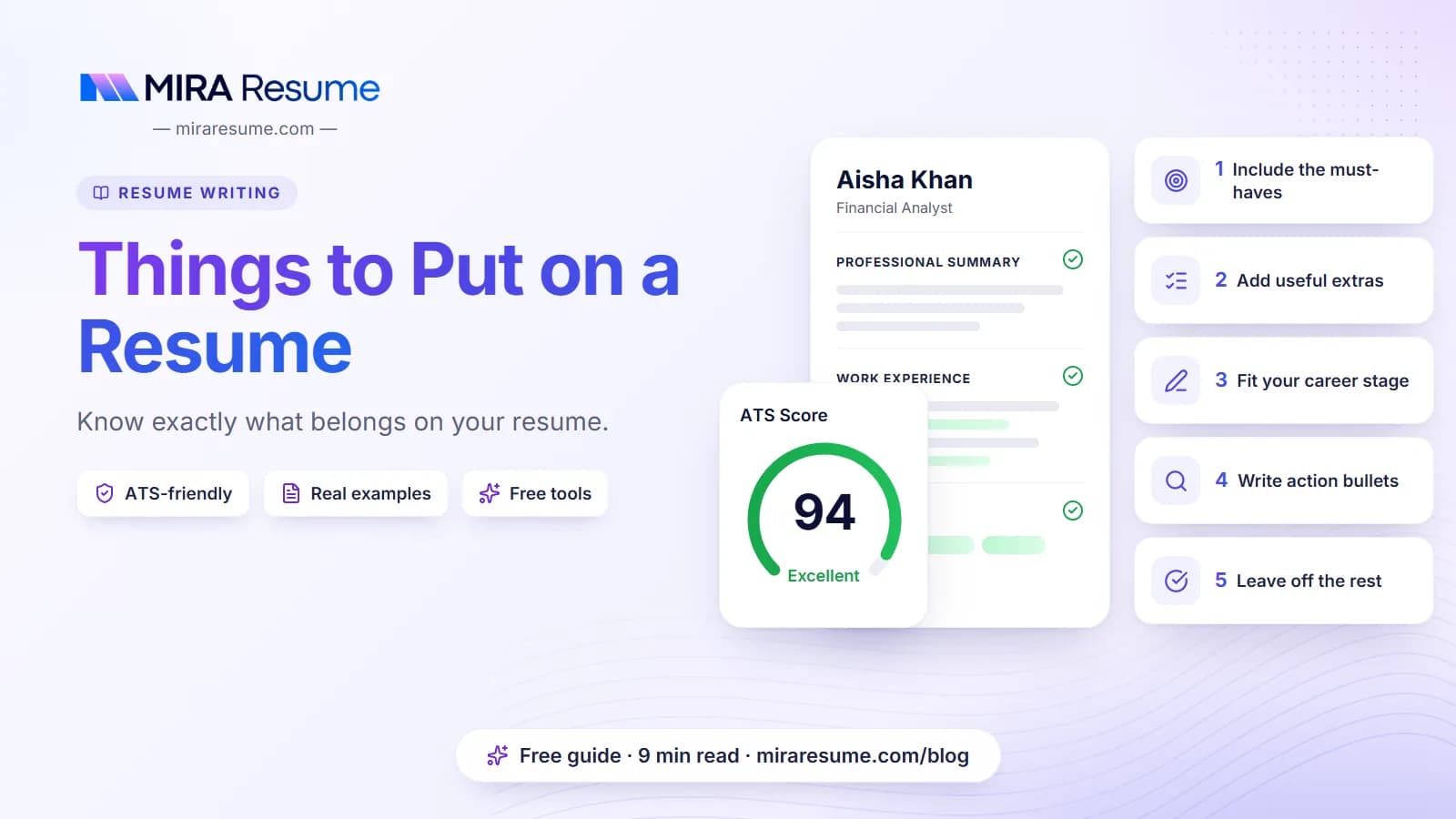
Things to Put on a Resume: What Should Be on a Resume and What to Leave Off
Every resume needs your name and contact details, work experience, education, and skills. Many also benefit from a short summary, certifications, and a few extras. This checklist shows what to include, what to skip, and how to decide.
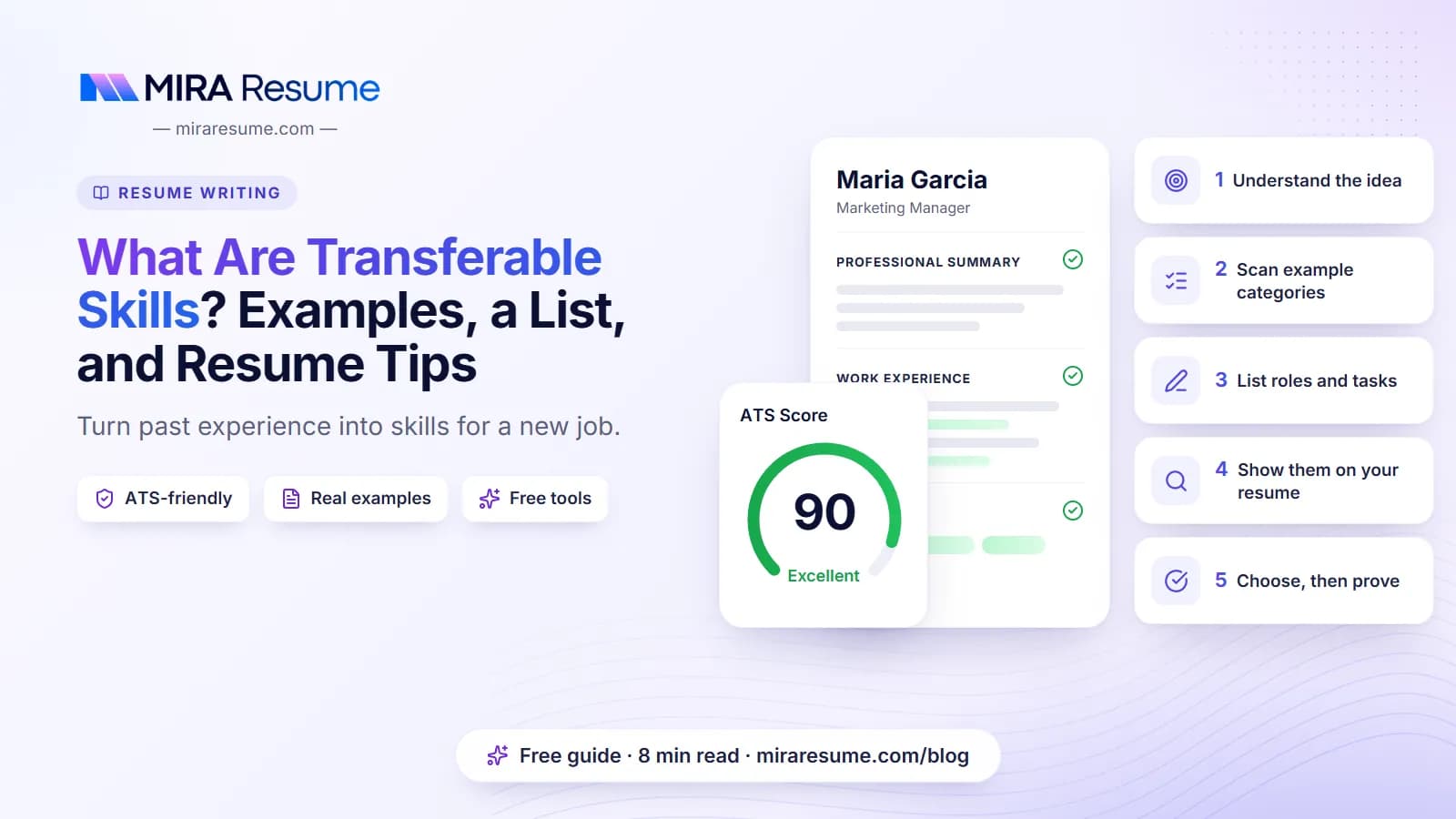
What Are Transferable Skills? Examples, a List, and Resume Tips
Transferable skills are abilities you can carry from one job, school, or life activity to another, such as communication, planning, and problem solving. This guide gives examples by category and shows how to find yours and put them on a resume.
How to Put Volunteer Work on a Resume (With Examples)
List volunteer work like a job: role, group, dates and two or three result-focused bullets. Put it in your experience section if it matches the job, or in its own section if not. Examples inside.
What Is a CV? Meaning, Structure and When to Use One
A CV is a document that lists your work history, education, skills, and achievements so an employer or school can judge your fit. It is short and focused in many countries, and long and detailed in academic fields. This guide explains the meaning, the structure, and when to use one.
What Is a Resume? Purpose, Parts, and a Simple Example
A resume is a short document, usually one or two pages, that shows an employer your work history, skills, and education. Its job is to win you an interview, not to tell your whole life story. This guide explains the purpose, the parts, and how to start.
What Should a Resume Look Like? Layout, Sections, and Visual Examples
A good resume is one clean column, one or two pages, with clear headings, readable fonts, and short bullets. This guide shows the layout, section order, spacing, and a text mock-up so you can see the target before you start.