
Cover Letter Guides, Templates and Examples
A cover letter is your chance to say what a resume cannot: why this job, why this company, and why you. Many hiring managers skim it quickly, so every sentence has to earn its place. The guides in this section show you how to open with a strong first line, match your experience to the job description, handle awkward situations such as career changes or having no experience, and close with a clear next step.
You will find plain-English walkthroughs, short and long examples, and formatting advice that keeps your letter easy to read for both people and applicant tracking systems. There are also guides for specific roles, such as teaching, customer service, engineering and IT internships, and for template formats in Word and Google Docs.
If you would rather start from a draft, the AI cover letter generator can write a tailored first version from a job description, and you can then edit it using the advice in these articles so the final letter sounds like you. Start with the first guide below, then branch out to the topic you need.
Start here
- 1What Is a Cover Letter for a Job Application? A Plain-English GuideA cover letter is a short letter, usually one page, that you send with your resume. It tells the employer which job you want, why you fit, and how to contact you. This guide explains the purpose, the parts, and when to use one.
- 2How Should You Start a Cover Letter? Greetings and Opening LinesStart a cover letter with a polite greeting that uses the hiring manager's name, then open with one or two sentences that name the job and give your best reason you fit. If you cannot find a name, use a simple team greeting.
- 3How Long Should a Cover Letter Be? Words, Pages and ParagraphsA cover letter should be one page long, usually about 250 to 400 words, split into three or four short paragraphs. Shorter is fine if every line earns its place. Longer is rarely better.
- 4How to Close a Cover Letter: Strong Endings, Sign-Offs and ExamplesTo close a cover letter, write one short paragraph that restates your interest, thanks the reader, and says what happens next. Then add a polite sign-off such as Sincerely and your name.
Free tools for this topic
All cover letters guides
How to Address a Cover Letter: Salutations, Titles and No-Name Options
Address your cover letter to the person who will read it, using their title and last name (Dear Ms. Patel) or their full name (Dear Jordan Lee). If you cannot find a name, use Dear Hiring Manager or Dear [Team] Hiring Team rather than To whom it may concern.
Relocation Cover Letter: What to Say About Your Move, With Examples
If you are applying for a job in a city you do not live in yet, say so in your cover letter, briefly and early. Give your move date, say whether you need help with costs, and then spend the rest of the letter on why you fit the job.
Cover Letter Header: What to Include, With Examples
A cover letter header holds your contact details, the date and the employer's details. Put it at the top, keep it clean and match your resume. This guide shows the order, formats and examples to copy.
Cover Letter Keywords and Phrases: How to Use Them Naturally
Find cover letter keywords by reading the job post for repeated skills, tools and duties. Use the same words in real sentences that describe what you have done. Do not stuff, copy whole lines or add skills you do not have.
Example Cover Letter With No Experience: Samples and Writing Steps
When you have no paid experience, build your cover letter on school, volunteer work, projects and the personal strengths you can prove. Be honest, be specific and show you are ready to learn. Two full samples and a template follow.
Cover Letter vs Resume: What Is the Difference and Do You Need Both?
A resume is a short, scannable list of your work, skills and education. A cover letter is a one-page note that explains why you fit one specific job. Most applications work best with both, sent together.
Customer Service Cover Letter: How to Write One (With 3 Samples)
A strong customer service cover letter is short, warm and specific. Name the job, show one or two real moments where you helped a customer, and tie them to what the employer asks for. Aim for about 250 to 350 words.
Engineering Cover Letter: How to Write One (With Samples)
A strong engineering cover letter picks one or two projects, explains the problem, your part and the result in plain words, and links them to the job. Keep it to one page and skip the long tool list.
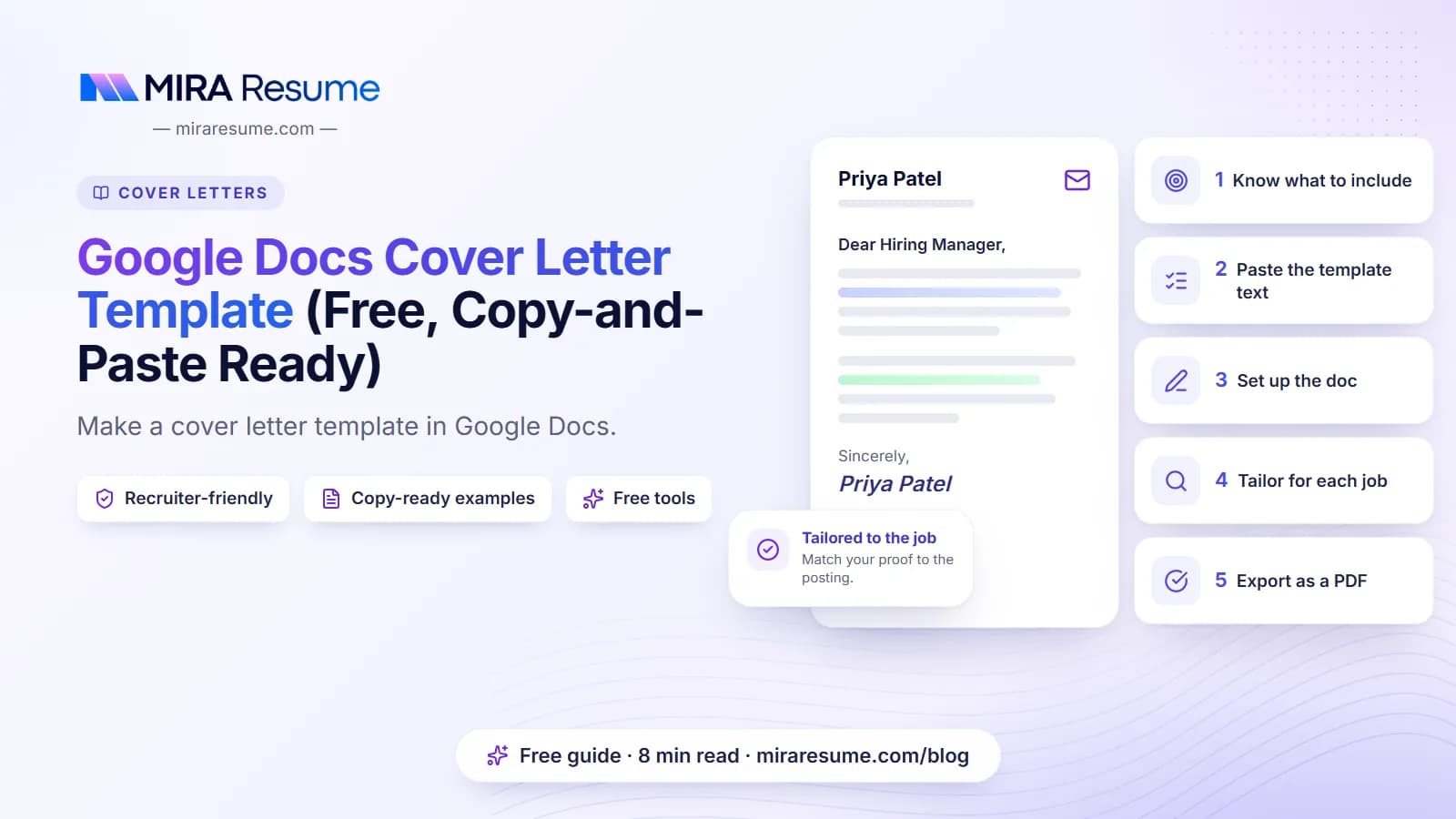
Google Docs Cover Letter Template (Free, Copy-and-Paste Ready)
A good Google Docs cover letter template is just a clean, one-page layout with your contact details, a short greeting, three short paragraphs and a sign-off. This guide gives you the exact layout, the text to copy, and the steps to export a PDF that employers can open.
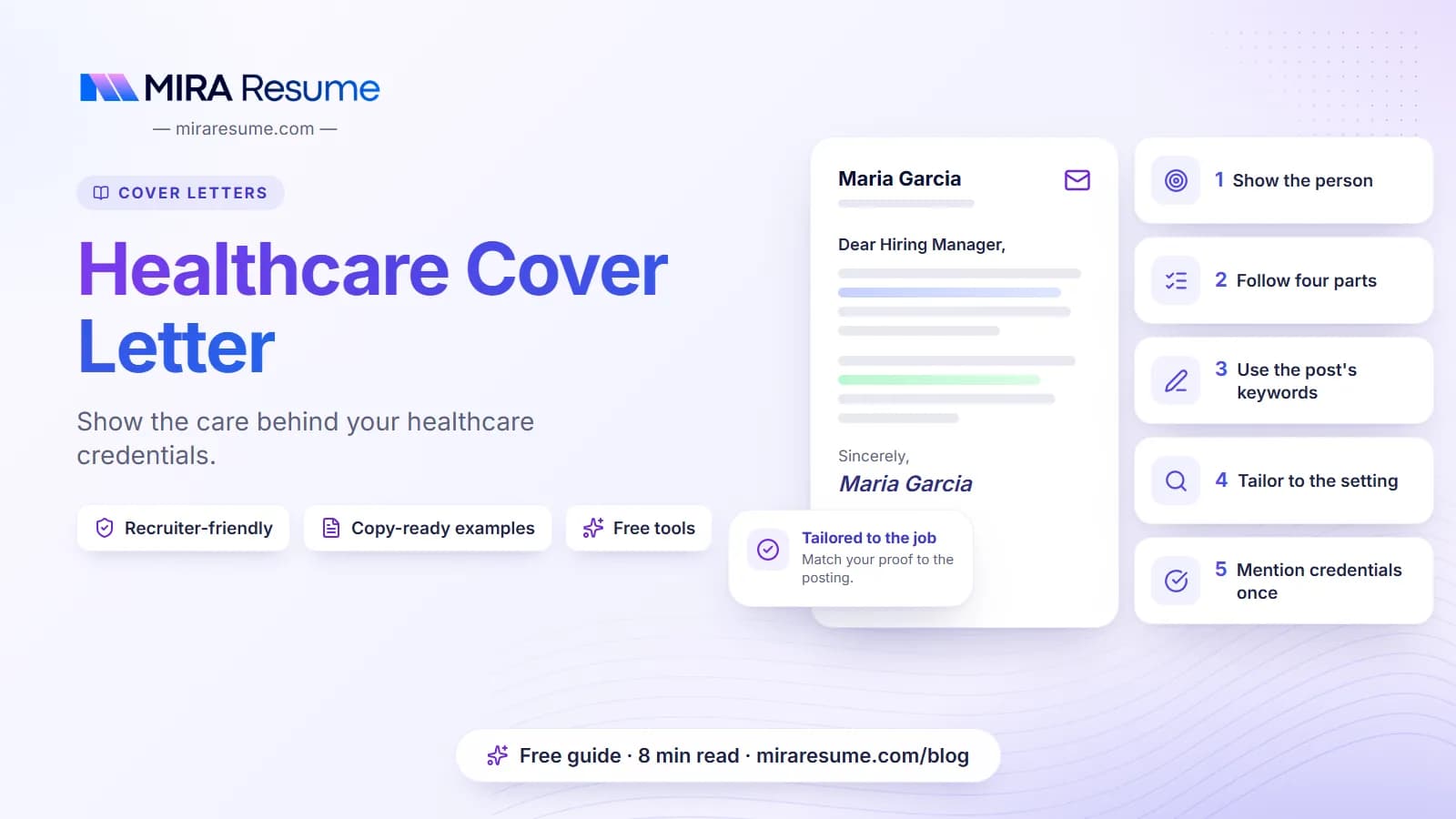
Healthcare Cover Letter: Examples, Structure and Tips
A healthcare cover letter shows who you are beyond your credentials: how you care for people, work in a team and handle pressure. This guide gives a simple structure, three samples and a keyword table.
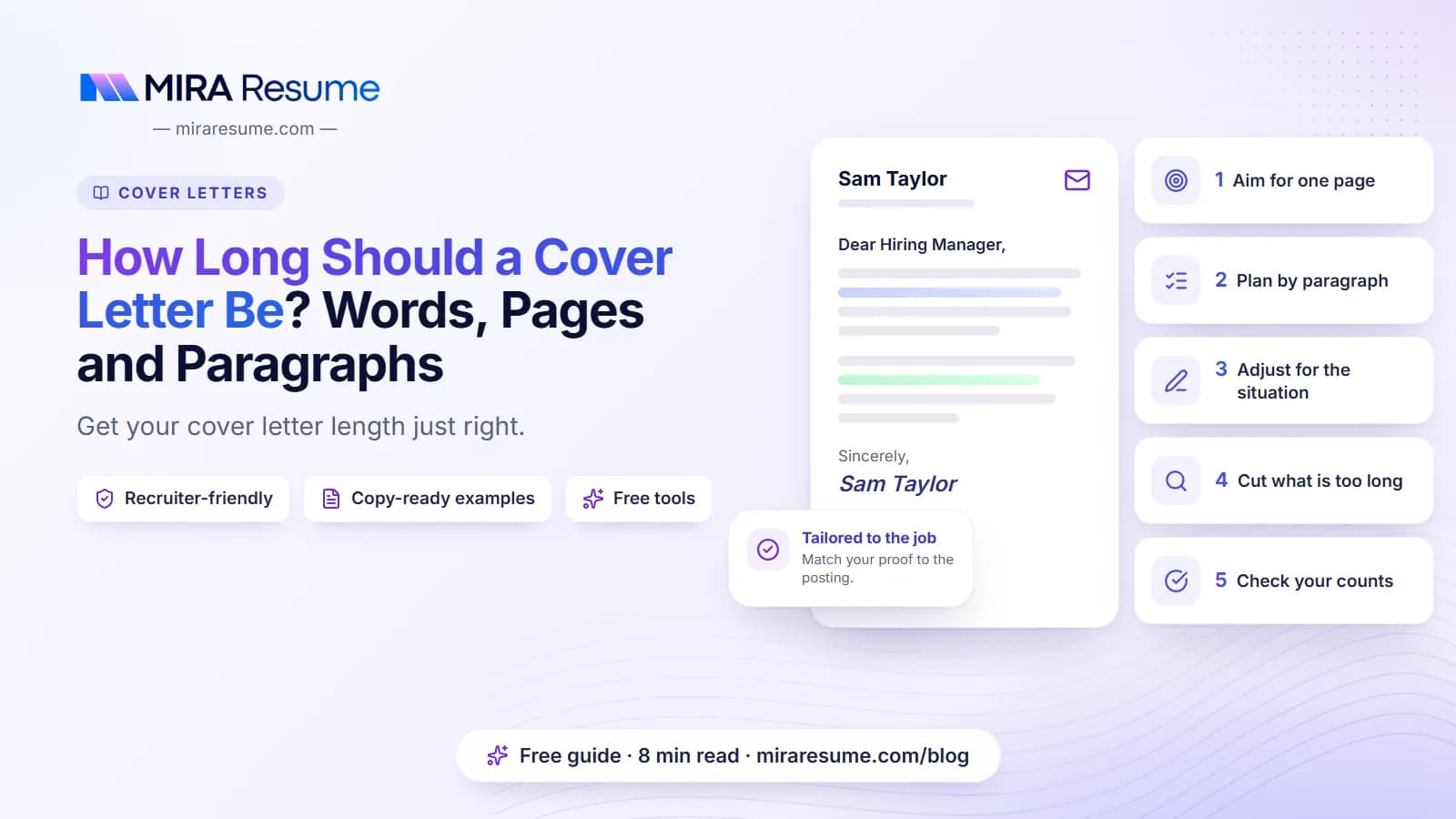
How Long Should a Cover Letter Be? Words, Pages and Paragraphs
A cover letter should be one page long, usually about 250 to 400 words, split into three or four short paragraphs. Shorter is fine if every line earns its place. Longer is rarely better.
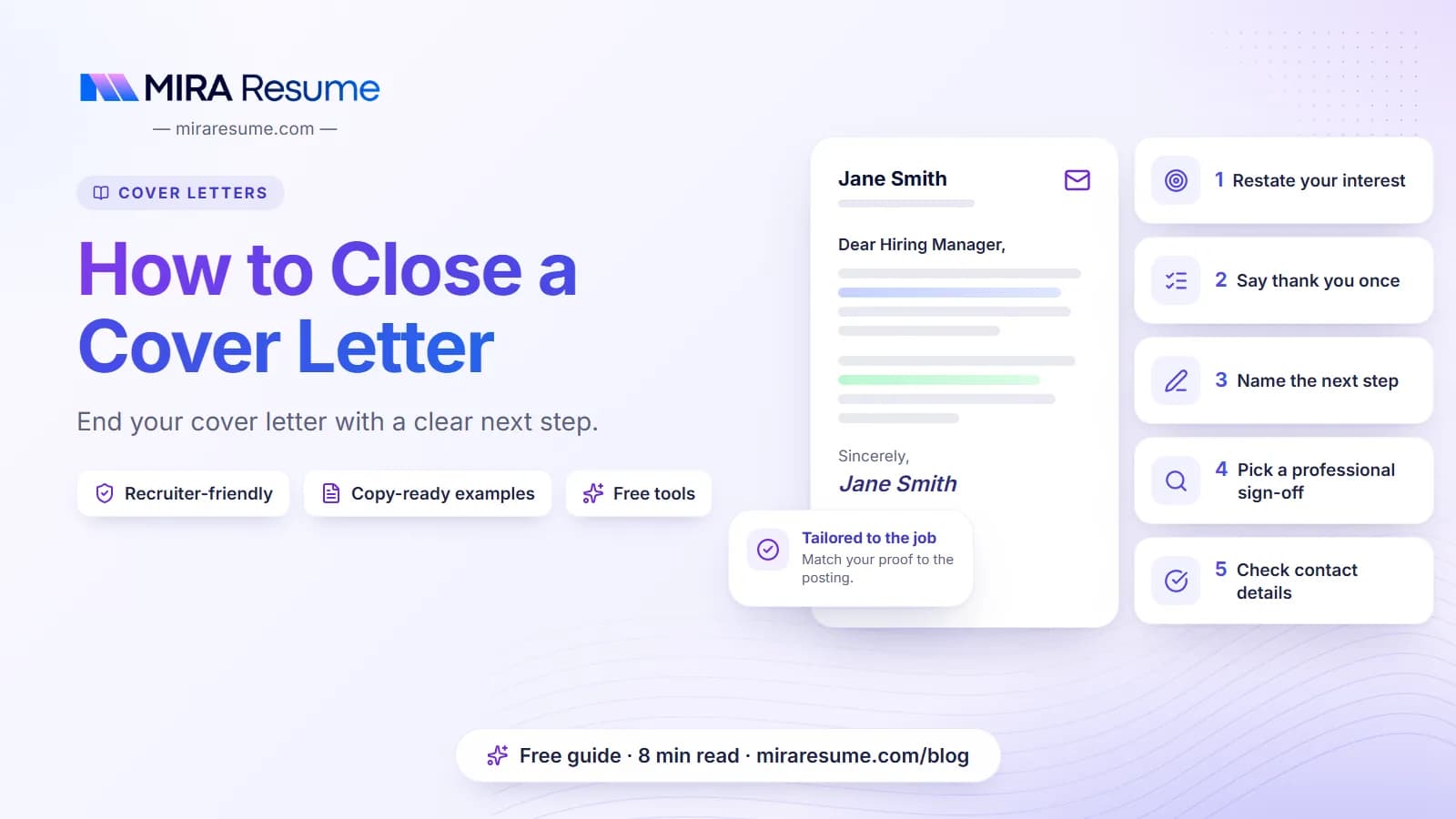
How to Close a Cover Letter: Strong Endings, Sign-Offs and Examples
To close a cover letter, write one short paragraph that restates your interest, thanks the reader, and says what happens next. Then add a polite sign-off such as Sincerely and your name.
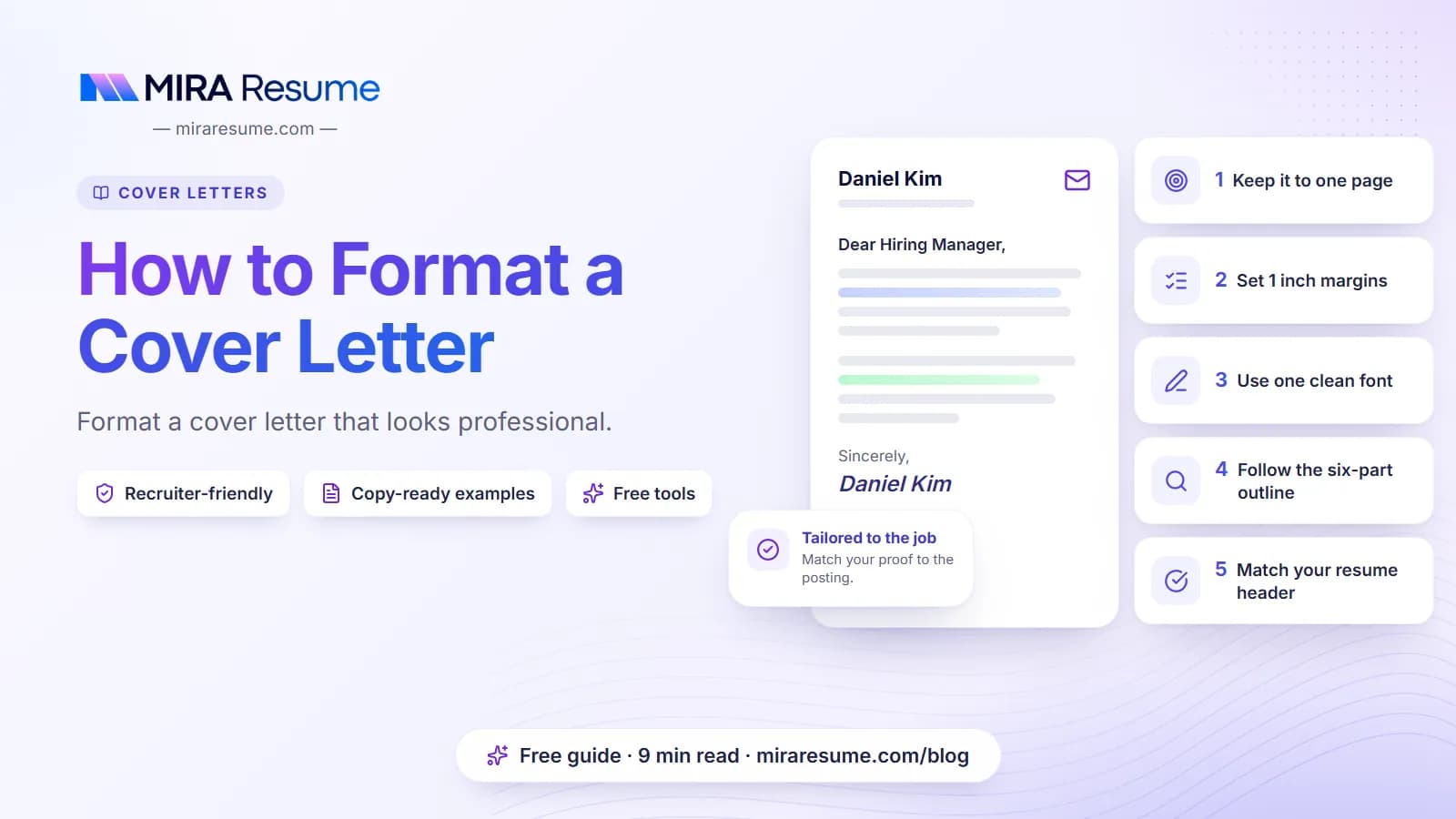
How to Format a Cover Letter: Layout, Fonts, Margins and Outline
Format a cover letter on one page with one-inch margins, a plain 10.5 to 12 point font, a header that matches your resume, a short greeting, three or four short paragraphs and a simple sign-off. Save it as a PDF.
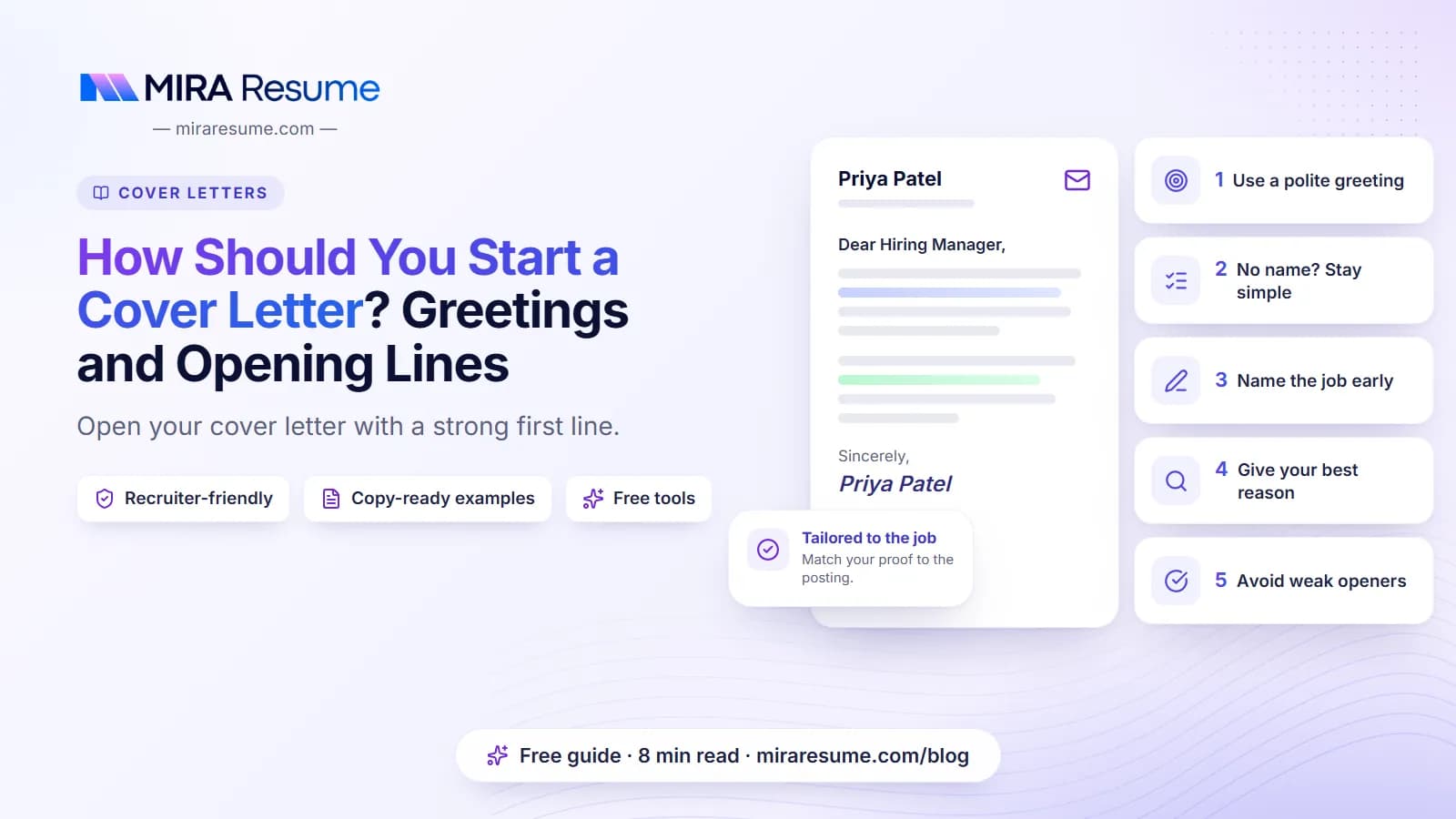
How Should You Start a Cover Letter? Greetings and Opening Lines
Start a cover letter with a polite greeting that uses the hiring manager's name, then open with one or two sentences that name the job and give your best reason you fit. If you cannot find a name, use a simple team greeting.
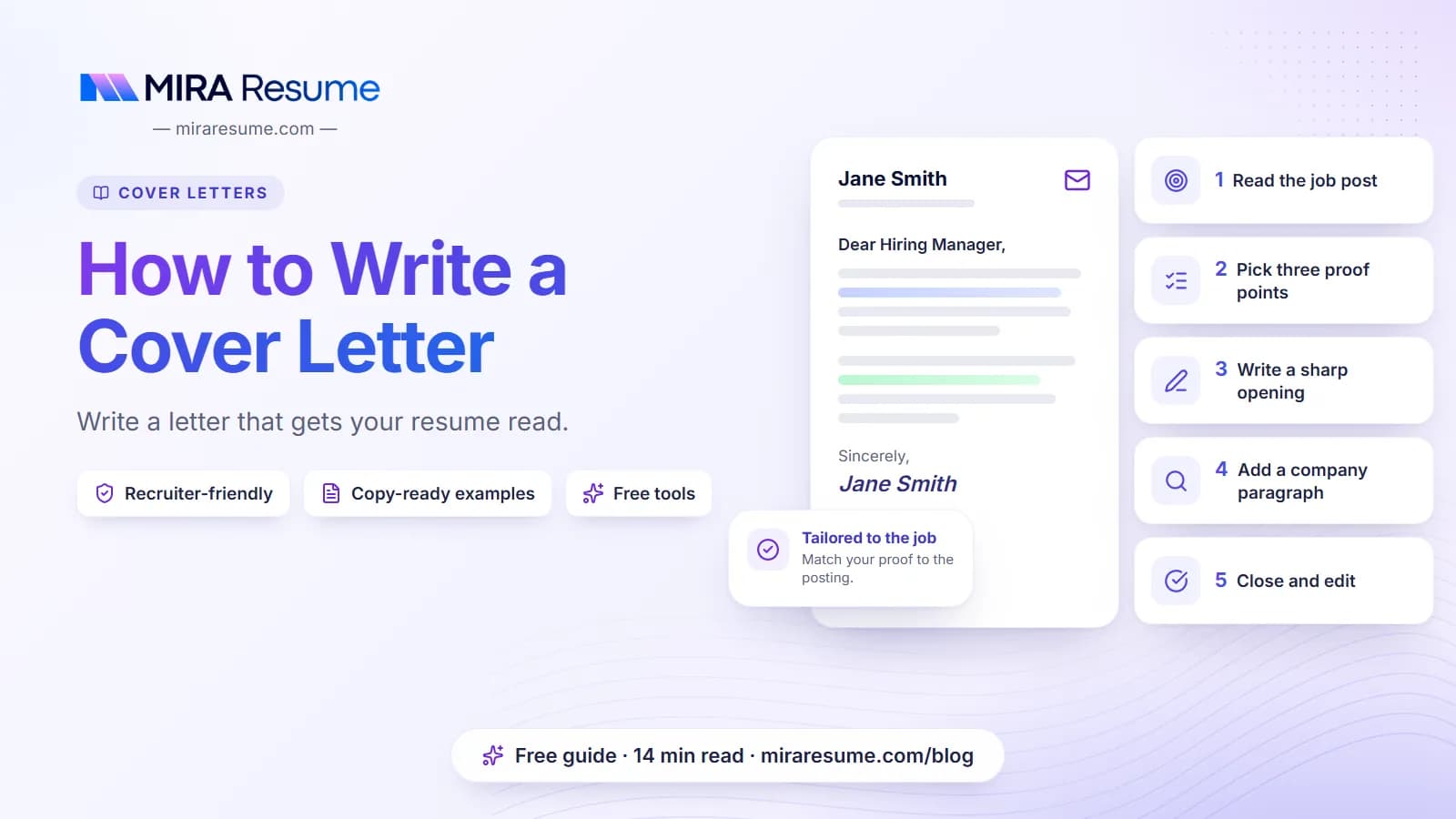
How to Write a Cover Letter: Step-by-Step Guide With Examples and Templates
To write a cover letter, read the job post, pick two or three proof points from your past work, and write three or four short paragraphs: an opening, proof, a reason for this company and a closing. Keep it to one page and send it as a PDF.
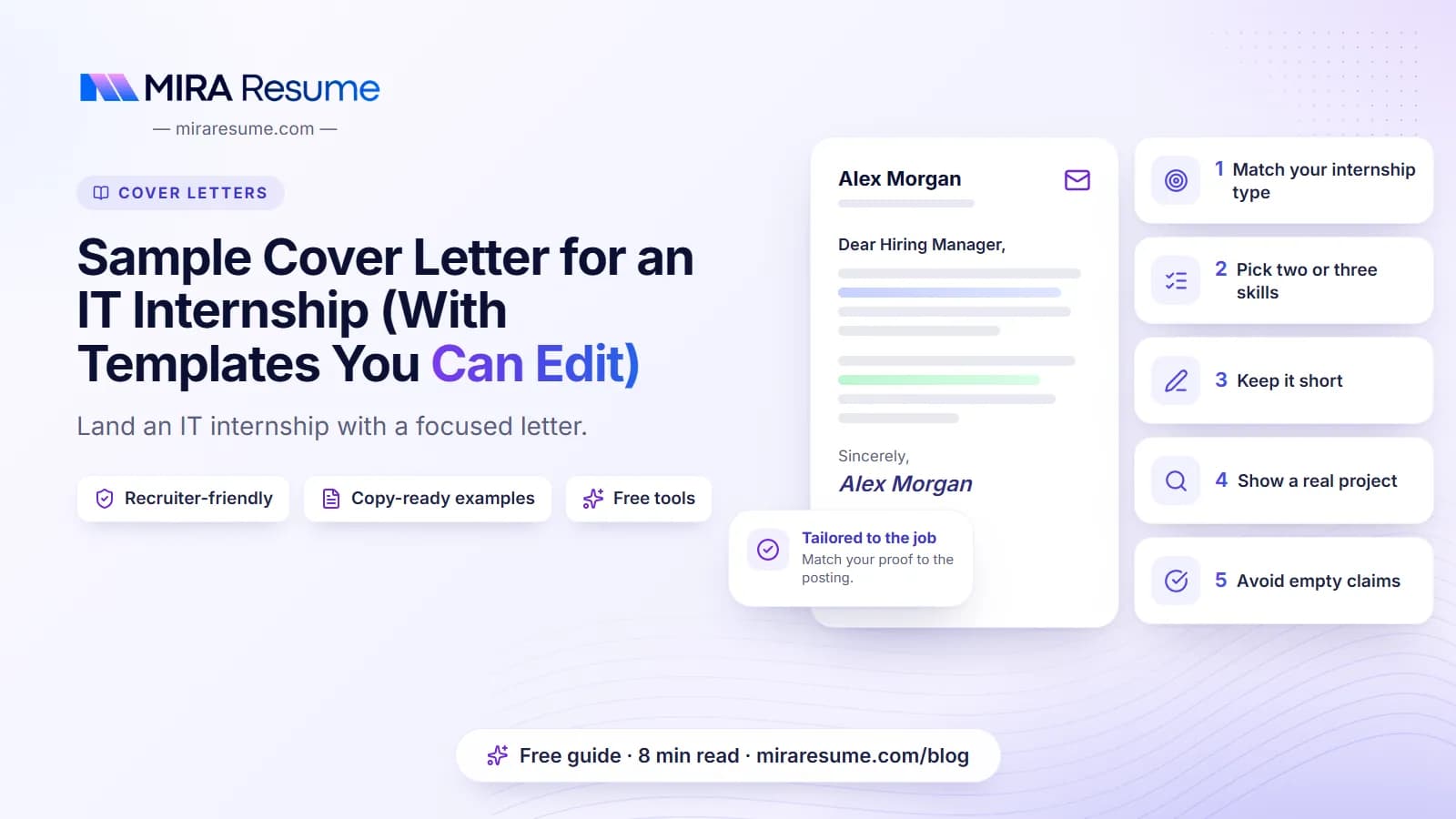
Sample Cover Letter for an IT Internship (With Templates You Can Edit)
A strong IT internship cover letter is short, specific and honest about your level. It names the role, shows two or three skills or projects, and says what you want to learn. Below are three samples and a fill-in template.
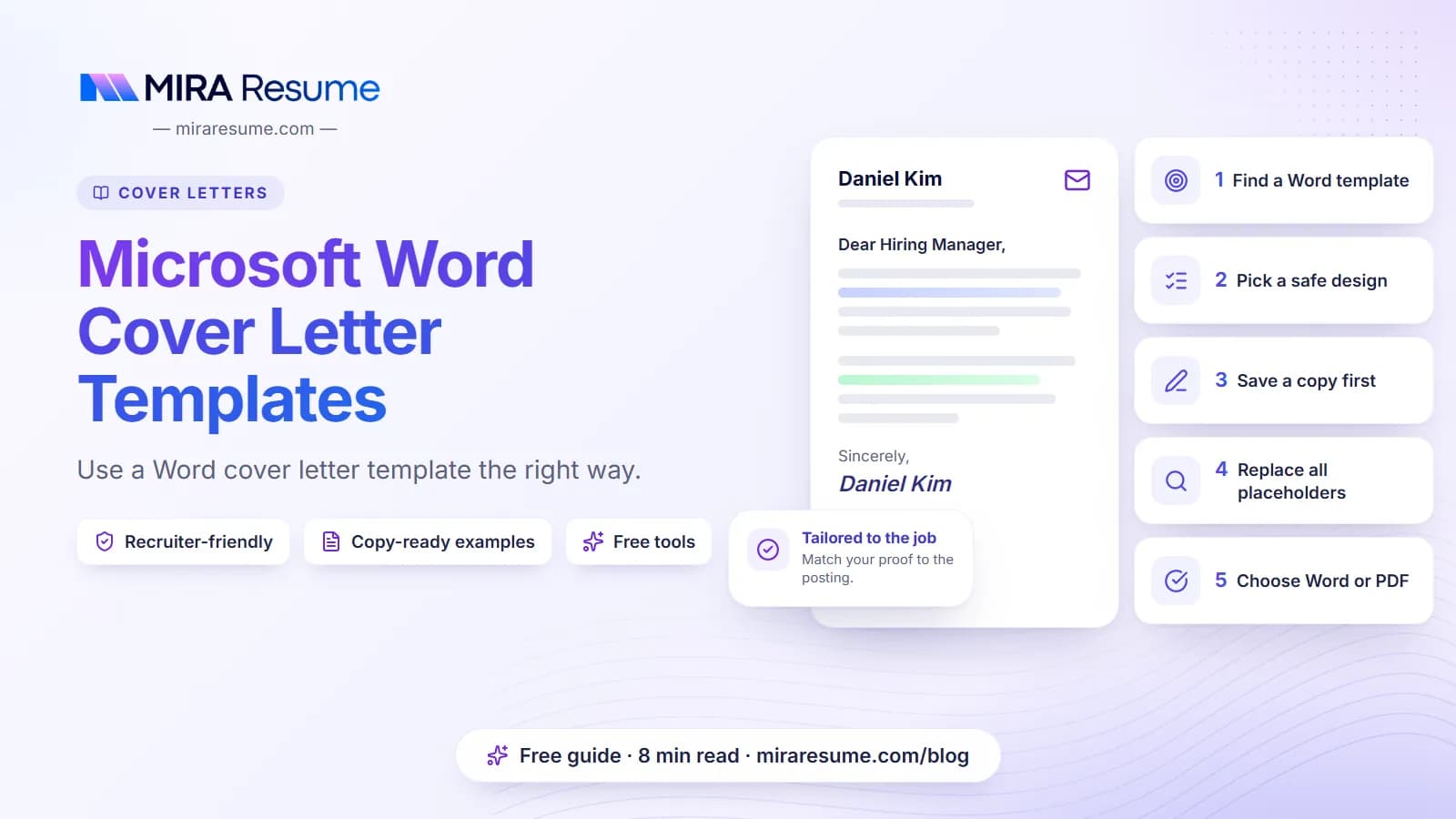
Microsoft Word Cover Letter Templates: Where to Find and How to Use Them
You can find free Microsoft Word cover letter templates inside Word itself, in its New menu. Pick a simple, one-column design, replace the sample text with your own and save it as a PDF unless the employer asks for a Word file.
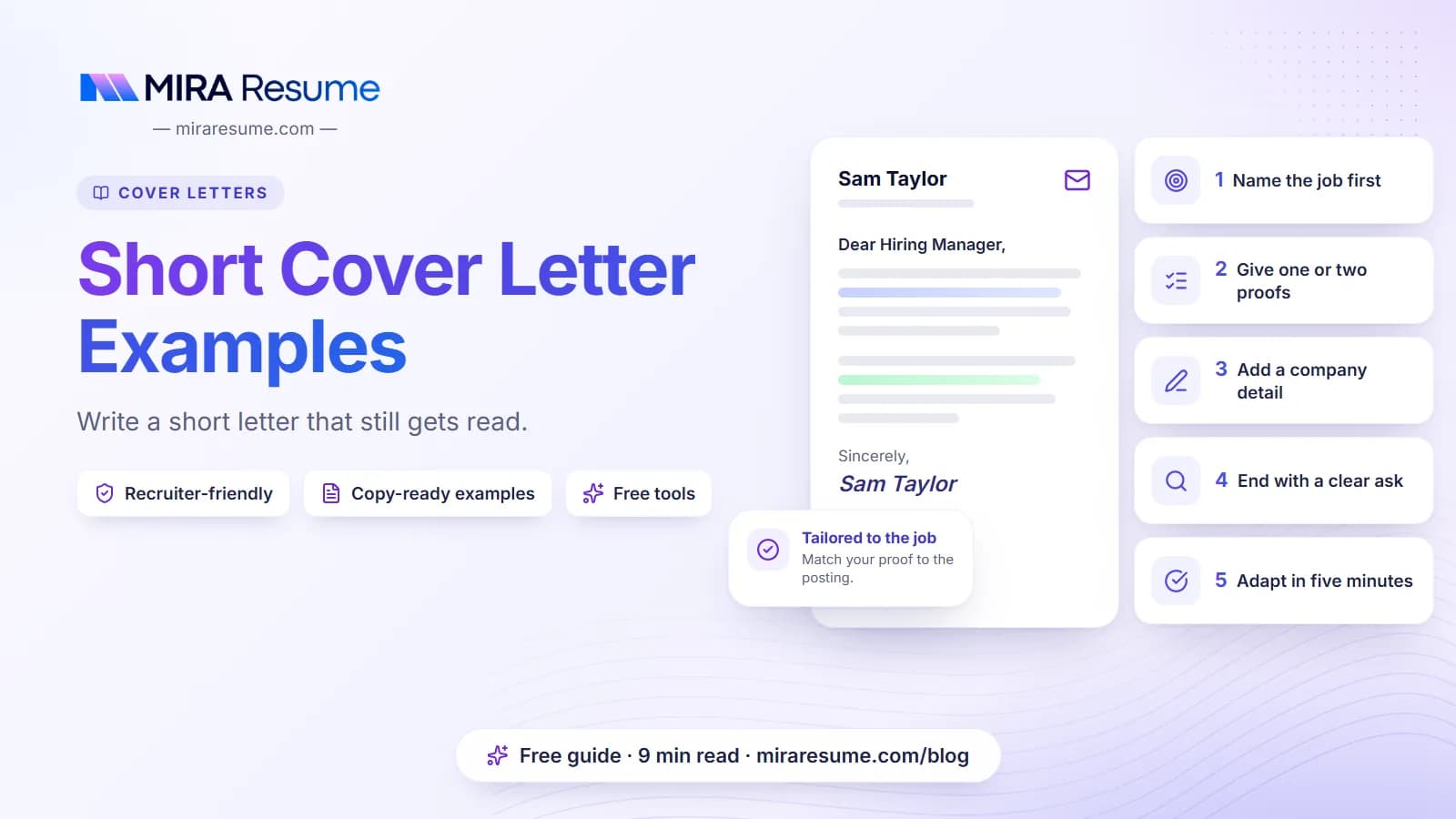
Short Cover Letter Examples: 8 Brief, Basic Samples You Can Copy
A short cover letter is 120 to 250 words: a clear opening, one or two proof points, one reason for the company and a polite close. These eight brief samples cover common situations and are easy to copy and edit.
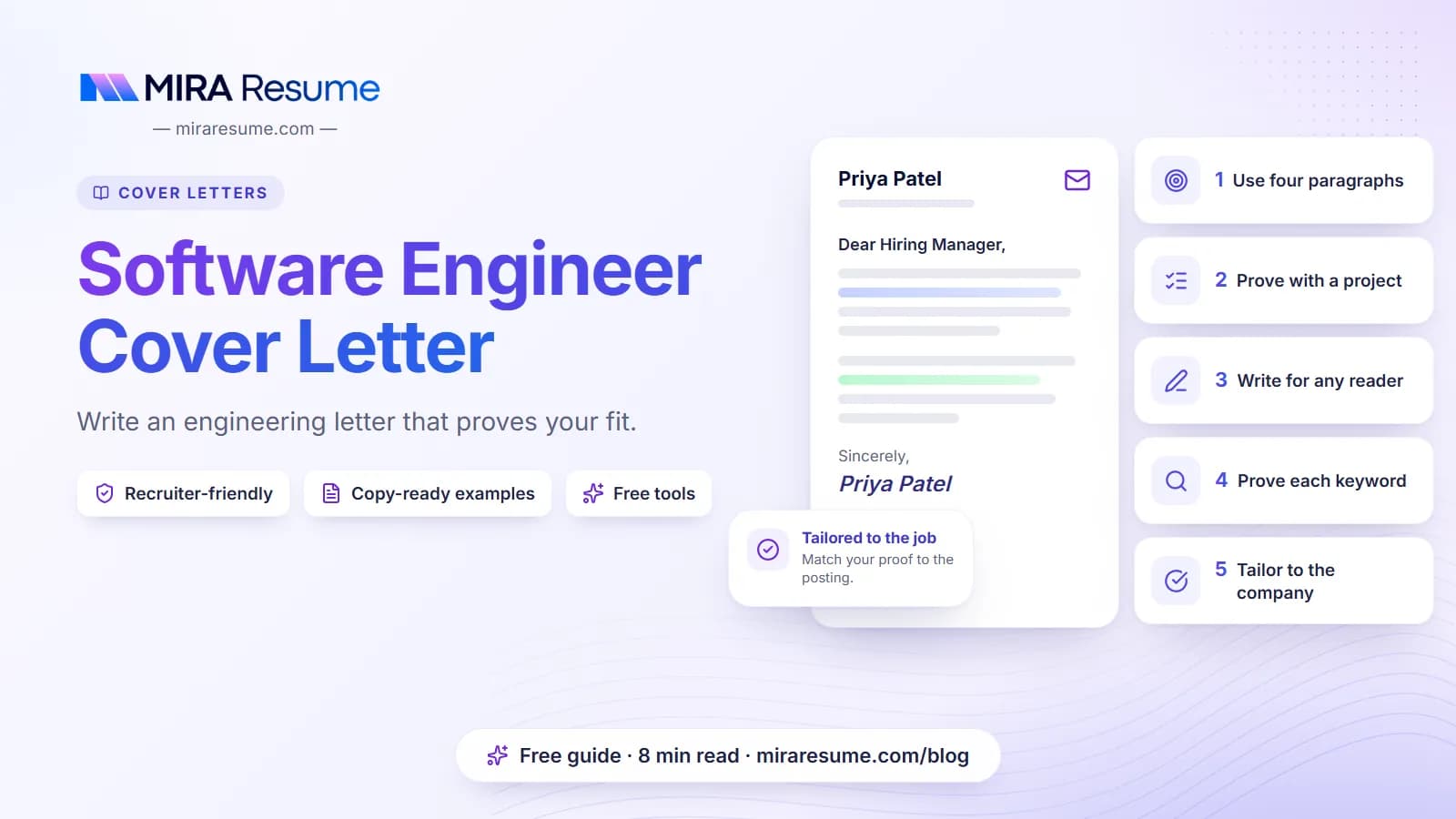
Software Engineer Cover Letter: Examples, Format and Tips
A good software engineer cover letter is short, specific and honest. It links one or two real projects to the team's needs and shows how you work with others. This guide gives a structure, three samples and mistakes to avoid.
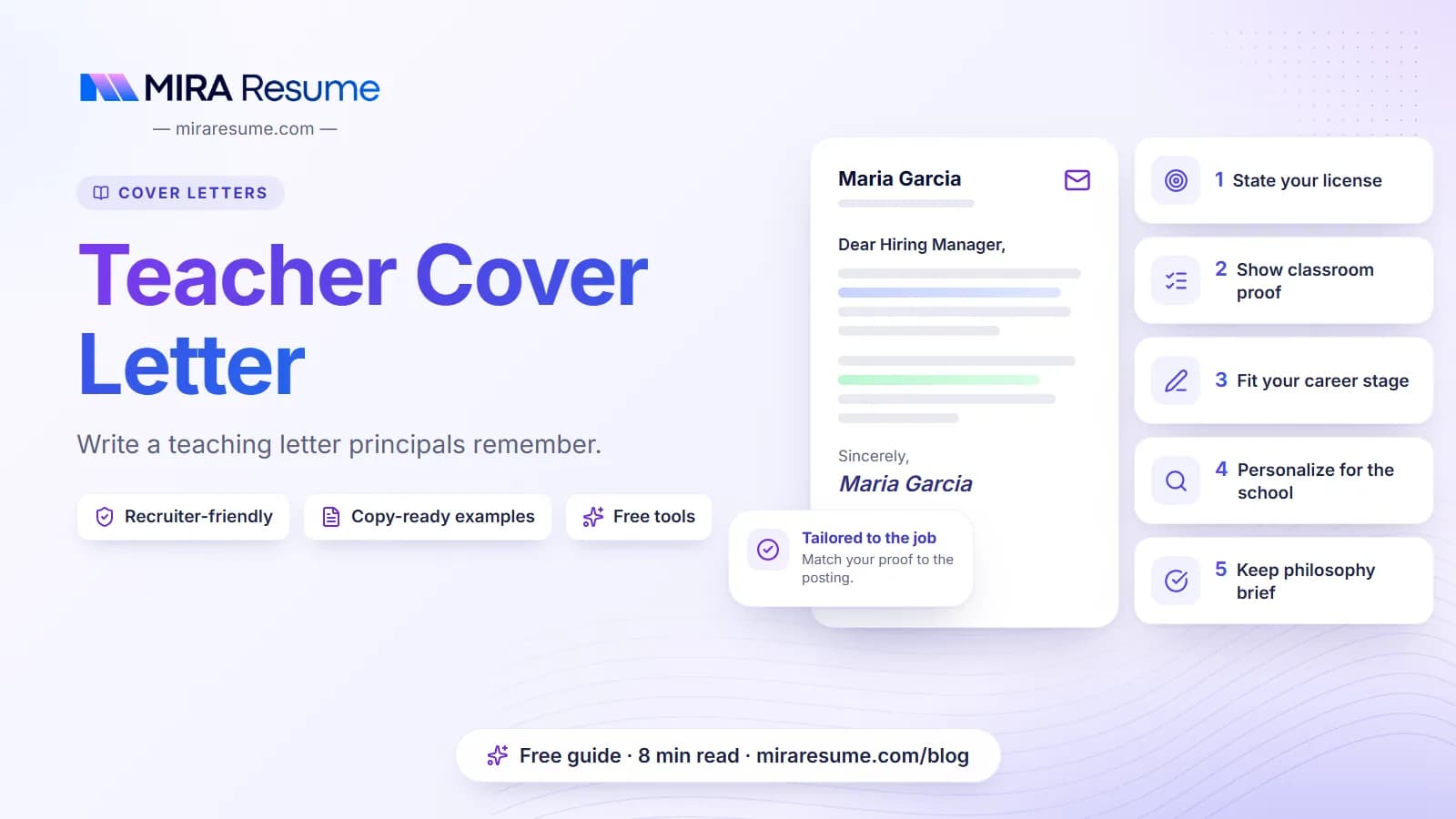
Teacher Cover Letter: How to Write One That Gets Interviews
A good teacher cover letter shows who you are in the classroom: how you help students learn, how you work with families and colleagues, and why you want this school. Keep it to one page with a real example from your teaching.
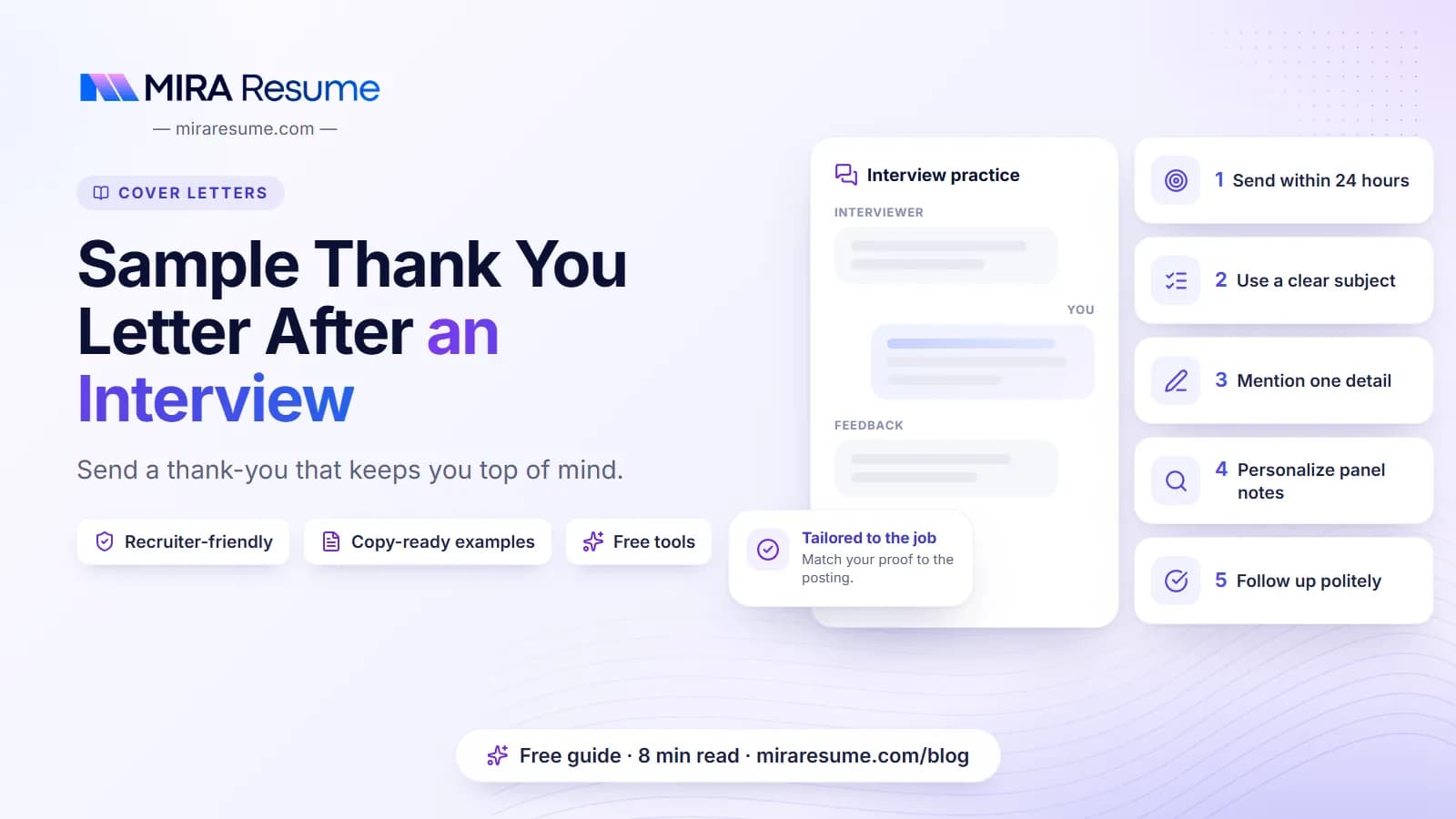
Sample Thank You Letter After an Interview: Templates and Timing
Send a short thank-you note within 24 hours of your interview. Thank the interviewer, mention one thing you talked about, repeat why you fit, and end politely. Below are six sample letters you can copy and change.
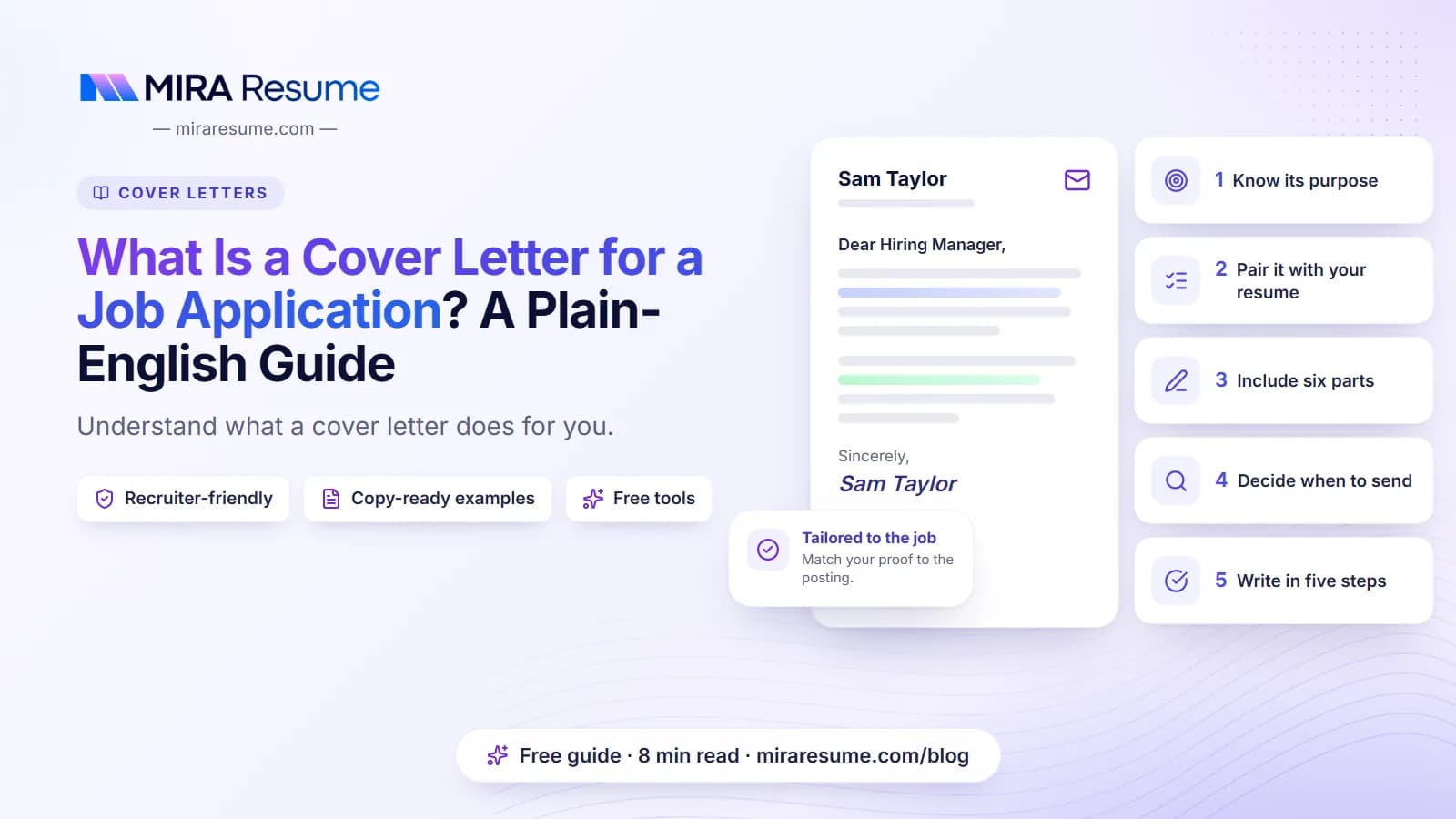
What Is a Cover Letter for a Job Application? A Plain-English Guide
A cover letter is a short letter, usually one page, that you send with your resume. It tells the employer which job you want, why you fit, and how to contact you. This guide explains the purpose, the parts, and when to use one.
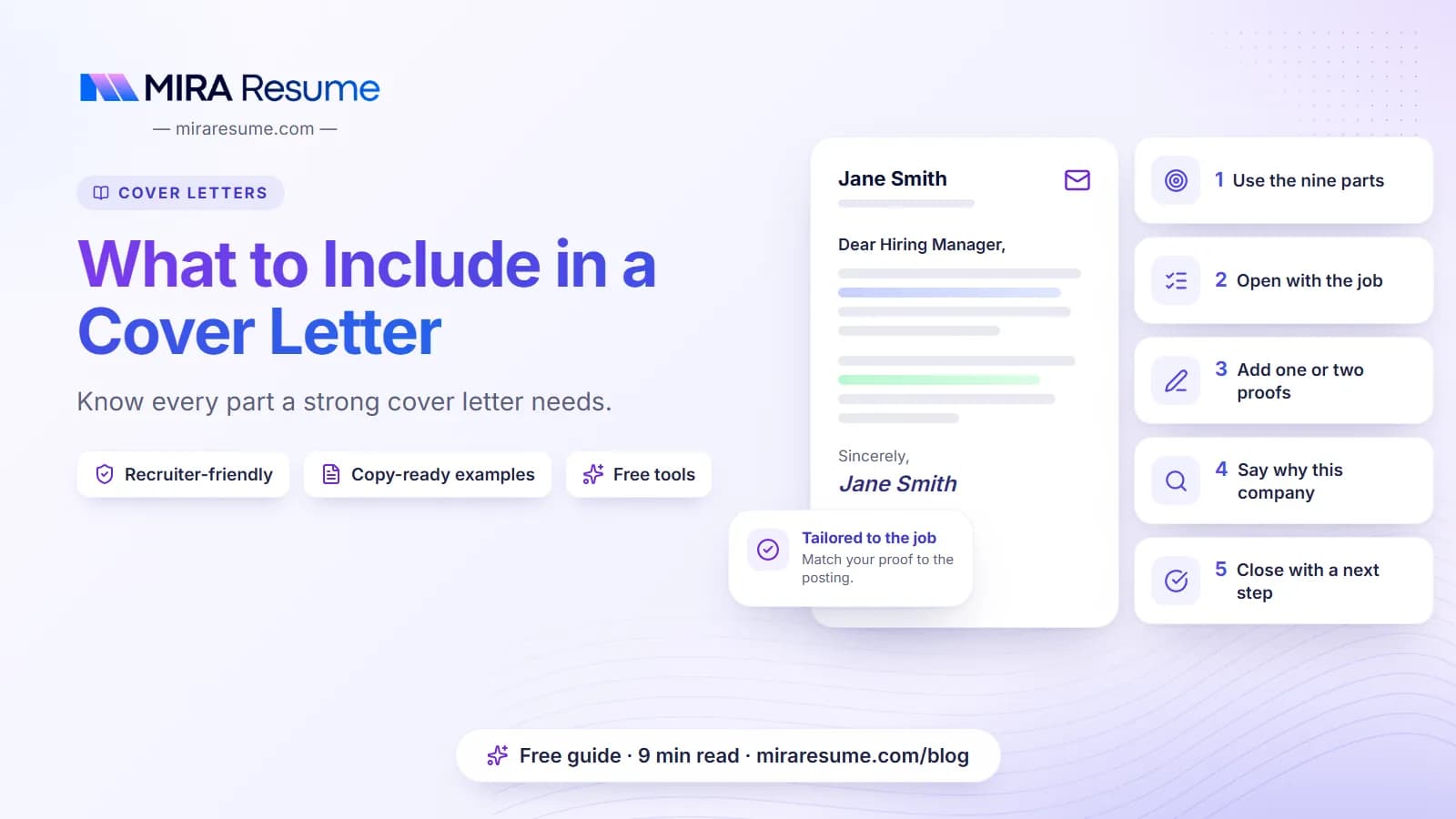
What to Include in a Cover Letter: A Complete Checklist With Examples
A cover letter should include your contact details, a date, a greeting, an opening that names the job, one or two proof points, a reason for this company, a clear closing and a sign-off. Leave out your life story and anything already on your resume.