
Career Letters: Resignation, Thank-You, Follow-Up and Intent
Your job search does not end when you press submit. The messages you send around the application matter as well: a thank-you note after an interview, a polite follow-up when you have not heard back, a professional resignation letter, or a letter of intent. The guides in this section give you clear wording, short templates and tips on tone and timing, so you can write with confidence even when the situation feels awkward.
You will find how-to guides and samples for resigning from a job, giving two weeks notice by letter or email, and what to do if you want to quit a job you only just started. There are also guides for follow-up emails after an interview, internship application letters, letters of intent, and how to explain employment gaps. A few articles cover career choices, such as well-paid jobs with different stress levels.
Pair these articles with the cover letter builder to keep your written materials consistent, and use the interview prep tool to practice answers before the day arrives. Start with the resignation guide below if you are leaving a job, or the follow-up guide if you are mid-search.
Start here
- 1How to Resign From a Job: A Step-by-Step GuideTo resign well, confirm your new job, read your contract, tell your manager in person, follow with a short written notice, and use your notice period to hand over your work. If you cannot give notice, be honest and brief. Rules vary by country and state.
- 22 Week Notice Letter: How to Write One (With Templates and Examples)A 2 week notice letter is a short, polite note that tells your employer your last day of work. Keep it to one page, state your last date, say thank you, and offer to help with the handover. This guide gives you a template you can copy and three worked examples.
- 3Follow Up Email After Interview: Timing, Templates and ExamplesSend a thank-you within a day of your interview. If you have heard nothing by the date they gave you, send one short, polite check-in. If they gave no date, wait about a week. This guide shows the timing and gives templates you can copy.
- 4Letter of Intent Format: What to Include and How to Write ItA letter of intent says what you plan to do and why you are the right person. Use a clear header, a short opening, two or three body paragraphs and a polite close. This guide covers job, school and business versions with simple examples.
- 5Sample Resume With Gaps in Employment: Examples and How to Explain a GapA gap in your work history is common and usually fixable. Be honest, keep the explanation short, use years or a skills-first layout if it helps, and show what you did or learned. This guide includes a sample resume with gaps in employment and interview wording.
Free tools for this topic
All career letters and interviews guides
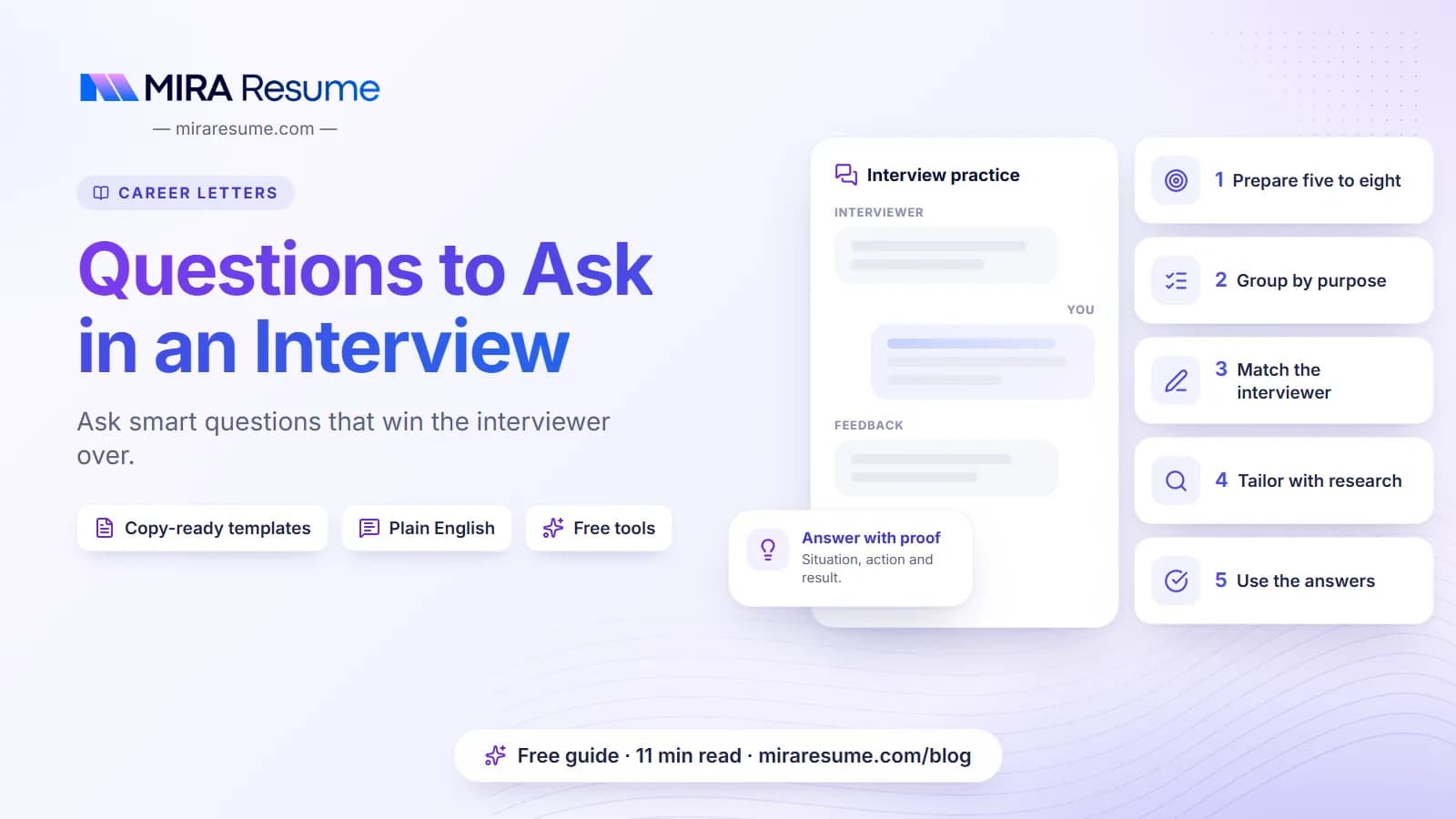
Questions to Ask in an Interview: 38 Examples, Grouped by Purpose
Prepare five to eight questions that help you learn what success looks like in the role, how the team works, and what happens next. Ask the ones that fit each interviewer, skip anything you could find online, and use the answers in your thank-you note.
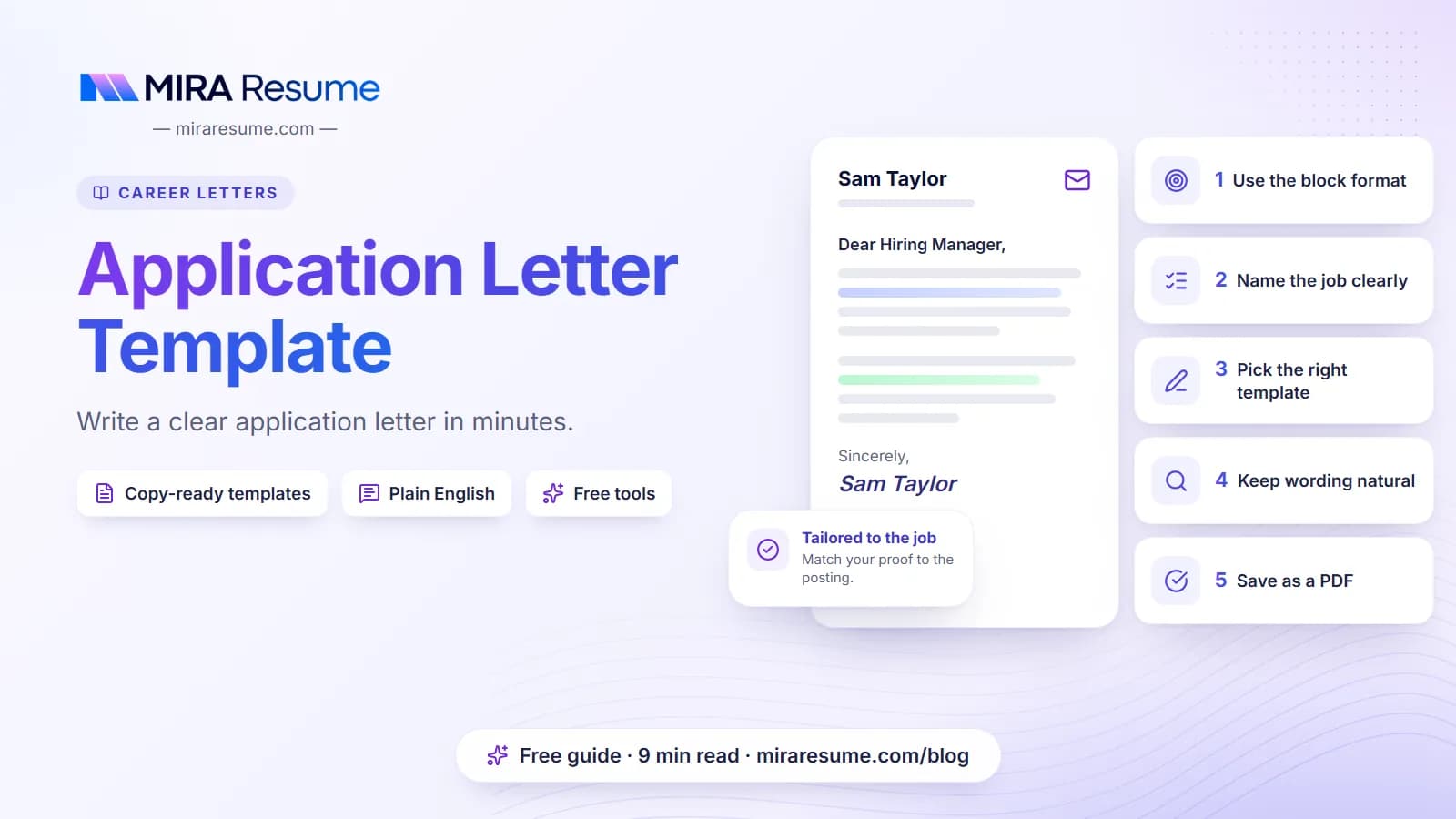
Application Letter Template: Format, Samples and Tips for Any Job
An application letter is a short formal letter that says which job you want, why you fit and how to reach you. Use a simple format: sender details, date, receiver, greeting, subject line, three short paragraphs and a sign-off.
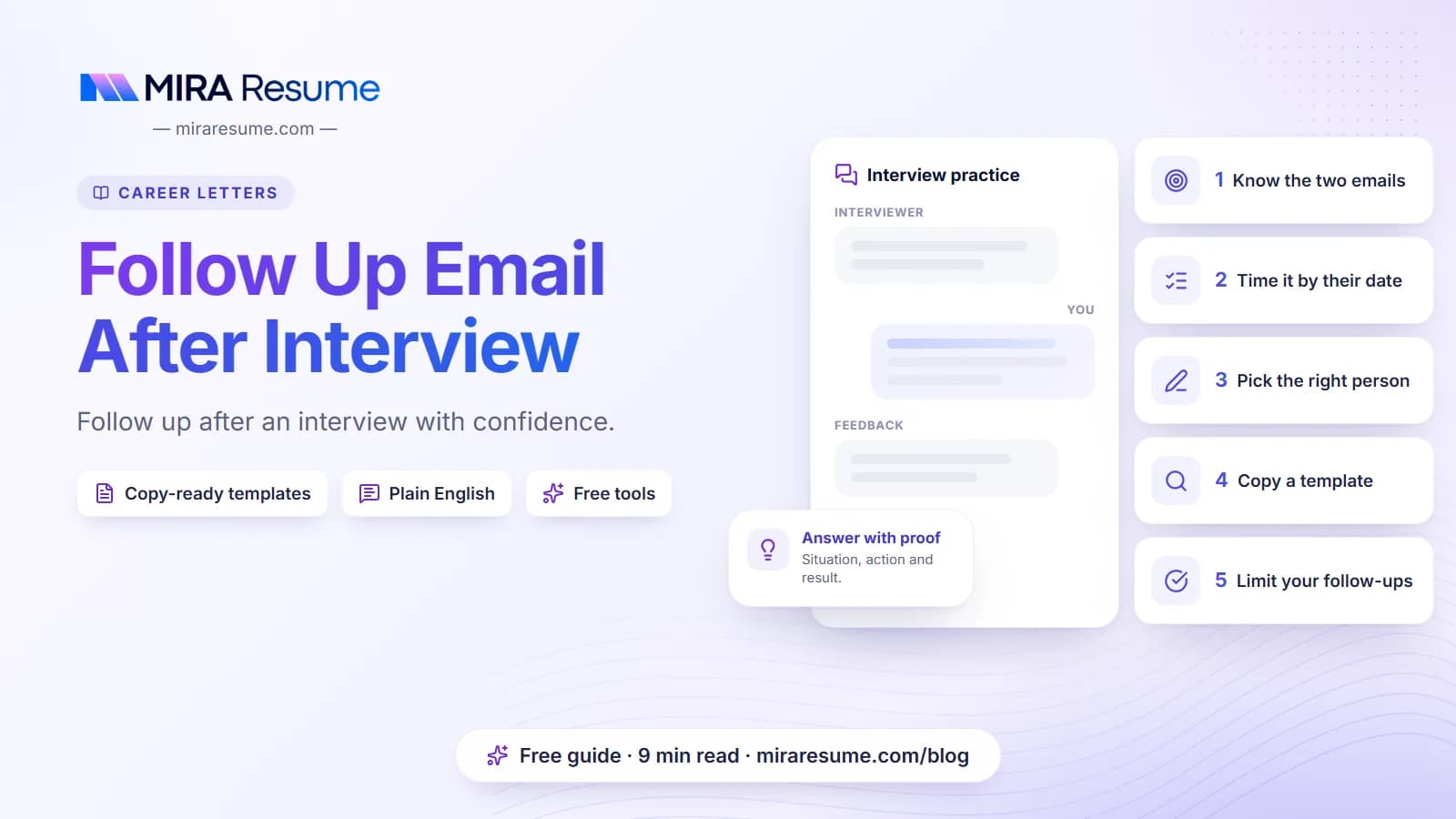
Follow Up Email After Interview: Timing, Templates and Examples
Send a thank-you within a day of your interview. If you have heard nothing by the date they gave you, send one short, polite check-in. If they gave no date, wait about a week. This guide shows the timing and gives templates you can copy.
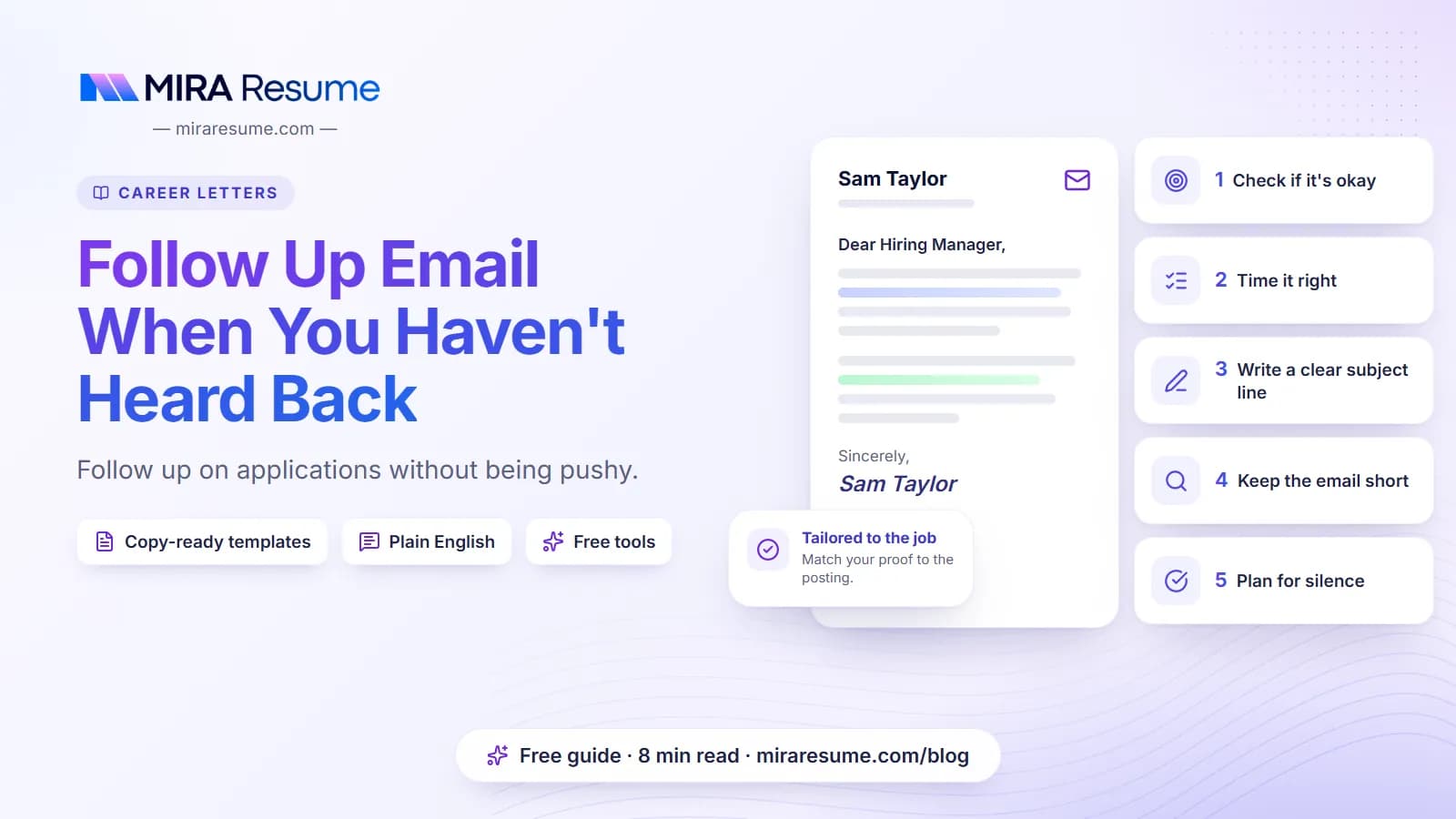
Follow Up Email When You Haven't Heard Back: What to Send
Send a short, polite note about one to two weeks after you apply, or a few days after an interview. This guide gives timing rules, subject lines and five copyable emails for each stage.
High-Paying Job With High Stress: Is It Worth It? A Fair Way to Decide
A high-paying job with high stress can be worth it for some people, for a time, with clear limits. It is not worth it if it harms your health, relationships or long-term goals. This guide gives you a fair framework to compare pay against the real cost of pressure.
How to Quit a Job You Just Started: What to Say and What to Do
If you need to quit a job you just started, do it quickly, honestly and politely. Check your contract and any trial period rules, talk to your manager, send a short written notice, and plan how to explain the short stay on your resume and in interviews.
How to Resign From a Job: A Step-by-Step Guide
To resign well, confirm your new job, read your contract, tell your manager in person, follow with a short written notice, and use your notice period to hand over your work. If you cannot give notice, be honest and brief. Rules vary by country and state.
Internship Application Letter Sample: How to Write One That Works
A good internship letter is short and honest. Say which internship you want, show two or three skills with proof from school, clubs or projects, and ask politely for a chance to talk. Below are a clear structure and three full samples you can adapt.
Letter of Intent Format: What to Include and How to Write It
A letter of intent says what you plan to do and why you are the right person. Use a clear header, a short opening, two or three body paragraphs and a polite close. This guide covers job, school and business versions with simple examples.
Letter of Interest for a Job: How to Write One With Samples
A letter of interest tells an employer you want to work for them, even if no job is posted. Keep it short, specific and polite. This guide gives a format, three samples and a checklist.
Low Stress High Paying Jobs: How to Find the Right Fit for You
No job is stress-free, and stress is personal. The best way to find low stress high paying jobs is to define what stress means to you, compare job types by workload, control and pressure, then check real pay in your own area. This guide shows how, without made-up numbers.
Application Letter for Nurses: Examples and a Simple Writing Guide
A strong nursing application letter is short, warm and specific. Name the unit, show your license and clinical strengths with real examples, and say why this hospital or clinic. Below are examples for new graduates and experienced nurses, with a template.
Resignation Letter Samples for Every Situation (Copy and Edit)
These resignation letter samples cover the most common reasons people leave: a new job, a move, school, health or family needs, a hard workplace, and leaving at once. Pick the one closest to your situation, change the details, and keep it short and polite.
Sample Resume With Gaps in Employment: Examples and How to Explain a Gap
A gap in your work history is common and usually fixable. Be honest, keep the explanation short, use years or a skills-first layout if it helps, and show what you did or learned. This guide includes a sample resume with gaps in employment and interview wording.
Statement of Qualifications (SOQ): What It Is, Structure and Sample
A statement of qualifications (SOQ) is a document that shows how you meet each requirement of a job or contract, usually with an example for each. Formats vary a lot by employer, so always follow the instructions you are given.
2 Week Notice Letter: How to Write One (With Templates and Examples)
A 2 week notice letter is a short, polite note that tells your employer your last day of work. Keep it to one page, state your last date, say thank you, and offer to help with the handover. This guide gives you a template you can copy and three worked examples.
Two Weeks Notice Email: Subject Lines, Examples and What to Say
A two weeks notice email should have a clear subject line, one short paragraph with your last day, a thank you, and an offer to help. Send it only after you have told your manager in person or by call. This guide gives subject lines and ready-to-use email examples.