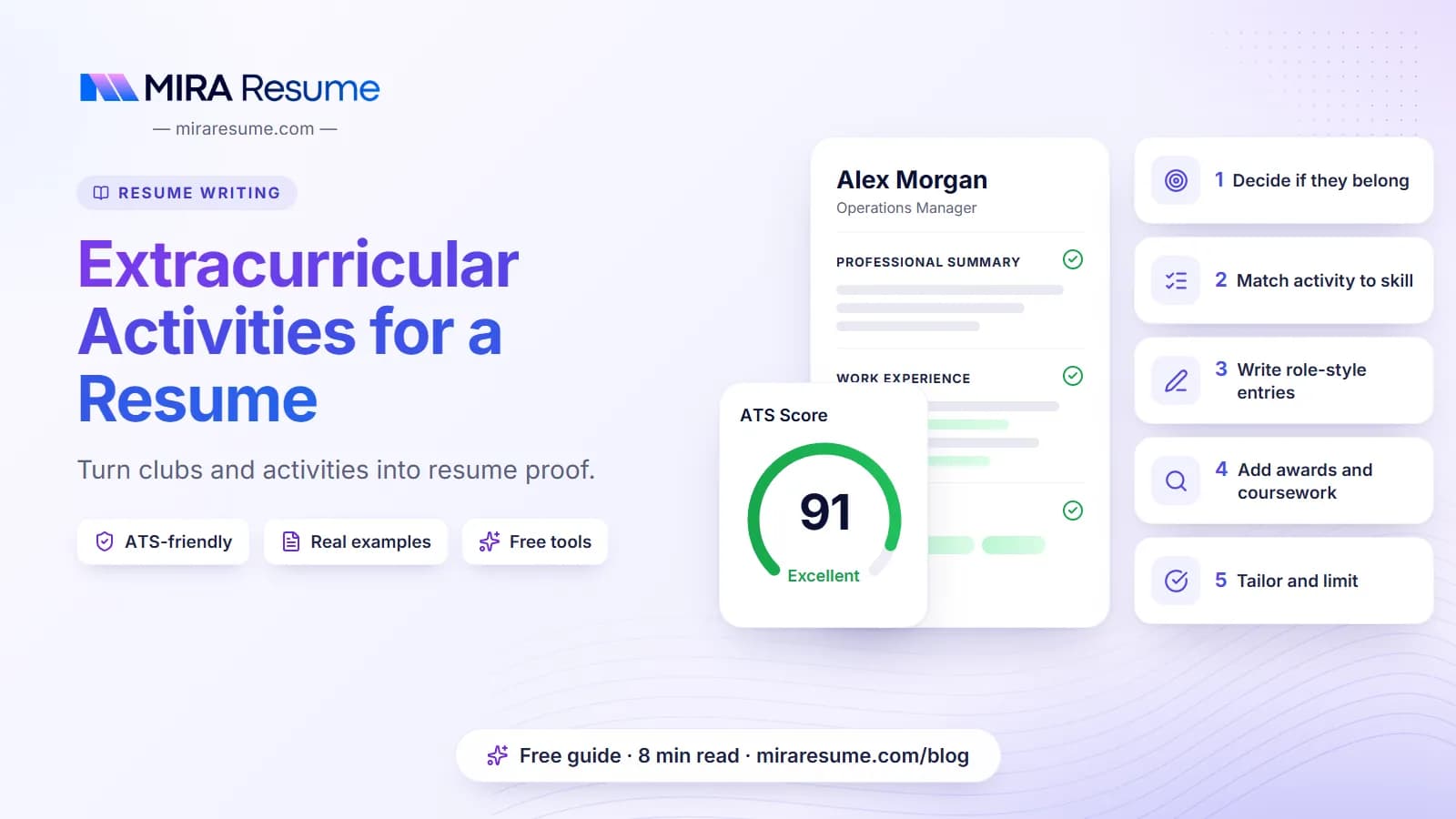

Choosing extracurricular activities for a resume is easier when you ask one question: does this show a skill the employer wants? Clubs, sports, student groups and service projects can prove leadership, teamwork and reliability, especially if you have little paid work. The key is to pick the best few and describe them like real experience.
This guide shows what to include, where to place it, how to word it and how to add awards and relevant coursework without clutter. You will find examples, a table of bullet rewrites and a list of mistakes. All samples use [brackets] for your own true details.
Do extracurricular activities belong on a resume?
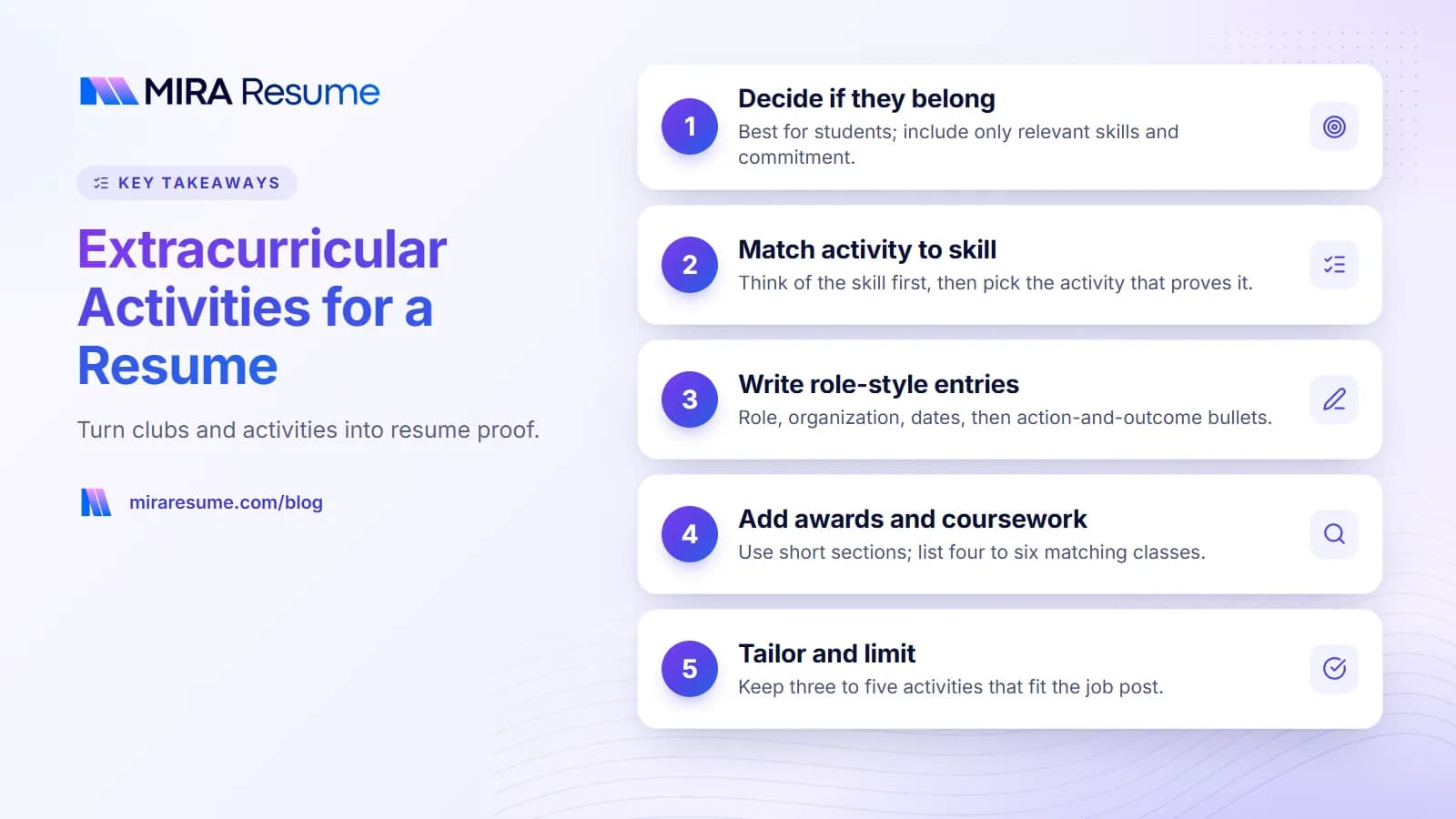
They can, depending on your stage. Students and recent graduates benefit most, since activities show what they can do before they have long job histories. Experienced workers usually drop school clubs and keep only current community work that is relevant.
Include an activity when it:
- Shows a skill that the job needs, such as leadership or organizing events
- Shows a long commitment, for example three seasons on a team
- Gave you a title, a responsibility or a result
- Relates to the field or employer's mission
Leave it off when it is unrelated, very brief or does not give you anything to say. A short, strong list beats a long one with filler. If you are still deciding what else belongs on your page, read things to put on a resume.
Who should use this section
High school students, college students and new graduates will use it most. If you are in high school, see resume for teens and high school on a resume. College students can read student resume examples. Career changers may use volunteer and club work as proof, see how to put volunteer work on a resume.
Extracurricular activities examples by skill
Think about the skill first, then pick the activity. The table shows common activities and what they can prove.
| Activity | Skills it can show | Good for these jobs |
|---|---|---|
| Student government | Leadership, public speaking, budgets | Management, public service, sales |
| Sports team or captain | Teamwork, discipline, time management | Sales, coaching, operations |
| Debate or speech club | Research, persuasion, clear speaking | Law, marketing, communications |
| Coding or robotics club | Problem solving, project work, teamwork | Engineering, IT, data |
| School newspaper or blog | Writing, deadlines, editing | Marketing, media, communications |
| Music, theater or art group | Practice habits, teamwork, creativity | Design, events, education |
| Service clubs | Reliability, community care, organization | Healthcare, nonprofit, customer roles |
| Cultural or language clubs | Language skills, event planning, outreach | Hospitality, global business, education |
Choose two to five items. Give each a role, even a simple one like Member or Volunteer. If you held a title, list it. For deeper skill ideas, see good skills to put on a resume and transferable skills examples.
How to list extracurricular activities on a resume
Use a heading like Activities and Leadership, Campus Involvement or Extracurricular Activities. Then write each item like a short job entry.
[Role], [Organization] | [City or School] | [Year] to [Year]
- [Action verb] [what you did] for [who or how many], resulting in [outcome]
- [Action verb] [second task or skill]
Example
Treasurer, [Business Club] | [University] | [Year] to [Year]
- Managed a budget of [amount you can share] and tracked spending in [tool]
- Planned [number] events with an average of [number] attendees
- Presented a financial summary at [number] club meetings
Where to place the section
| Your situation | Where to put activities |
|---|---|
| Student with little work history | Right after Education, or merged into Experience |
| Recent graduate with a few jobs | After Experience, before Skills |
| Experienced worker | Short line near the end, or leave out |
| Applying to a school or program | Near the top, since activities often matter more |
For a clean layout, see how to format a resume, and for student layouts, see internship resume.
Extracurricular bullet points: before and after
Do not list only the name of the club. Say what you did and what happened. Use real numbers or describe the scope.
| Weak bullet | Stronger bullet |
|---|---|
| Member of the robotics club | Built and tested a [robot or part] with a team of [number], helping us place [result if true] at [event] |
| Played on the soccer team | Played [position] for [number] seasons and balanced [number] hours of practice a week with a full course load |
| Helped with school paper | Wrote [number] articles for the school paper and met weekly deadlines with an editing team of [number] |
| Was in the service club | Organized [number] volunteer events, recruiting about [number] students for each |
| Joined debate team | Researched and presented arguments at [number] tournaments, improving speaking and quick thinking |
Start with action verbs such as organized, led, designed, coached and presented. Our action verbs for resume page has more. Never invent a title, number or award. If you are unsure of a number, use "about" or describe it without one.
Show leadership even without a title
You do not need to be president to show leadership. Training new members, organizing a schedule, solving a problem or keeping a project on track all count. Describe the action and the result.
Awards to put on a resume
Awards add proof that others noticed your work. You can place them in a short Honors and Awards section, or inside the related activity or education entry. Include awards that are recent and relevant, and skip anything that needs a long explanation.
- Academic: Dean's list, scholarships, honor society membership
- Competitions: placing in a contest, science fair or hackathon
- Service: recognition for volunteer hours or leadership
- Work: employee of the month, perfect attendance, team awards
- Athletics or arts: all-conference, first chair, featured performance
How to list an award
[Award name], [Organization] | [Year]
[Optional one-line reason or scope]
Example: "Dean's List, [University], four semesters", or "Regional Science Fair, Second Place, [Year]". If an award name is unclear to outsiders, add a few words of context, such as "top 5% of class" only if it is true and documented. Do not list awards from many years back unless they remain impressive and relevant. For experienced applicants, a short line is enough.
Relevant coursework on a resume
Relevant coursework is useful when you lack work experience in the field. List four to six classes that match the job post. Place them under your degree in the Education section.
[Degree], [Major] | [University] | Expected [Month Year]
Relevant coursework: [Course 1], [Course 2], [Course 3], [Course 4]
Tips for coursework
- Pick classes that match the job post, not your entire schedule.
- Use course titles that readers will understand, such as Financial Accounting instead of a code only.
- Drop the line once you have two or more relevant jobs or internships.
- Turn big class projects into bullets, with a task, tool and result.
For education layout, see how to list education on a resume. If you are applying for graduate programs, see grad school resume. A project from a class can sit in a Projects section with a short description; read student resume examples for an example.
Tailor your activities to the job
Not every activity helps every application. Spend a few minutes matching your list to each post.
- Read the post and mark three skills it asks for.
- Pick the activities that best show those skills.
- Reword the bullets to use similar terms where they are true.
- Put the most relevant item first in the section.
- Drop activities that add nothing for this job.
For example, a customer service post may value a club where you welcomed guests, while a data post may value a club where you tracked results in a spreadsheet. Using the post's words also helps applicant tracking systems. Learn more at resume keywords and how ATS works, and test your file with the ATS checker.
A student activities section you can adapt
Here is a complete example for a second-year college student applying for a marketing internship. It is illustrative, so replace each bracket with your own true details.
Activities and Leadership
Social Media Chair, [Marketing Club] | [University] | [Year] to Present
- Planned and posted [number] updates a month across [platforms], tracking likes and shares in a simple sheet
- Grew event sign-ups from [number] to [number] by testing different post times
Member, [Intramural Volleyball Team] | [Year] to [Year]
- Attended [number] practices a week and helped organize game schedules for [number] players
Volunteer, [Campus Food Pantry] | [Year] to Present
- Sorted and packed food for about [number] students each week
Honors and Awards
Dean's List, [University], [number] semesters
Relevant Coursework
Principles of Marketing, Consumer Behavior, Statistics, Business Writing
Notice that the first entry matches the job directly, so it comes first. The second shows teamwork and reliability. The third shows service. Together they make a student with limited work history look active and dependable.
If you have no clubs at all
Not every student has time for clubs. Jobs, family duties and caring for relatives are real responsibilities. You can show them as work or life experience when they gave you skills, for example "Cared for two younger siblings after school, managing schedules and meals". Use honest, simple wording. See resume with no experience and first job resume for more ideas.
Keep it up to date
Review this section each term. Add new roles, remove items that no longer help and move your strongest item to the top. Our guide on how to update your resume gives a simple routine.
Common mistakes with extracurricular activities
- Listing too many. Choose the best three to five.
- Naming without explaining. Add a role and what you did.
- Including very old items. High school clubs are fine for first-year students, less so for later graduates.
- Exaggerating titles or numbers. Interviewers ask follow-up questions.
- Adding sensitive topics without thought. Include political or religious groups only when relevant and when you choose to.
- Ignoring the job. Pick activities that match the post.
- Cluttered layout. Keep the section short and tidy.
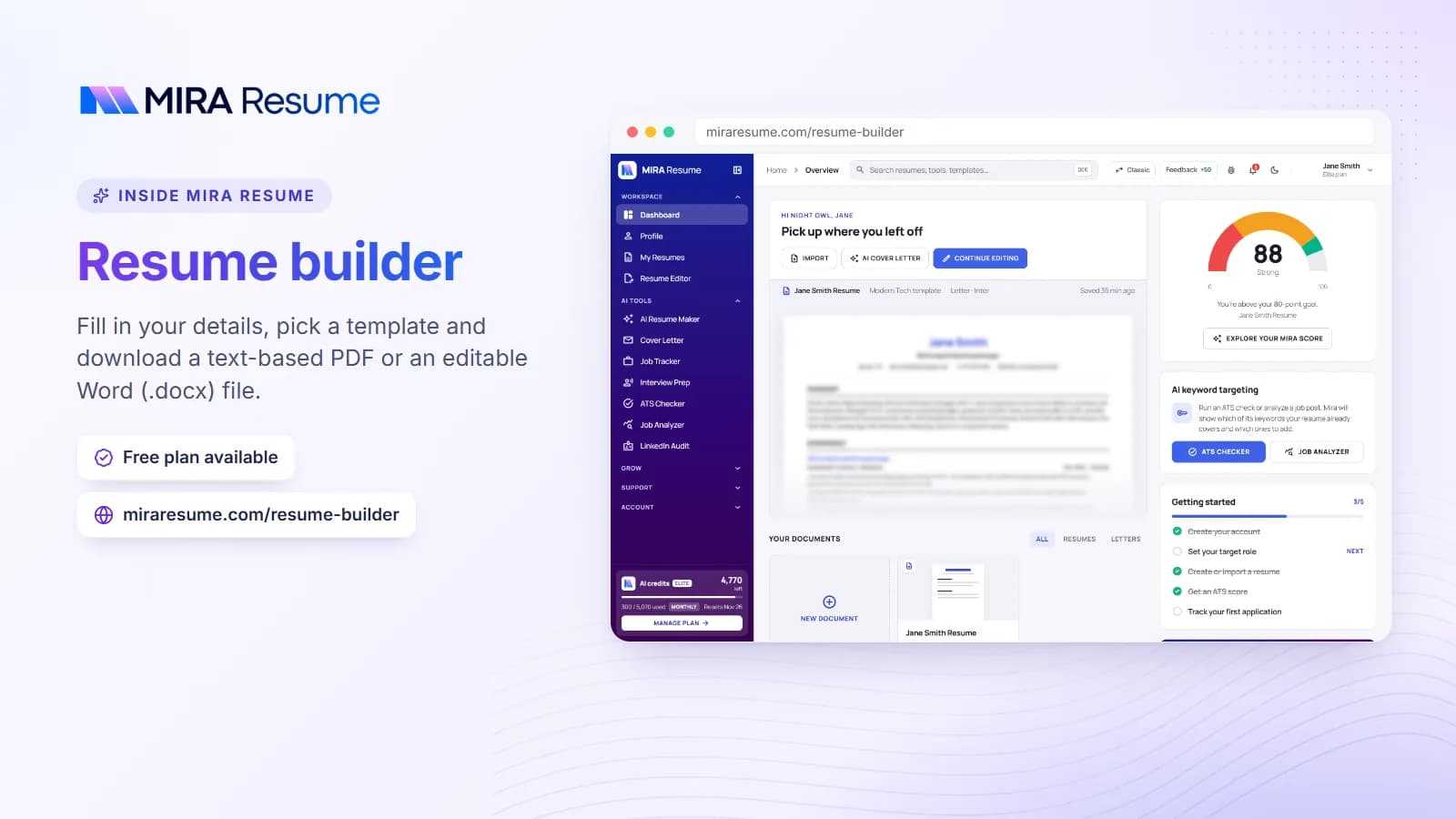
When you are ready to build your page, start in the resume builder or pick a design from resume templates. See more layouts in resume examples, and use the resume checker to catch problems before you send it.