
CV and Resume Formats by Country: What Employers Expect Where You Apply
A resume that works in New York can look wrong in Dubai, and a CV that is normal in Berlin can raise eyebrows in London. Employers in each country have their own habits about length, photos, personal details, page size, date formats and even what the document is called. Getting these details right is a quick way to look like someone who understands the local market, and getting them wrong can make a strong candidate look careless.
The guides in this section cover each market one at a time: North America (the United States and Canada), the UK and Ireland, Europe and Germany, Australia and New Zealand, South Asia (India, Pakistan, Sri Lanka and the Maldives), the Gulf (the UAE and Dubai, Saudi Arabia, Qatar and neighbours), Southeast Asia (Singapore, Malaysia, the Philippines, Indonesia including Bali, Vietnam, Thailand, Cambodia and Laos) and Africa (South Africa, Nigeria and Kenya). Each guide explains what to include, what to leave out, how long the document should be and how to handle visas and references, with a simple section order you can copy.
Conventions change and every employer is different, so treat these guides as a starting point and always follow the job advert first. When you are ready, build the document in the resume builder, pick a clean single-column template and run it through the ATS checker before you apply.
Start here
- 1American Resume Format: How to Write a US Resume (With Template)A US resume is usually one or two pages on US Letter paper, written in American English, with no photo, date of birth or marital status. It focuses on results in recent jobs. International applicants can add a short, honest work authorization line, and federal jobs follow their own rules.
- 2UK CV Format: How to Write a CV for Jobs in the UKA UK CV is usually two sides of A4 with a short personal statement, work history in reverse order, education and key skills. Photos, date of birth and marital status are normally left out. If you need a visa, a brief, honest right to work line helps employers understand your situation.
- 3Canadian Resume Format: How to Write a Resume for Jobs in CanadaA Canadian resume is usually one or two pages, with no photo, date of birth or marital status. It lists recent work first, focuses on results, and often includes a short line about your work status in Canada. In Quebec, many employers work in French, so follow the language of the job post.
- 4Indian Resume Format: Sections, Length and What to Leave OutMost private employers in India now expect a clean one or two page resume on A4, in English, with a short summary, recent experience first, skills, education with CGPA or percentage, and a notice period line. Long biodata-style personal details and the old declaration line are usually unnecessary for private jobs.
- 5CV Format for Gulf Jobs: A Practical Guide for the GCCGulf employers commonly expect a two-page A4 CV in English, with a photo, nationality, visa status, notice period and languages near the top. Keep the layout simple for applicant tracking systems, leave out religion and ID numbers, and treat any request to pay for a job as a warning sign.
- 6Australian Resume Format: Layout, Example and Local TipsAn Australian resume is usually two to three pages, written in Australian English, with newest jobs first, a clear line about your right to work, and a referees section. Photos, age and other personal details are left out. This guide gives the section order, an example, and tips for students and overseas applicants.
Free tools for this topic
All cv formats by country guides
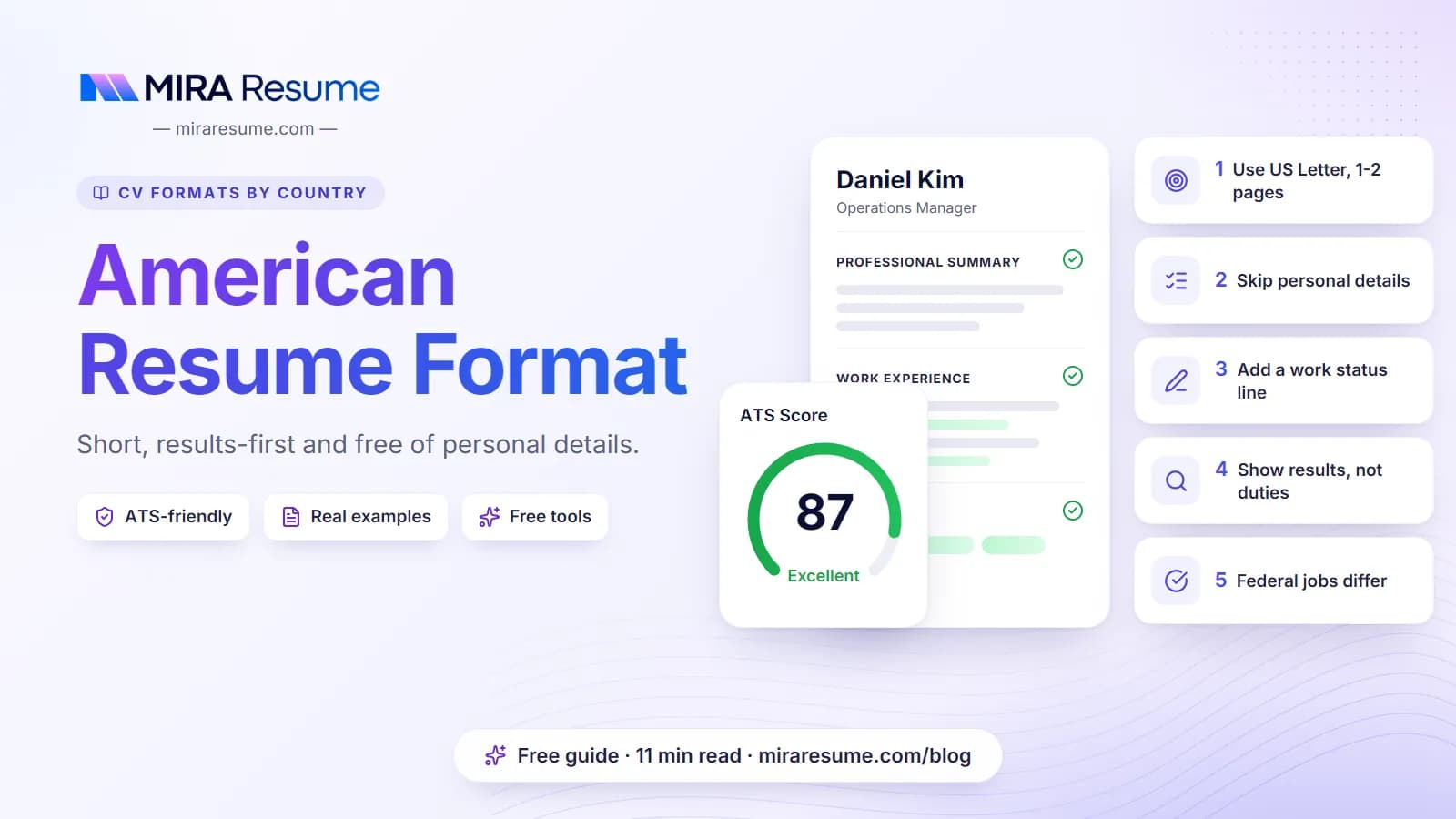
American Resume Format: How to Write a US Resume (With Template)
A US resume is usually one or two pages on US Letter paper, written in American English, with no photo, date of birth or marital status. It focuses on results in recent jobs. International applicants can add a short, honest work authorization line, and federal jobs follow their own rules.
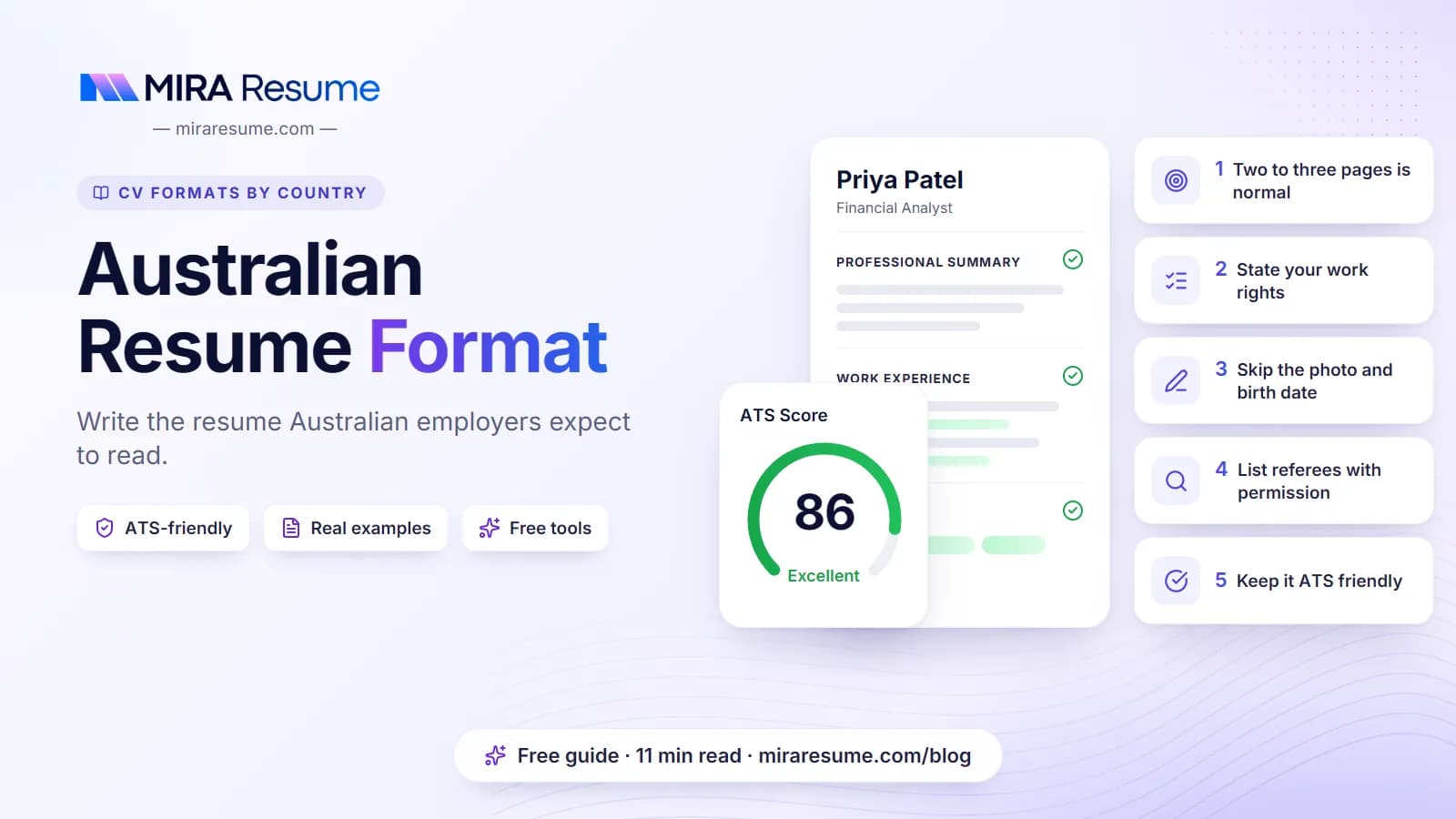
Australian Resume Format: Layout, Example and Local Tips
An Australian resume is usually two to three pages, written in Australian English, with newest jobs first, a clear line about your right to work, and a referees section. Photos, age and other personal details are left out. This guide gives the section order, an example, and tips for students and overseas applicants.
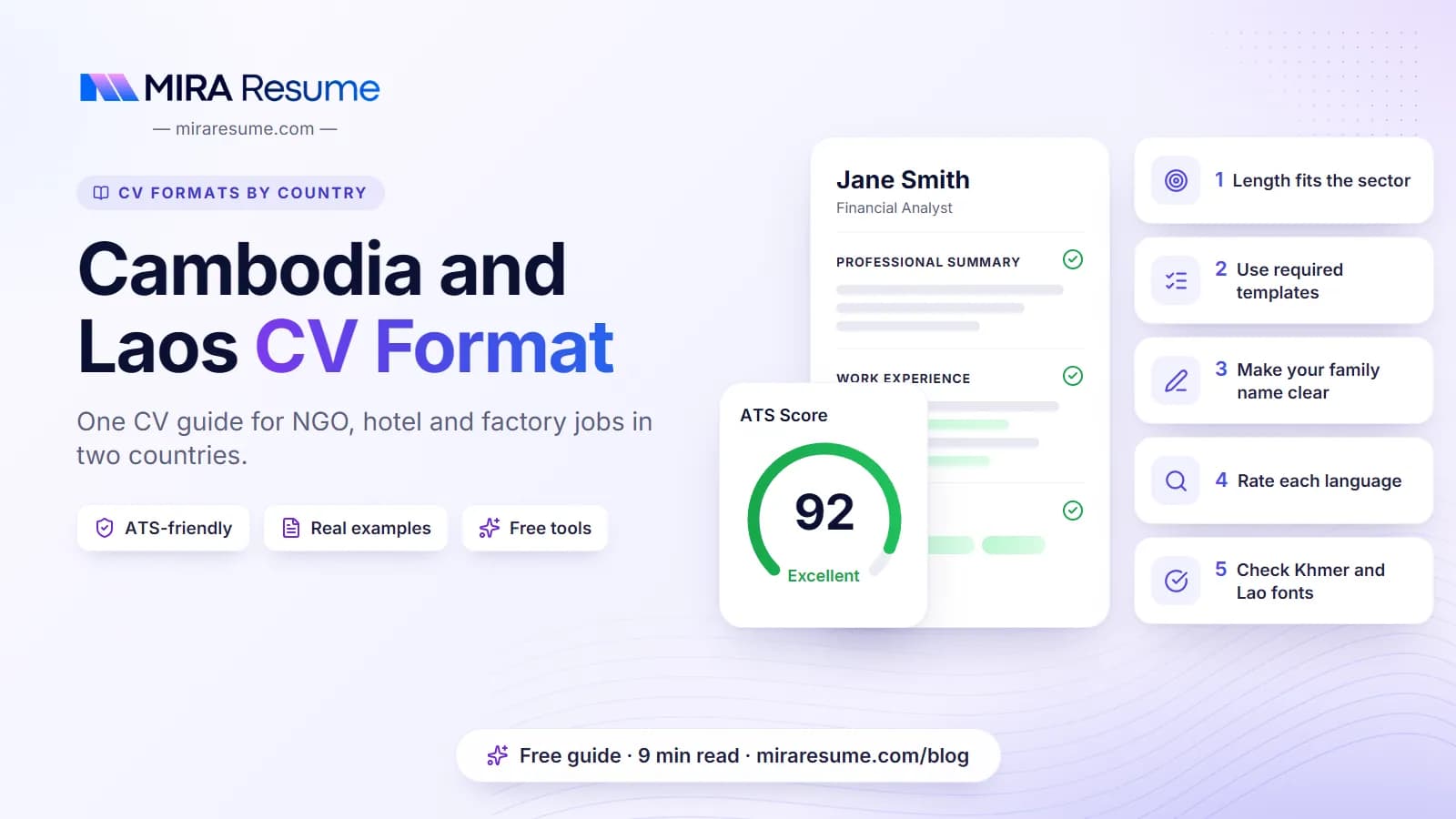
Cambodia and Laos CV Format: How to Write a CV for NGO, Hospitality and Factory Jobs
In Cambodia and Laos, most private employers expect a one or two page A4 CV, often with a photo. NGOs and development projects usually want longer, more detailed CVs, sometimes in a donor's own template. Write in English for international employers and in Khmer or Lao when the job ad is local.
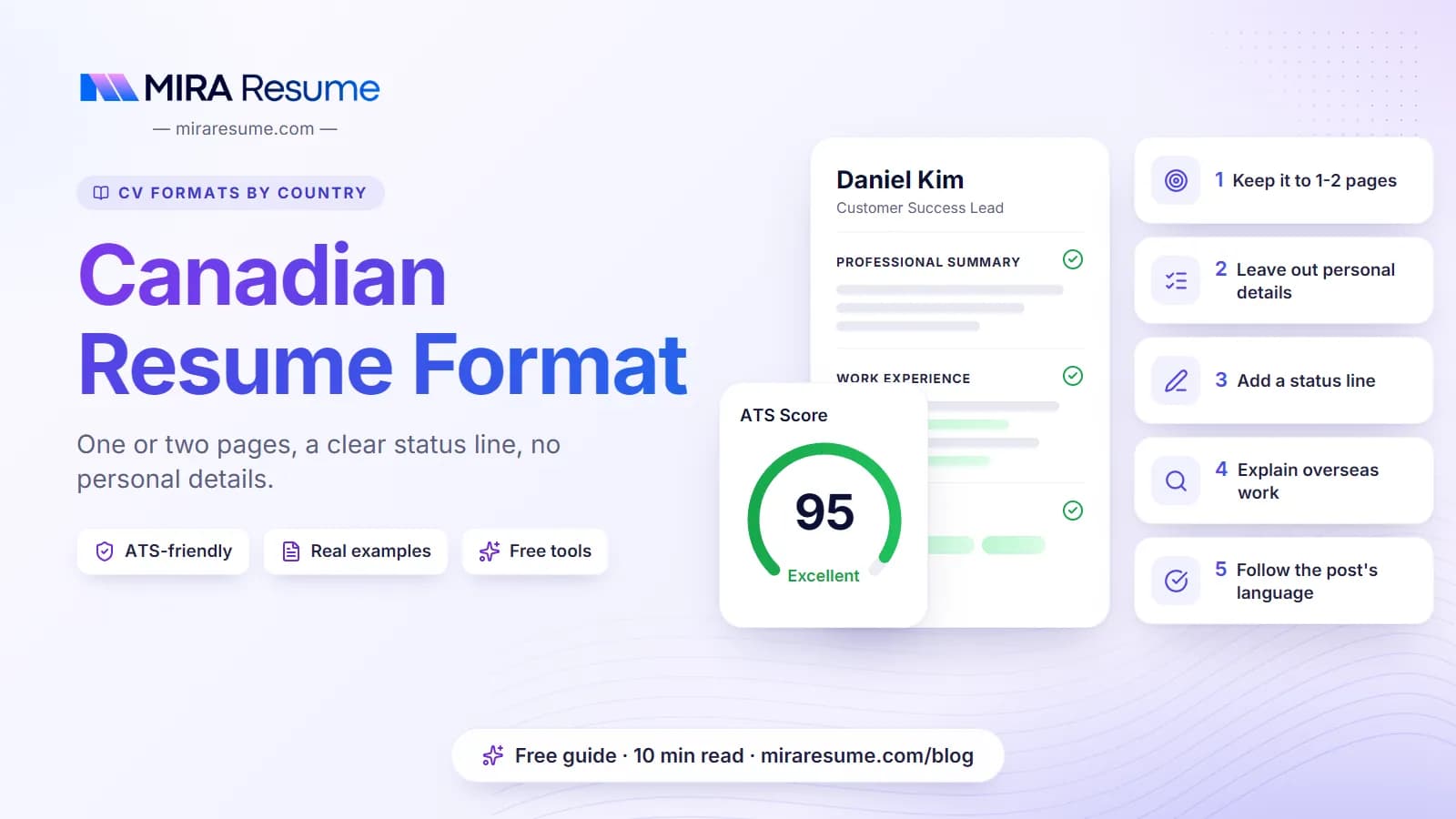
Canadian Resume Format: How to Write a Resume for Jobs in Canada
A Canadian resume is usually one or two pages, with no photo, date of birth or marital status. It lists recent work first, focuses on results, and often includes a short line about your work status in Canada. In Quebec, many employers work in French, so follow the language of the job post.
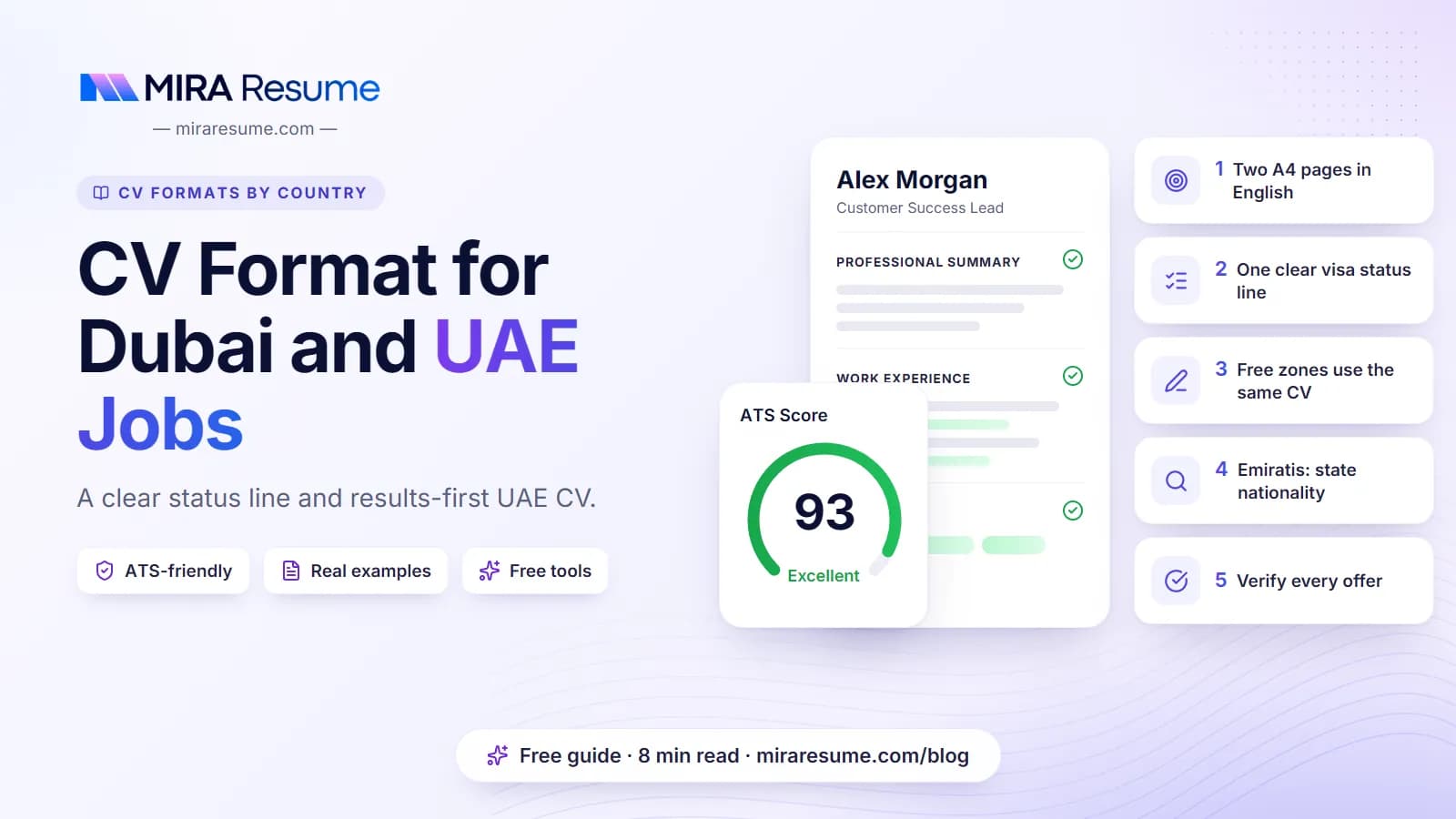
CV Format for Dubai and UAE Jobs: What to Include and How to Lay It Out
A Dubai CV is usually two A4 pages in English, with a professional photo, nationality, UAE visa status and notice period near the top. Write one clear status line, show results in each job, keep the layout ATS-friendly, and never pay anyone for a job offer.
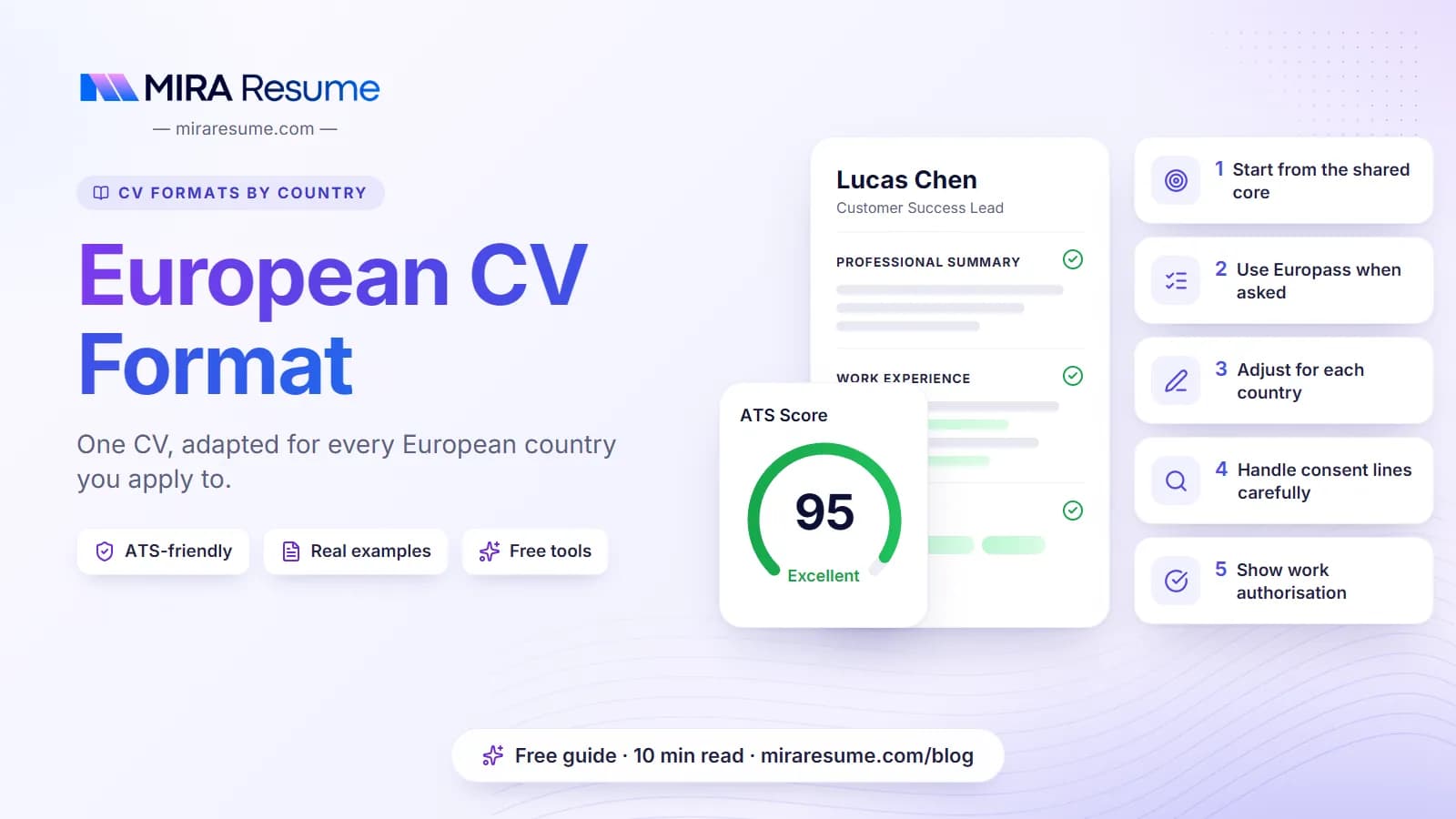
European CV Format: What Changes From Country to Country
There is no single CV format for all of Europe, but most countries share the basics: A4, newest jobs first, one to two pages and CEFR language levels. Photos and personal details are usually optional, Europass is one option rather than a rule, and some countries add a data-consent line. This guide compares the main differences.
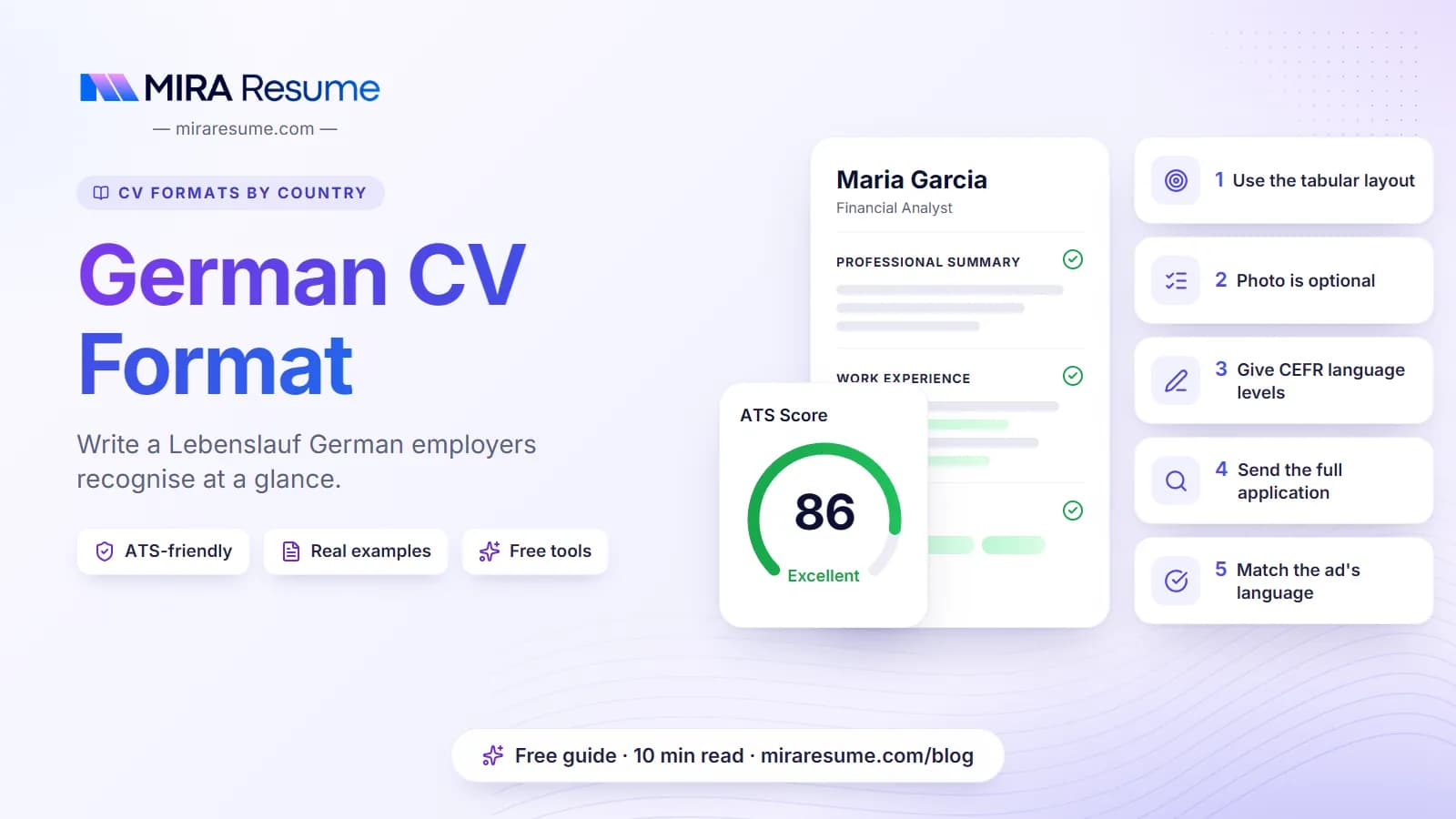
German CV Format: How to Write a Lebenslauf (With Example)
A German CV, or Lebenslauf, is usually a one to two page tabular document on A4, with dates in a left column and newest entries first. A photo and personal details such as date of birth are optional, not required. It is normally sent with a cover letter (Anschreiben) and certificates (Zeugnisse).
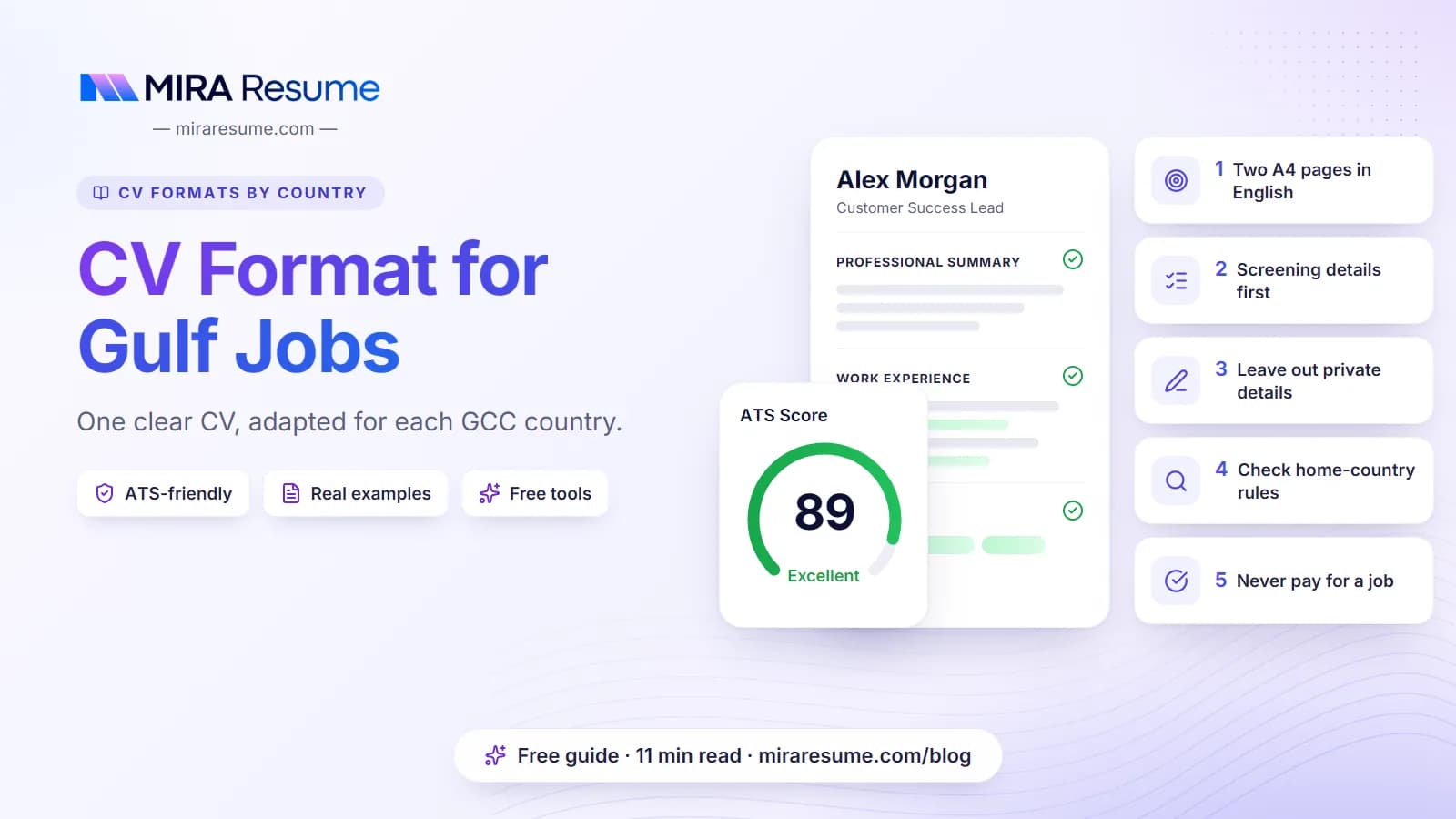
CV Format for Gulf Jobs: A Practical Guide for the GCC
Gulf employers commonly expect a two-page A4 CV in English, with a photo, nationality, visa status, notice period and languages near the top. Keep the layout simple for applicant tracking systems, leave out religion and ID numbers, and treat any request to pay for a job as a warning sign.
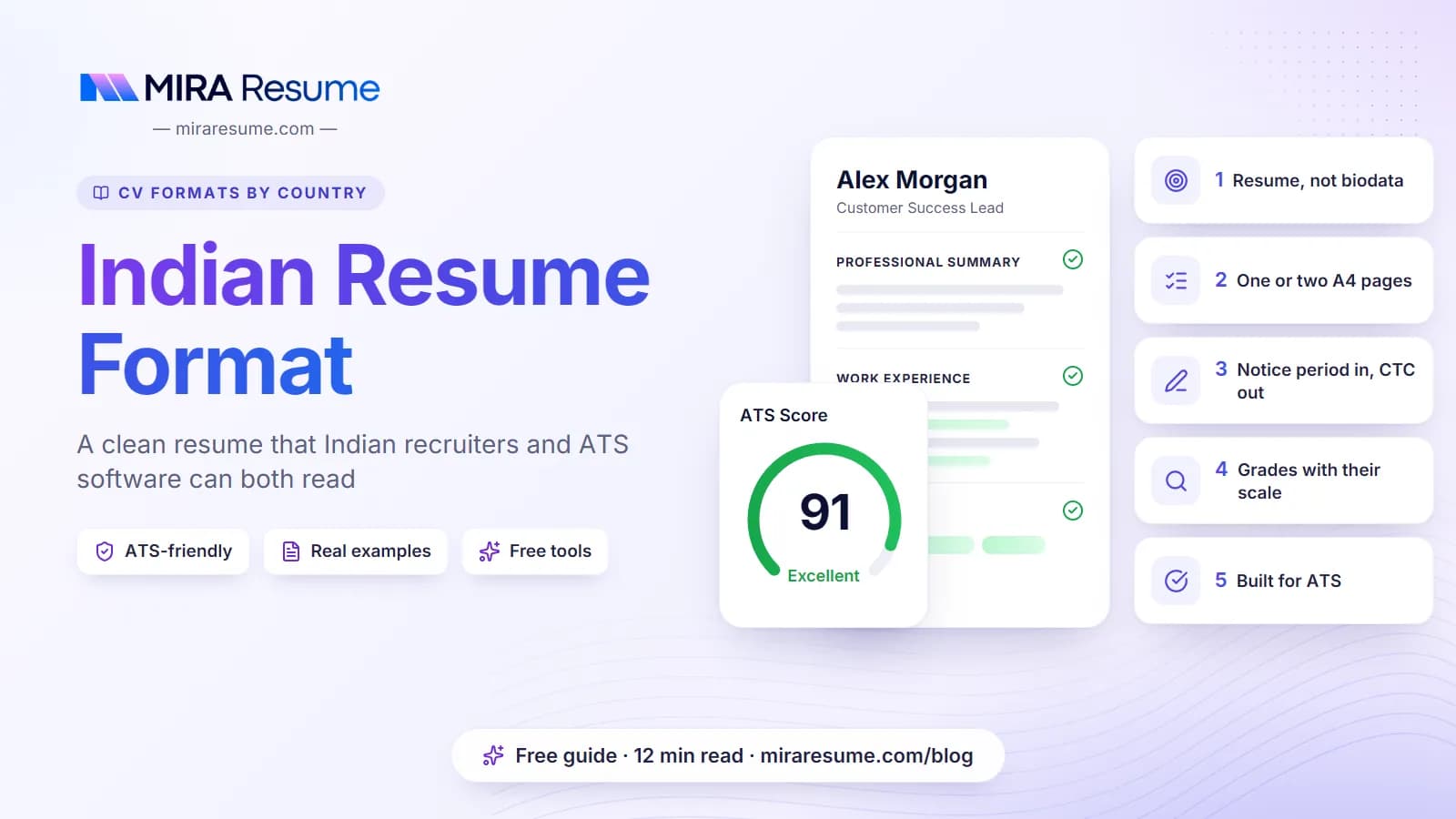
Indian Resume Format: Sections, Length and What to Leave Out
Most private employers in India now expect a clean one or two page resume on A4, in English, with a short summary, recent experience first, skills, education with CGPA or percentage, and a notice period line. Long biodata-style personal details and the old declaration line are usually unnecessary for private jobs.
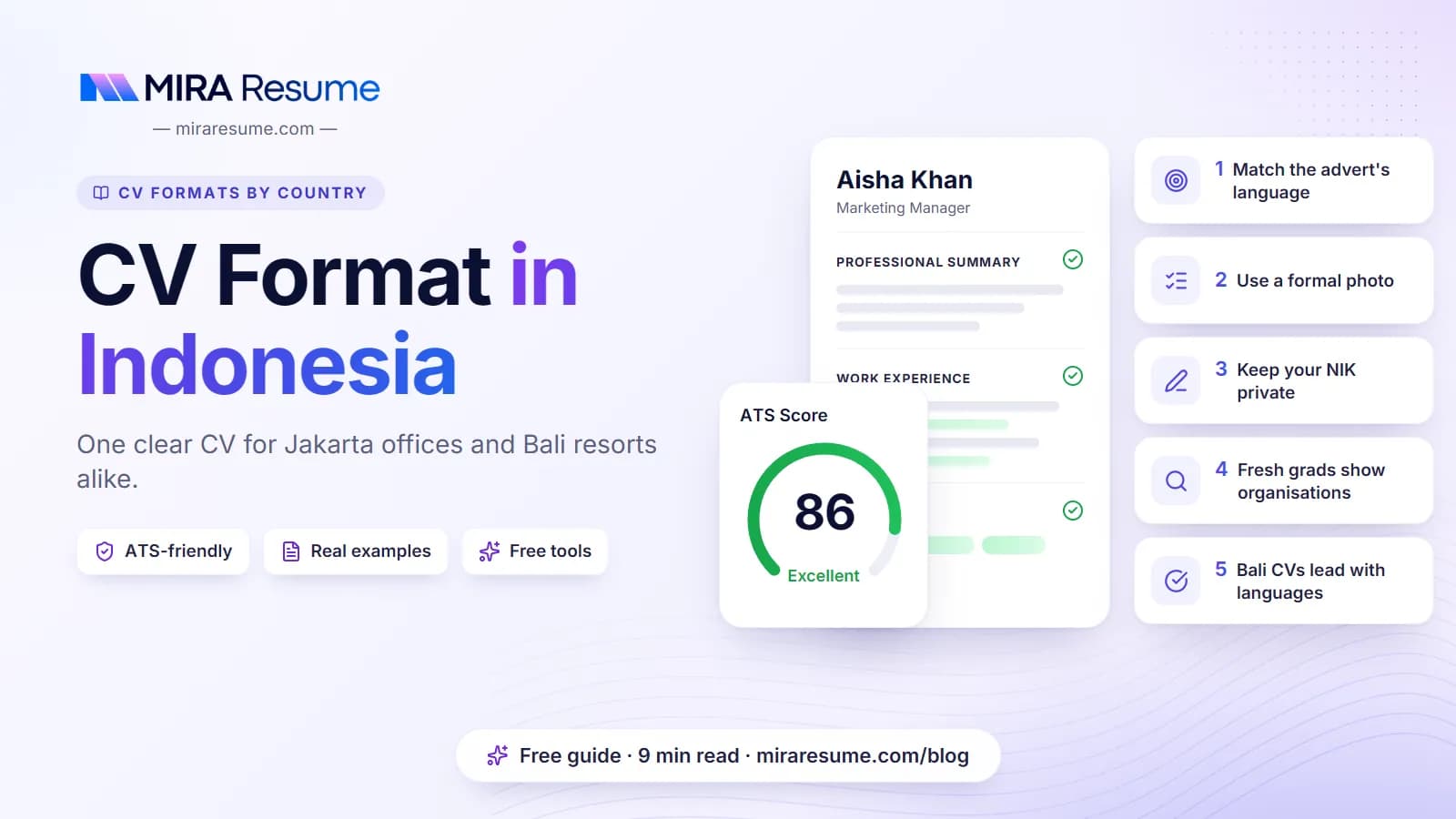
CV Format in Indonesia: Layout, Example and Tips for Bali Hospitality Jobs
An Indonesian CV is usually one to two A4 pages in Bahasa Indonesia or English, matching the language of the job advert, and a professional photo is common. Keep your NIK off the page and leave out religion and marital status unless asked. For Bali hospitality jobs, lead with languages, property experience and certificates.
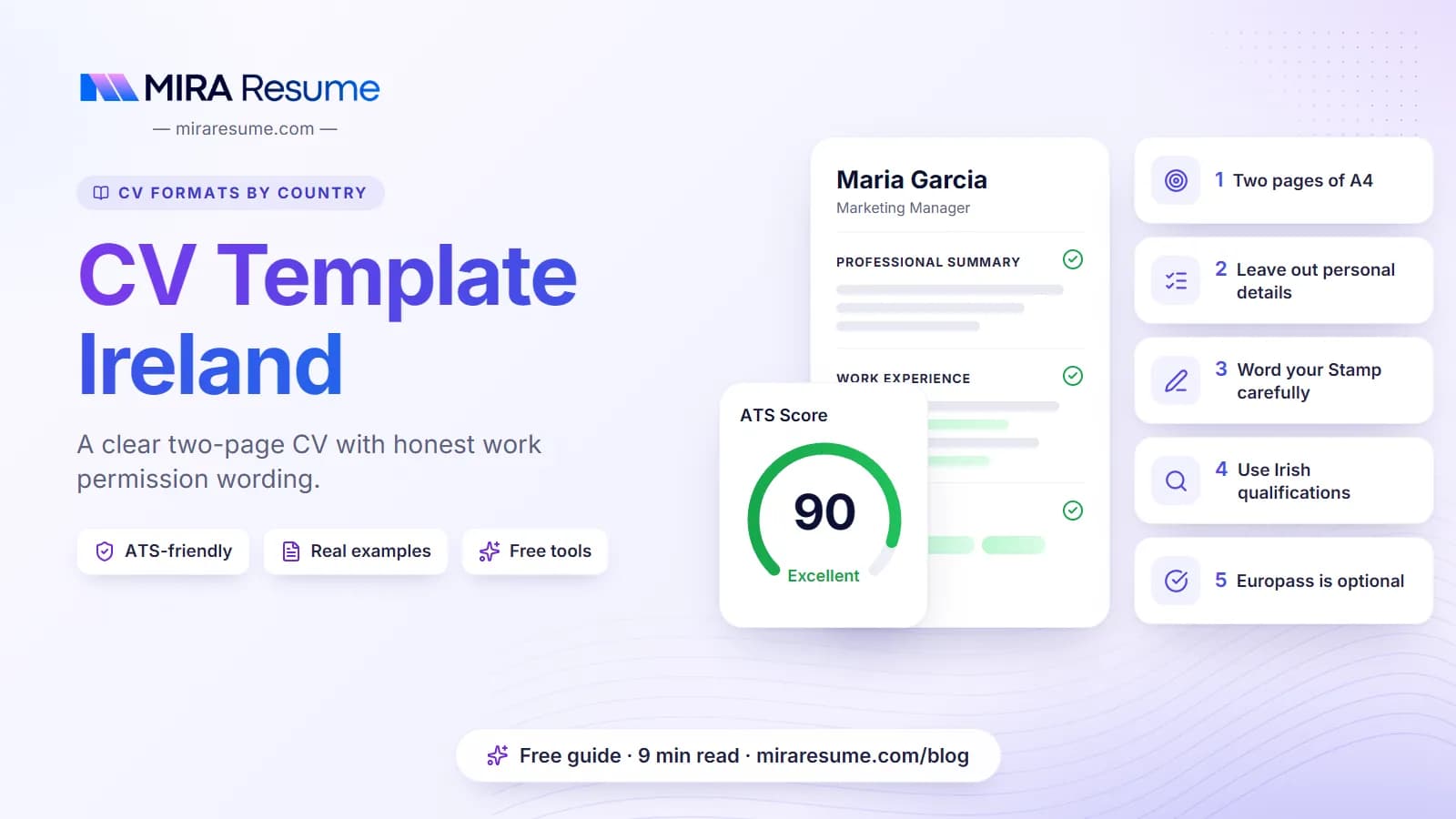
CV Template Ireland: How to Write a CV for Jobs in Ireland
An Irish CV is usually two pages of A4 with a short profile, work history in reverse order, education and key skills. Photos, date of birth and marital status are normally left out. If you are not an EU, EEA, Swiss or UK citizen, a short, accurate line about your immigration permission helps employers.
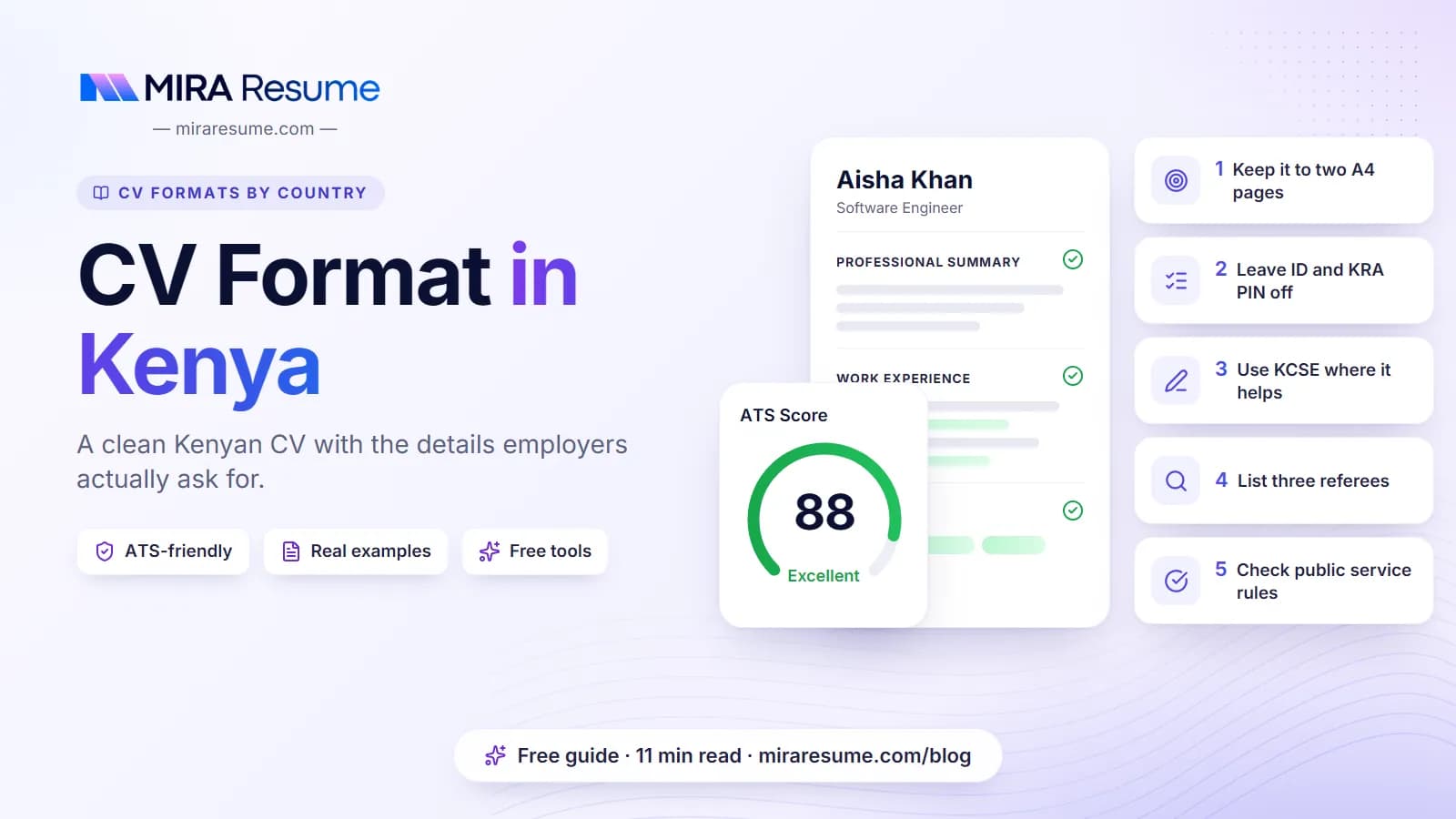
CV Format in Kenya: Layout, Sample CV and What Employers Expect
Most Kenyan employers expect a two-page A4 CV in English with contact details, a short profile, work history, education with degree class and three referees. Keep your ID number, KRA PIN and date of birth off the CV unless asked, and check public service adverts for clearance documents.
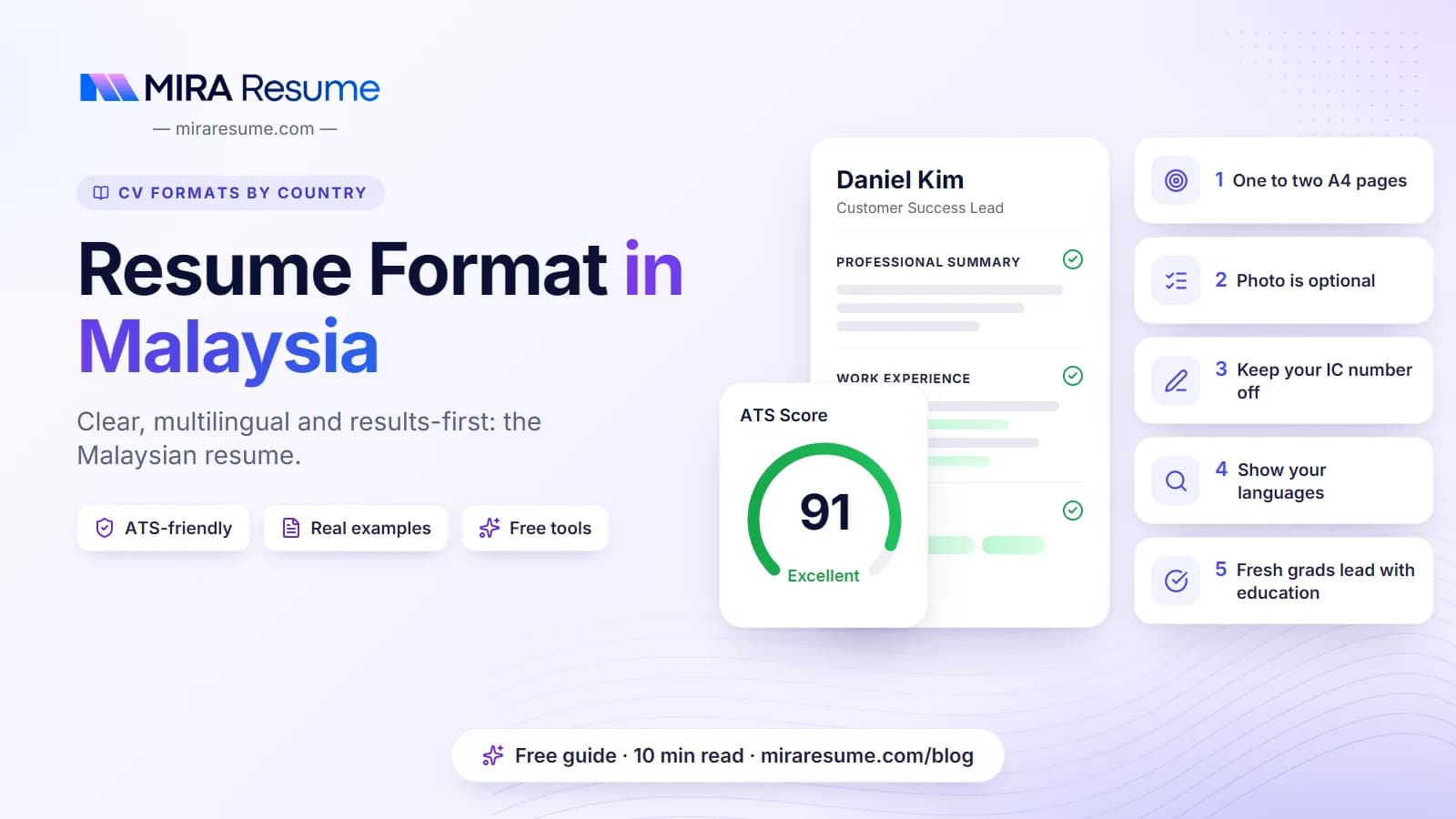
Resume Format in Malaysia: Template, Examples and What Employers Expect
A Malaysian resume is usually one to two A4 pages in English, with a short summary, results-focused experience and a clear languages section. A professional photo is common but optional. Keep your IC number off the page, and state your expected salary and notice period when asked.
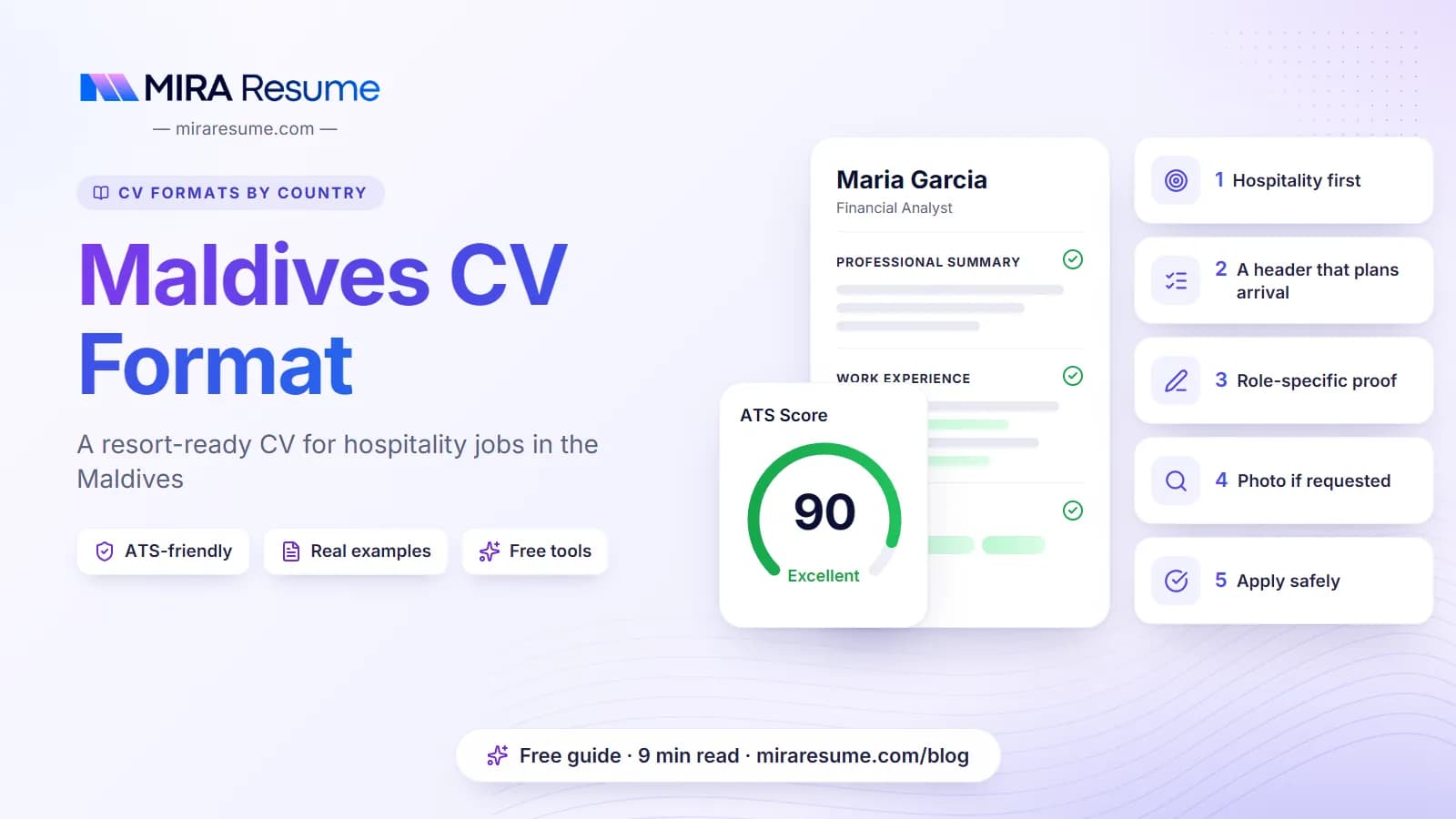
Maldives CV Format: A Practical Guide to Resort and Hospitality CVs
Most jobs in the Maldives are in resorts and hospitality, so a strong CV is one or two A4 pages in English that leads with guest-facing experience, service standards, languages and certifications. A professional photo is often requested. Expatriate applicants should state their nationality and availability, and let the employer handle the work permit process.
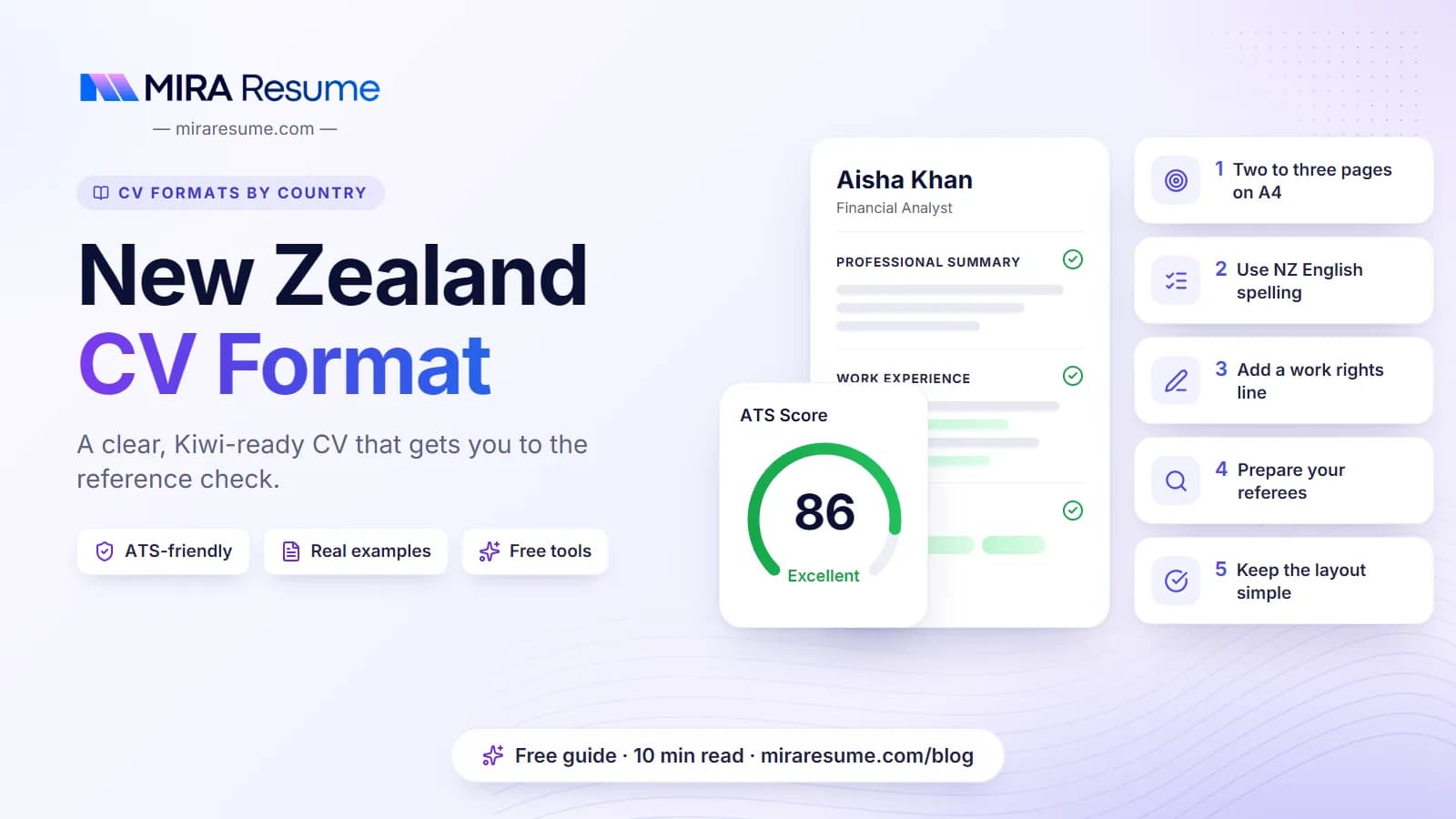
New Zealand CV Format: Template, Example and Local Tips
A New Zealand CV is usually two to three pages on A4, written in New Zealand English, with your newest job first, a short line about your work rights and a list of referees. Photos, age and other personal details are left out. This guide covers the section order, an example and tips for students and overseas applicants.
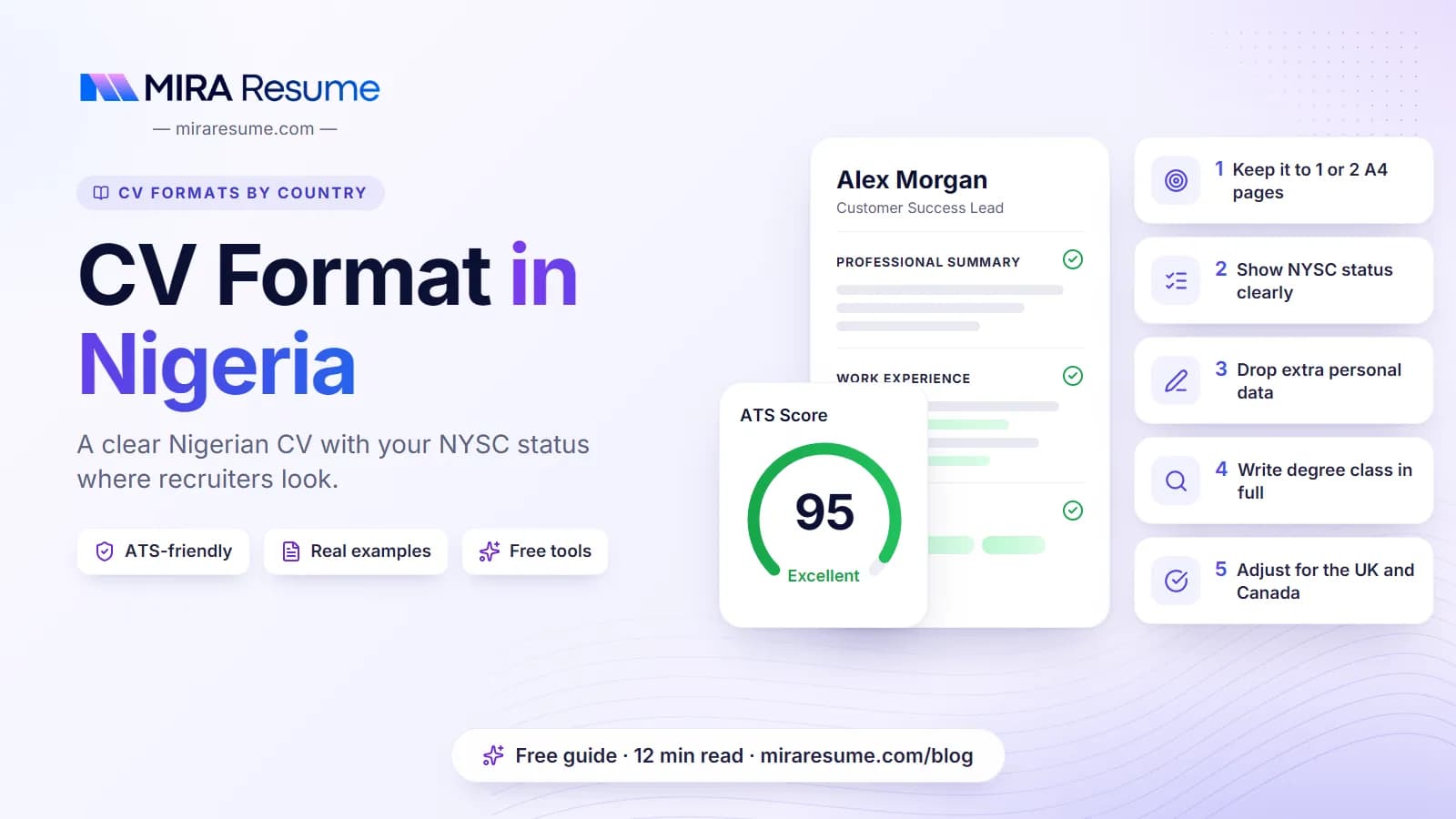
CV Format in Nigeria: How to Write a CV Nigerian Employers Want to Read
A strong Nigerian CV is one or two A4 pages with your contact details, a short summary, work experience, education with degree class, and your NYSC status. Leave out date of birth, state of origin and religion unless an employer asks, and list referees or say they are available on request.
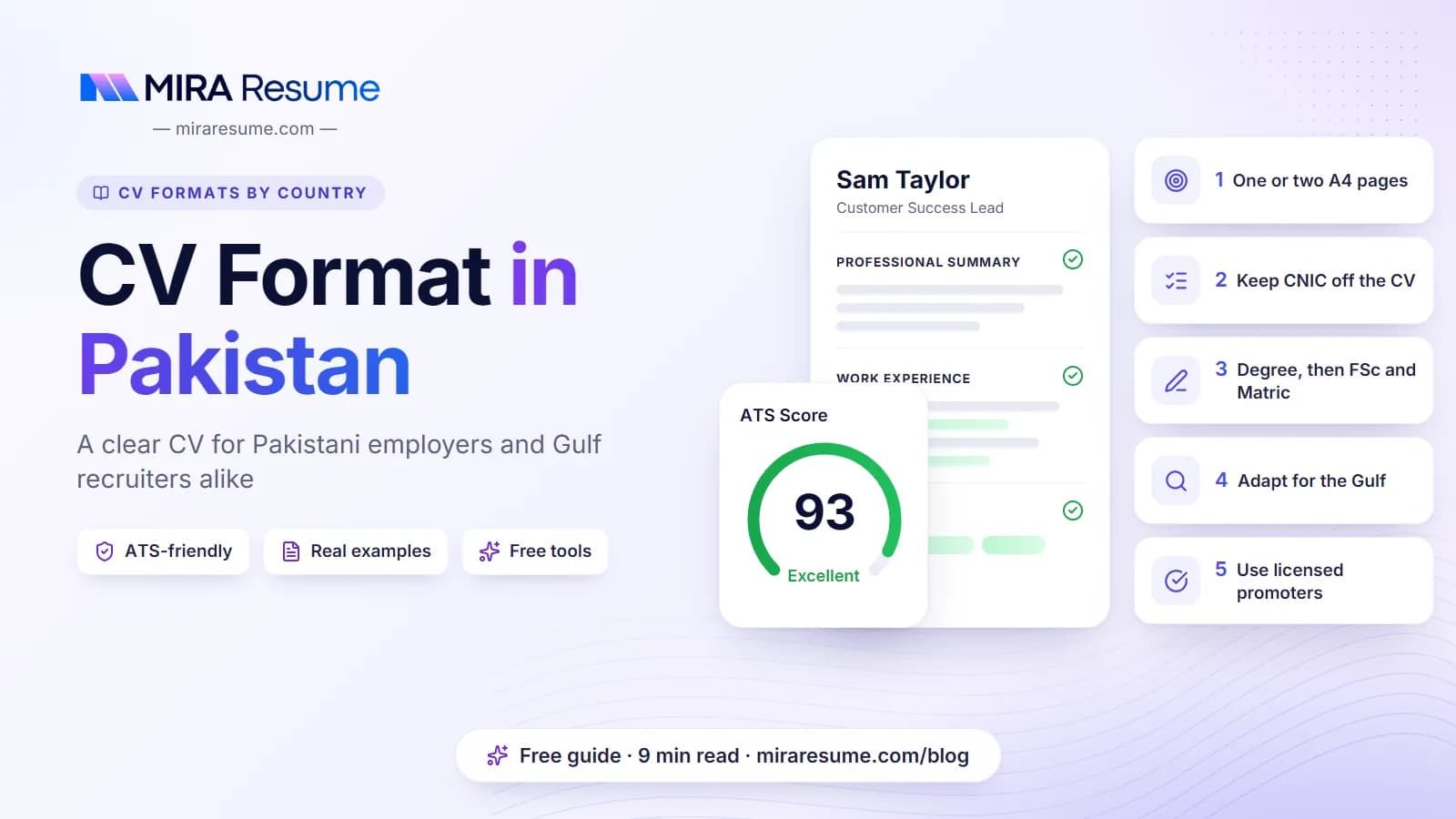
CV Format in Pakistan: How to Write a CV for Local and Overseas Jobs
In Pakistan, a CV for private-sector jobs is usually one to two A4 pages in English, with a short profile, recent experience first, skills and education from your degree back to Intermediate and Matric. A photo is common but optional; keep your CNIC number off the CV and add nationality, passport and visa details only for overseas applications.
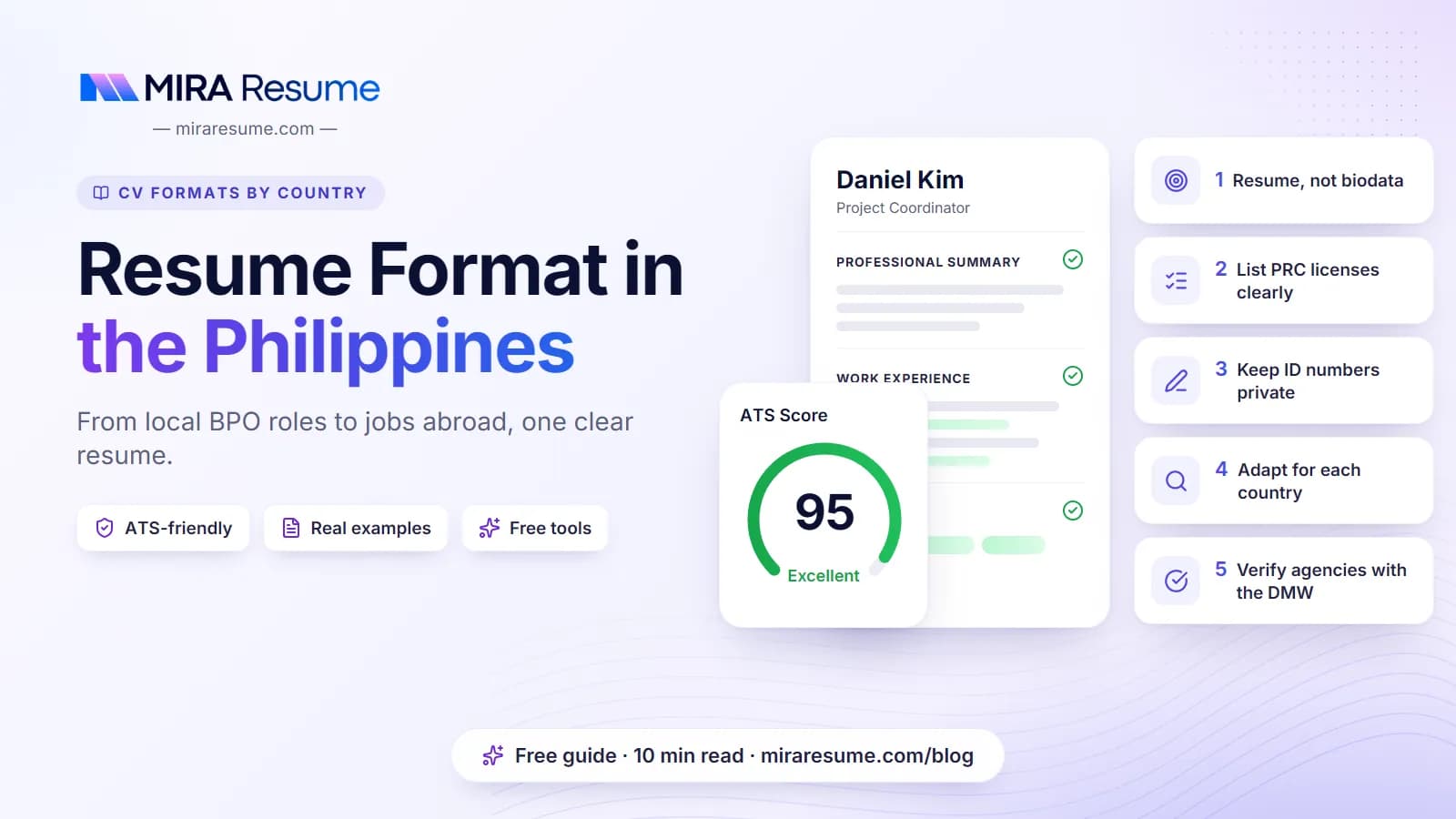
Resume Format in the Philippines: Local Jobs, Biodata and Applying Abroad
A modern Philippine resume is one to two pages that lead with skills, results and licenses, with only the personal details the job needs. A biodata is a separate fill-in form some employers and agencies still request. For jobs abroad, follow the destination country's norms and use DMW-licensed agencies.
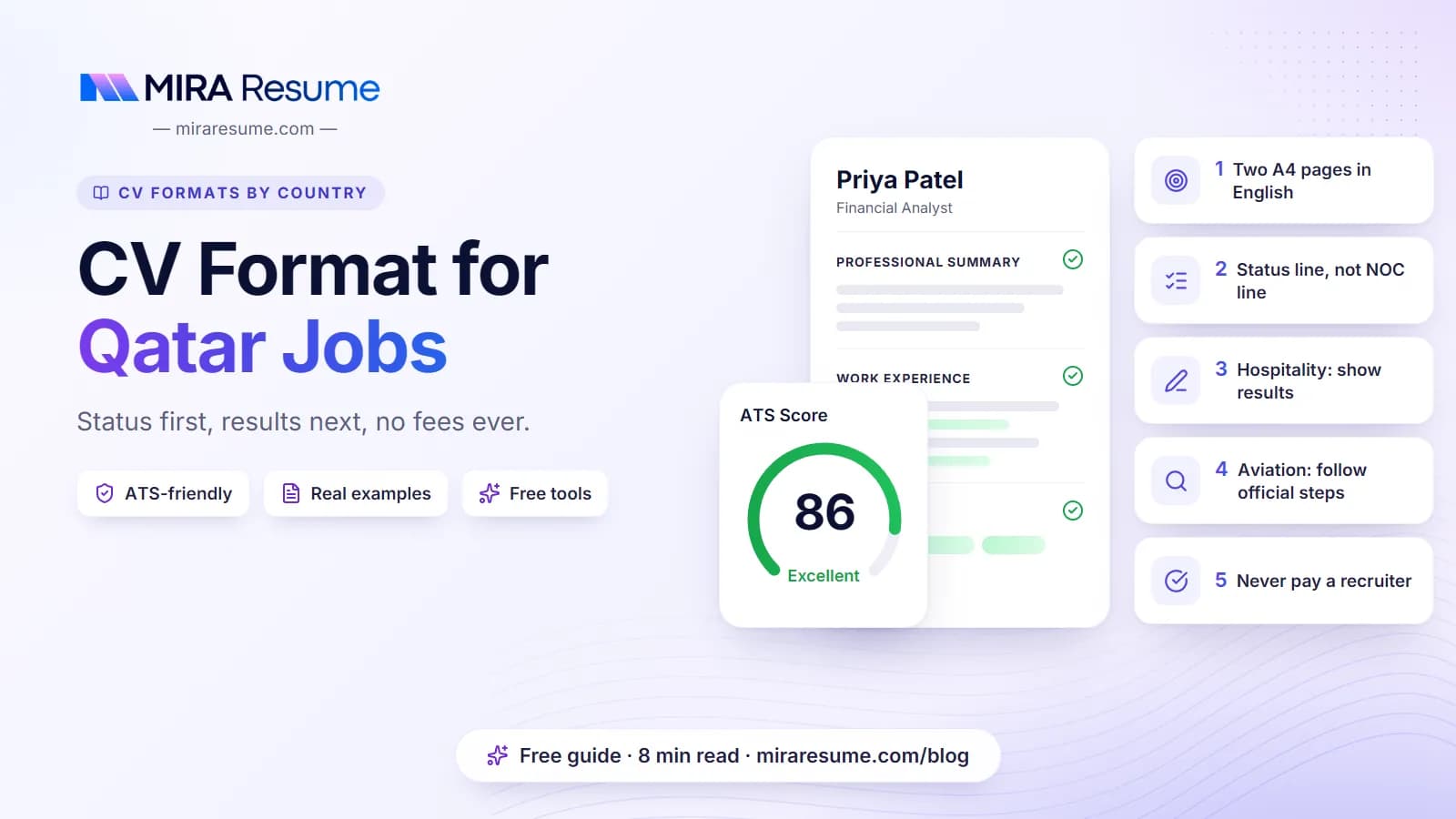
CV Format for Qatar Jobs: Template, Tips and a Sample CV
Qatar employers commonly expect a two-page A4 CV in English with a professional photo, nationality, current location, status and notice period near the top. Show results in every role, list languages and certifications, keep the layout ATS-friendly, and never pay a fee to secure a job.
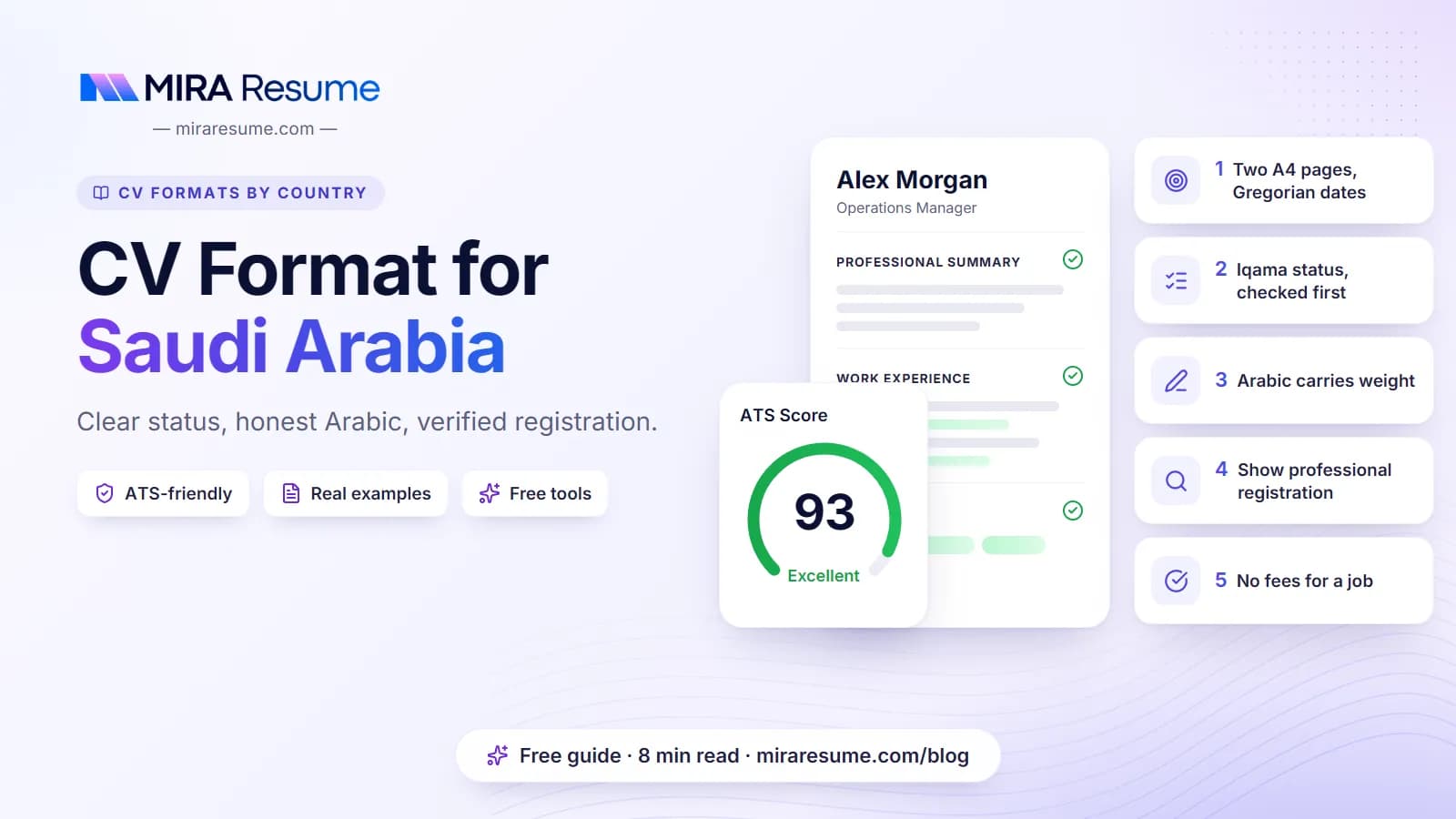
CV Format for Saudi Arabia: How to Write a CV for KSA Jobs
Saudi employers commonly expect a two-page A4 CV in English, with a photo, nationality, location, notice period and, for people already in the Kingdom, Iqama status near the top. Arabic skills, Saudi or GCC experience and recognised professional registration all help. Check official sources before describing your Iqama as transferable.
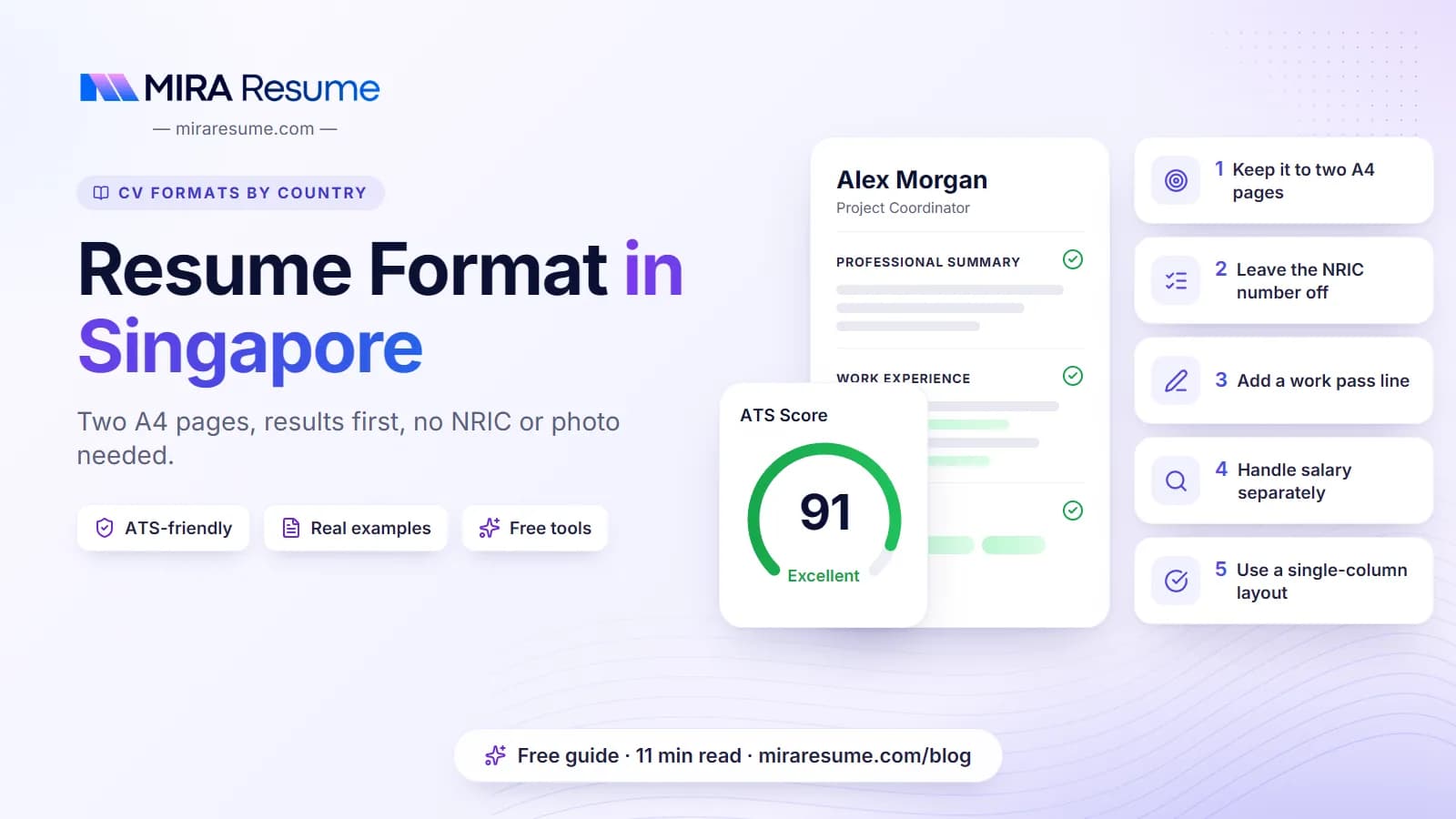
Resume Format in Singapore: What to Include, What to Leave Out, and a Sample
A Singapore resume is usually one to two A4 pages in English, focused on results rather than personal details. Leave out your NRIC number, photo, date of birth, race and religion. Add a plain work pass line if you are not a citizen or PR, and handle salary in the form or email.
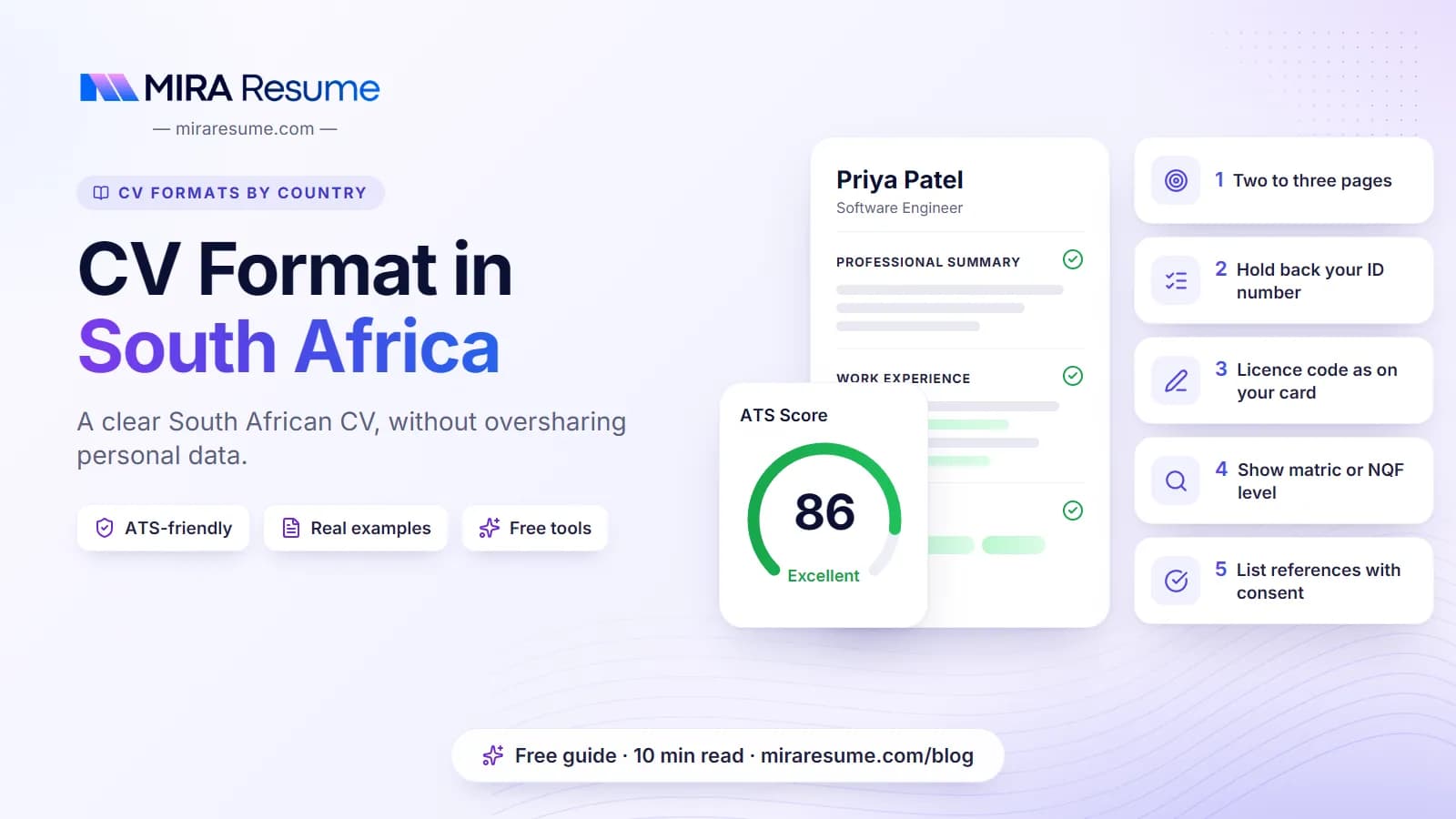
CV Format in South Africa: How to Write a CV Employers Expect
South African CVs are usually two to three A4 pages, in British English, with contact details, a short profile, work experience, education, skills, languages, driver's licence and references. Share your ID number only when an employer needs it, and treat employment equity details as your choice unless an application form asks.
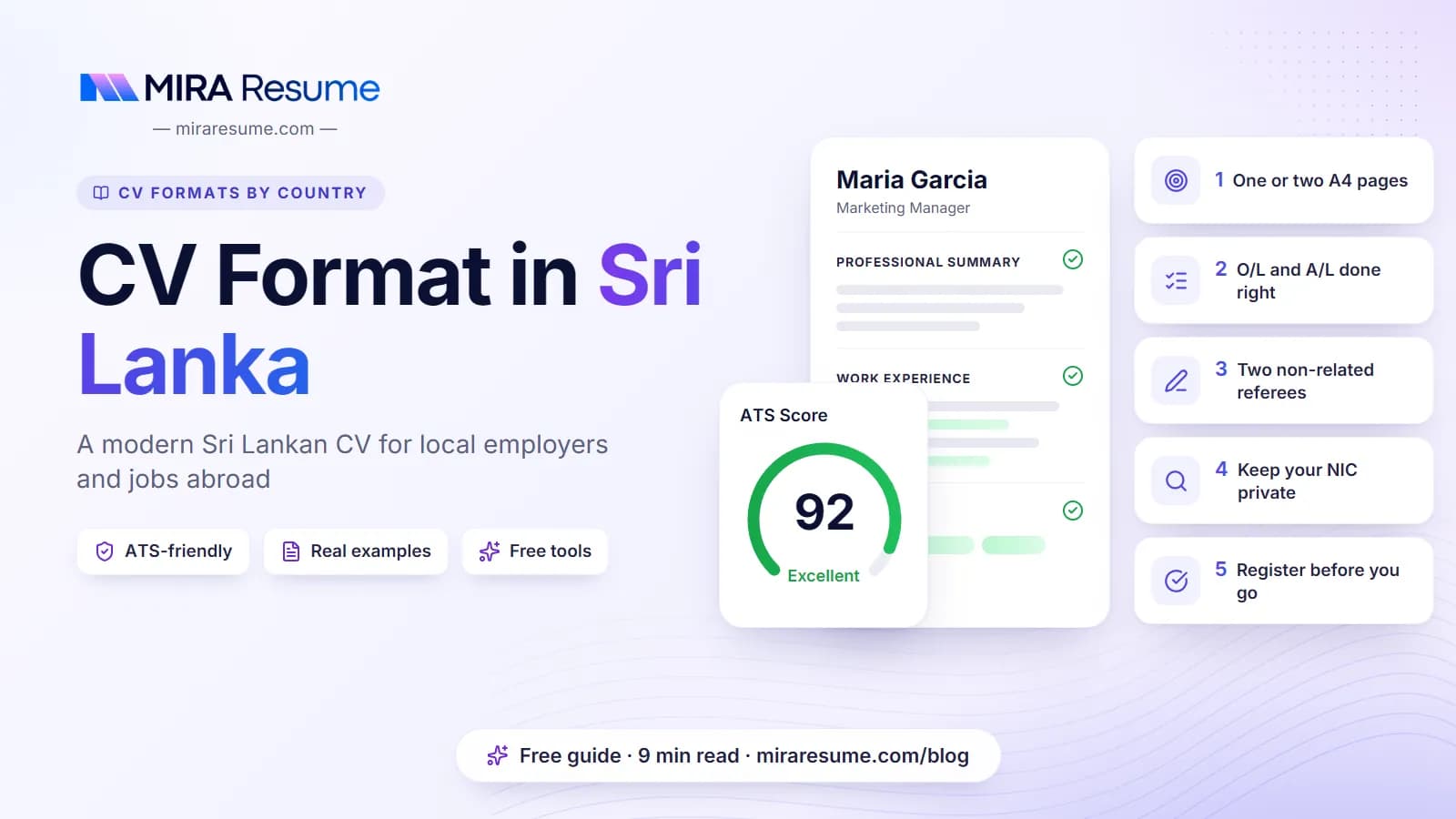
CV Format in Sri Lanka: How to Write a CV for Local and Foreign Jobs
A Sri Lankan CV is usually two A4 pages in English, with a short profile, experience, education including your degree and G.C.E. A/L and O/L results, professional qualifications and, very often, two non-related referees. A photo is common but optional; keep your NIC number for official forms.
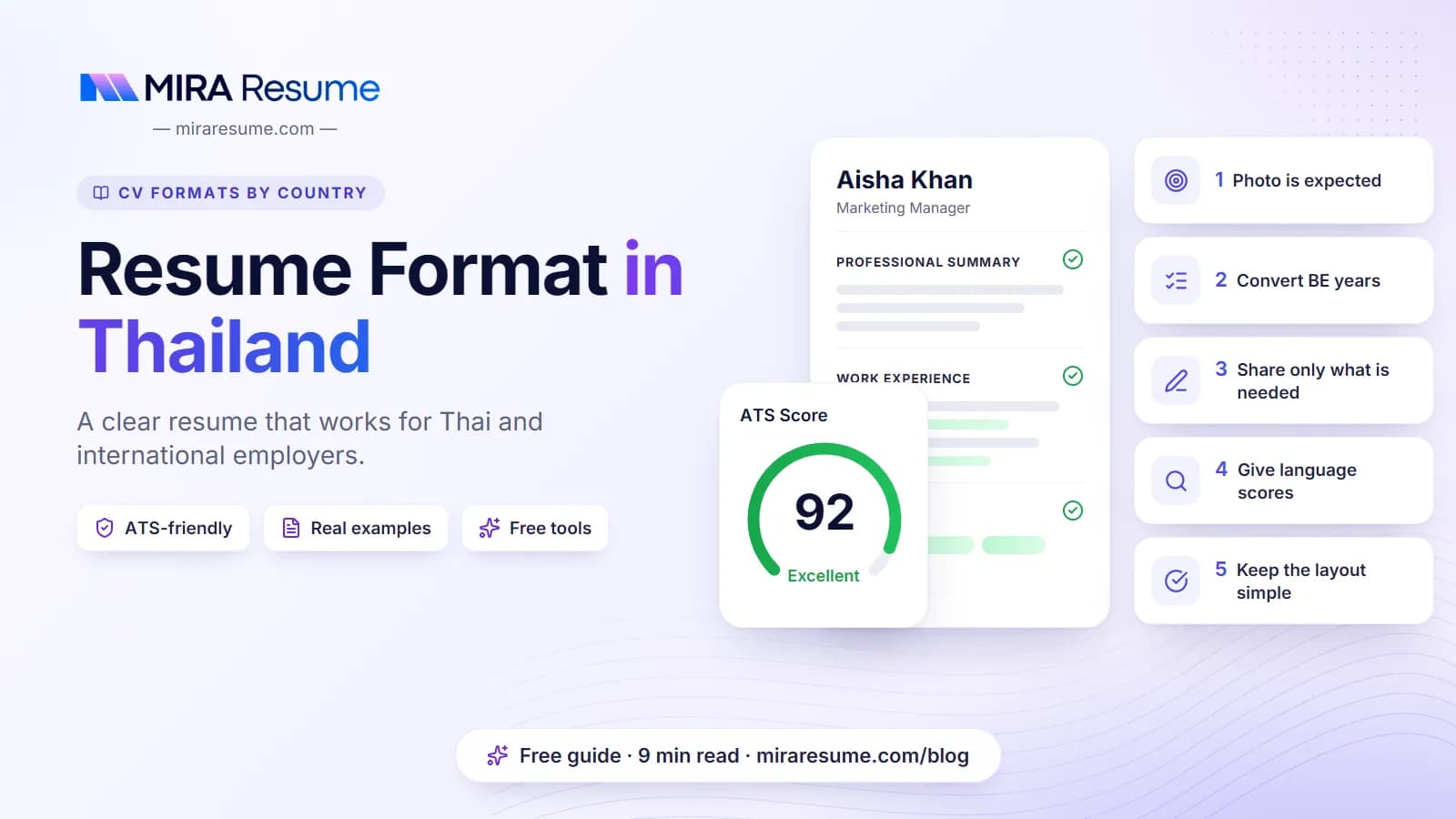
Resume Format in Thailand: How to Write a Thai or English Resume
Employers in Thailand usually expect a one or two page A4 resume with a photo, clear contact details, work experience, education, skills and language scores. Send it in the language of the job ad. Keep your ID number, religion and other sensitive details off it unless an official form asks.
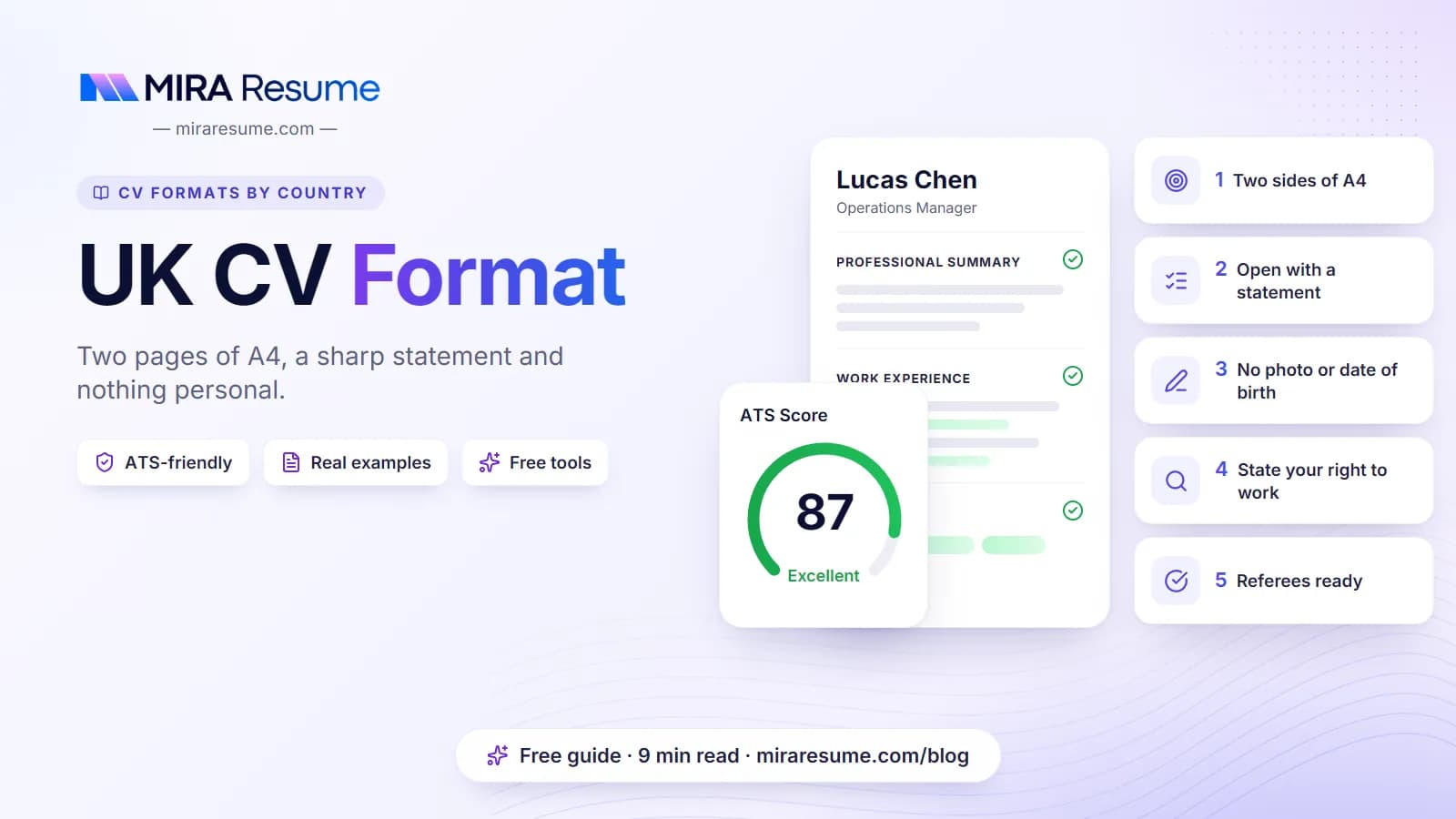
UK CV Format: How to Write a CV for Jobs in the UK
A UK CV is usually two sides of A4 with a short personal statement, work history in reverse order, education and key skills. Photos, date of birth and marital status are normally left out. If you need a visa, a brief, honest right to work line helps employers understand your situation.
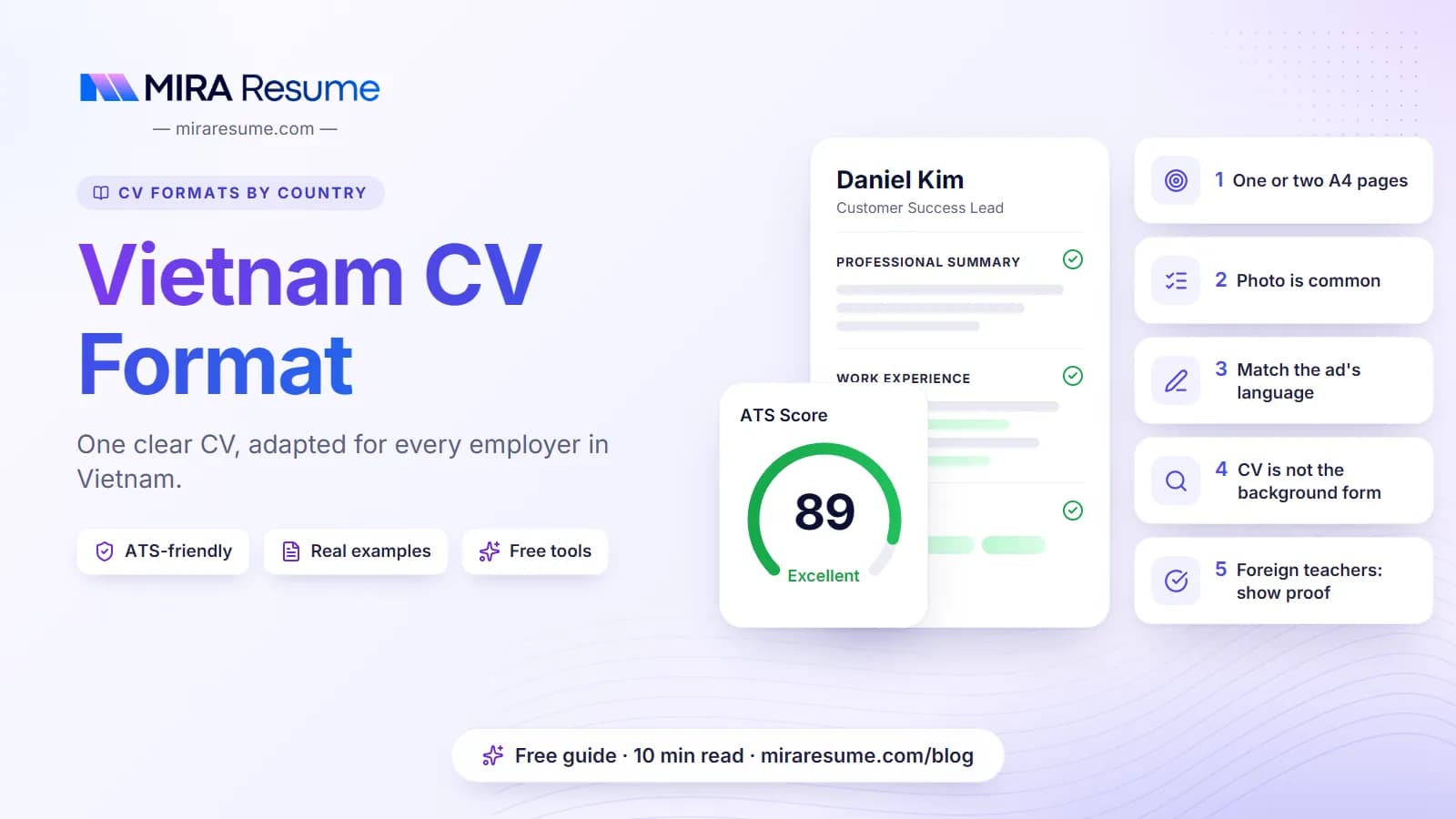
Vietnam CV Format: How to Write a CV for Jobs in Vietnam
Most employers in Vietnam expect a one or two page A4 CV with a clear header, a short career objective, work experience, education, skills and languages. A photo is common on Vietnamese CVs. Send your CV in the language of the job ad, and keep ID numbers and family details off it.