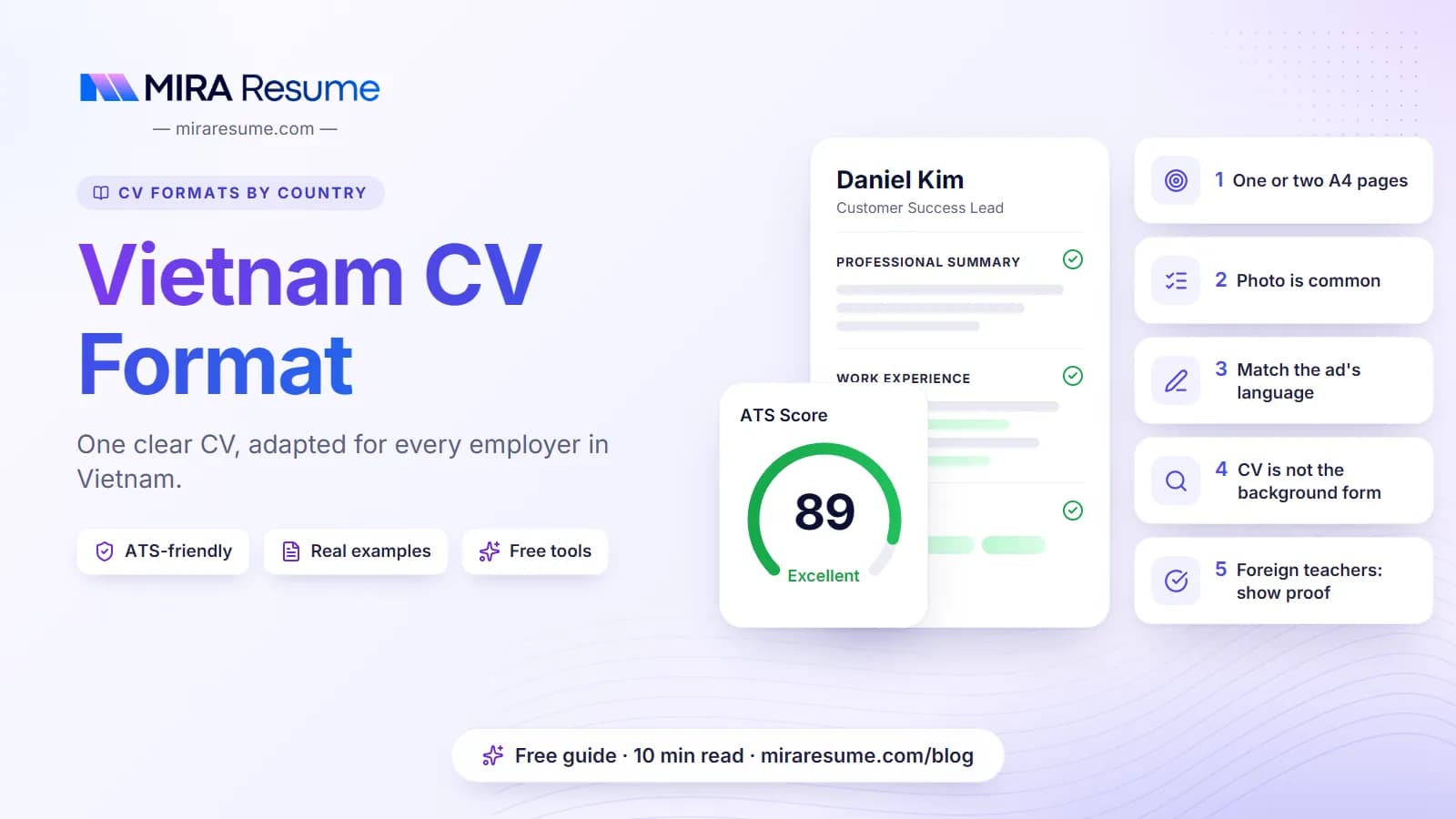
Vietnamese CVs often include more personal information than CVs in the UK or US. That is changing, especially at international companies, so the safest approach is to include what helps an employer contact and assess you, and leave out the rest.
Your name
Vietnamese names are written family name first, for example Nguyễn Văn An. On an English CV, many people keep that order. Some also add the English or given name they use at work in brackets. Whatever you choose, spell your name the same way on your CV, LinkedIn profile, certificates and email address.
Photo
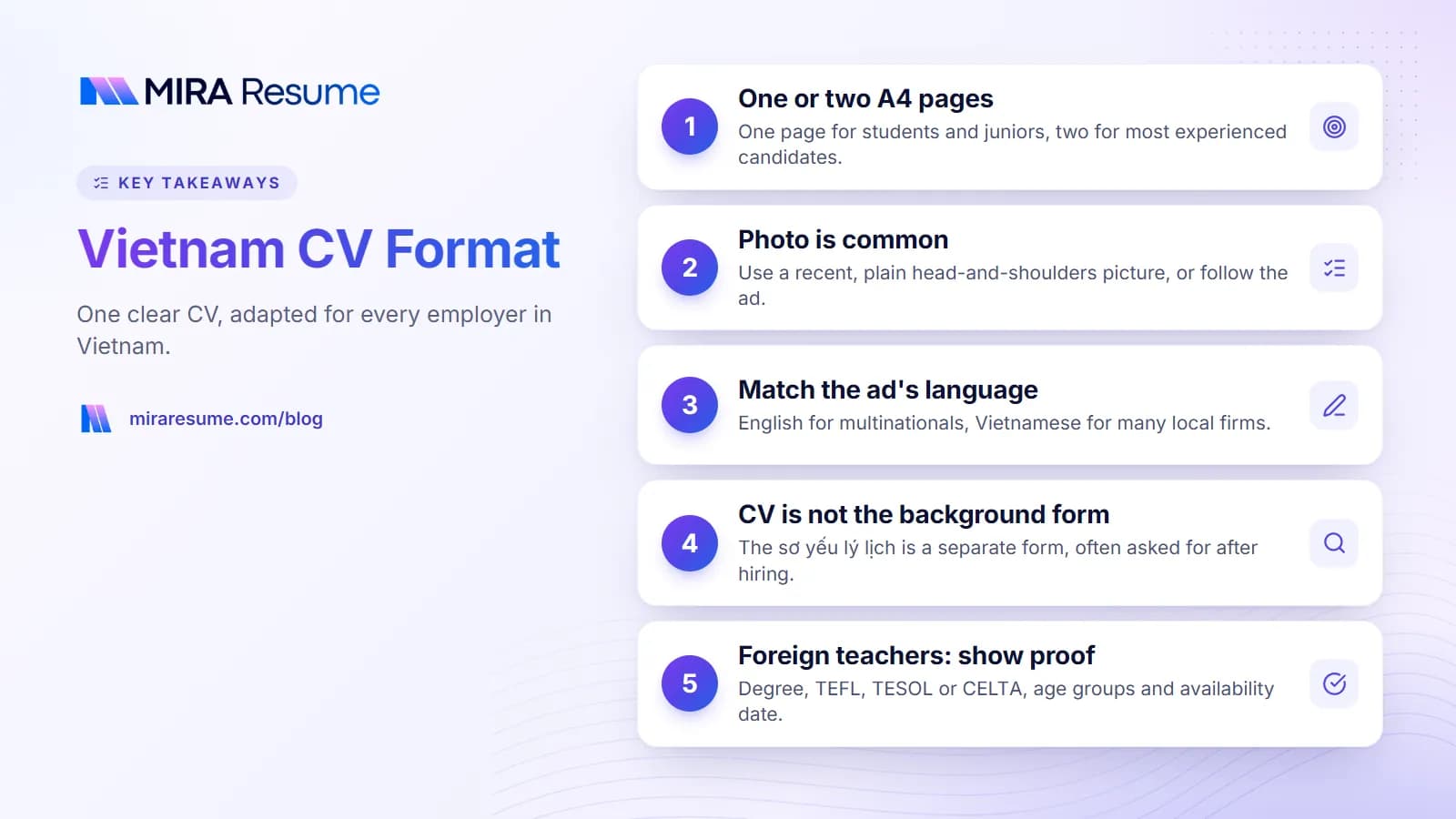
A photo is commonly included on Vietnamese CVs, and many local templates have a space for one. If you add a photo, use a recent, plain head-and-shoulders picture with a neutral background. Many multinationals treat the photo as optional. If an employer's instructions say not to include one, follow them.
Data protection
Vietnam's Law on Personal Data Protection took effect on 1 January 2026, replacing earlier decree-level rules. In general terms, it expects organisations, including employers, to handle personal data carefully. For you as an applicant, the practical habit is simple: share only what is needed at each stage, and give sensitive numbers when an employer has a clear reason to ask.
| Detail | Include? | Why |
|---|
| Full name and target job title | Yes | The first thing a recruiter reads |
| Phone with +84 and email | Yes | Add the country code so overseas recruiters can call |
| City or district | Yes | A full street address is rarely needed |
| Photo | Common, often optional | Expected by many local employers, optional at many multinationals |
| Date of birth, gender | Optional | Still common on local CVs; you can leave them off |
| Marital status, hometown, family details | Usually leave out | These belong on the background form if one is requested |
| National ID or passport number | Leave out | Give it during onboarding or official paperwork |