Your contact block should include your full name, a mobile number, a professional email address, and your suburb and city. A full street address is rarely needed. A LinkedIn link is useful for office roles.
Should you put your ID number on your CV?
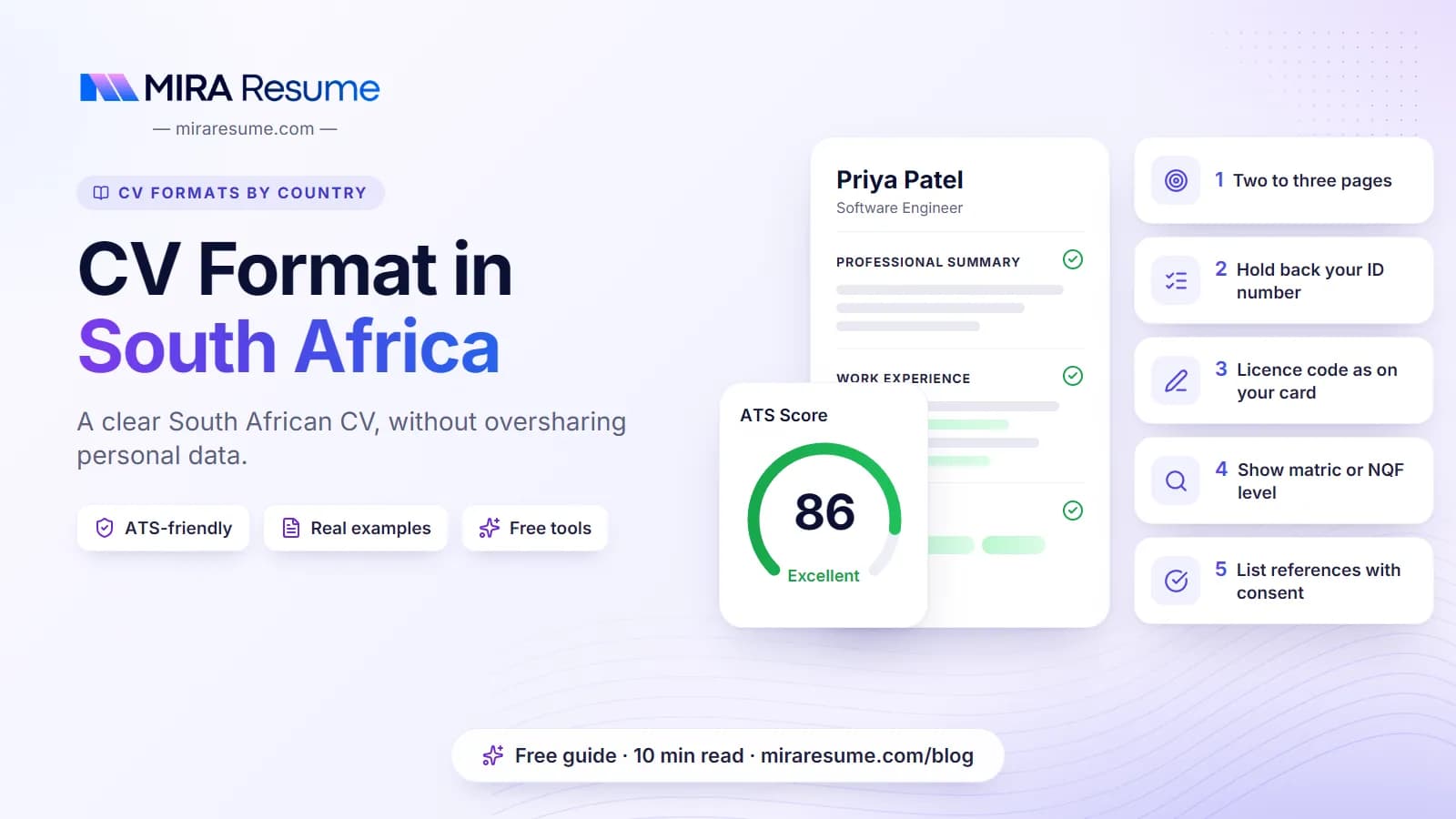
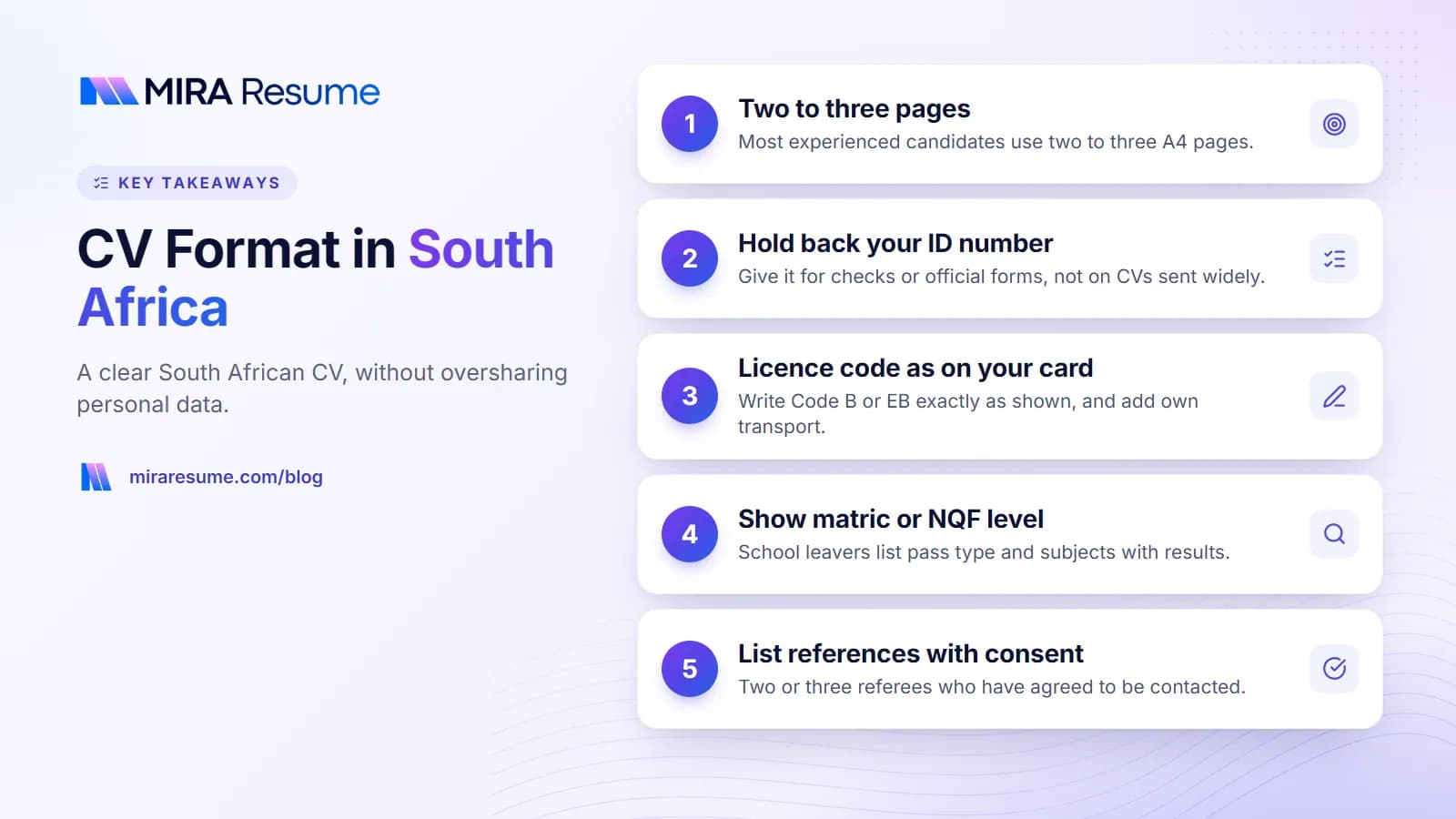
Many South African CV templates include a 13-digit ID number. Be careful with this. Your ID number reveals your date of birth and gender, and in the wrong hands it can be misused for identity fraud. For a CV you upload to job sites or send widely, many career advisers now suggest leaving it off and giving it when an employer needs it, for example for background checks or on an official application form such as the Z83 for public service jobs.
Citizenship and work status
A short line such as "South African citizen" or "Permanent resident" can help, because employers need to know you can work in South Africa. If you hold a work visa, state its type and end date briefly, and check its conditions with the Department of Home Affairs or a registered adviser.
Why some employers ask about employment equity
The Employment Equity Act 55 of 1998 aims to promote equal opportunity and fair treatment at work. It also requires designated employers (since 1 January 2025, generally those with 50 or more employees, plus organs of state) to take affirmative action measures for designated groups, which the Act defines as black people, women and people with disabilities, and to report on their workforce. That is why some job ads say "This is an EE position" or invite applicants to state their race, gender or disability status, usually on an application form and by self-identification.
Including EE details on your CV is generally your choice. Some candidates add a short line stating their EE status, in their own words, when an ad asks for it; others leave it for the application form. Disclosing a disability is also your decision, though telling an employer can help if you need accommodations for an interview. Employers must not unfairly discriminate against applicants on grounds such as race, gender, age, religion, marital status, pregnancy, HIV status or disability, so leave those details off unless a form specifically requests them for a lawful purpose.
POPIA in general terms
The Protection of Personal Information Act 4 of 2013 (POPIA), overseen by the Information Regulator, sets conditions for how organisations collect, use and store personal information. In broad terms, they should collect it for a clear purpose, keep only what they need and keep it secure. For you, the practical habits are to share only what is needed and to ask your referees before you list their contact details.
| Detail | Include? | Notes |
|---|
| Name, mobile, email, suburb and city | Yes | The essentials |
| Citizenship or work status | Usually yes | One short line |
| Driver's licence and own transport | Yes, if you have them | Often asked for in job ads |
| Languages | Yes | With spoken and written levels |
| ID number | Usually leave off | Provide when needed for checks or official forms |
| EE status | Your choice | Add it if the ad asks; otherwise the application form may cover it |
| Marital status, religion, health, photo | Leave out | Not relevant to most jobs |