
Stealth Job Search: Finding a New Job While You Still Have One
Most people look for their next job while they still have one. That is usually the smart way to do it: you keep your income, you negotiate from a stronger position, and you can say no to offers that are not right. It also means you have to be careful. A tip-off to your manager, a LinkedIn setting left on, or an interview booked at the wrong time can make your current job harder before the new one is ready.
The guides in this section cover the whole quiet search. They explain how to plan a search around a full-time job, what your employer can and cannot see on a work laptop or network, how to keep Open to Work and your profile changes discreet, how to work with recruiters confidentially, how to schedule and attend interviews without obvious excuses, and whether it is fine to look in the first place. There is also a free job search spreadsheet template for tracking every application.
When you are ready to search, Mira Resume's Stealth Mode shows real job listings inside a page that looks like an ordinary spreadsheet, so a glance at your screen shows rows and columns rather than a job board. It changes what is on your screen, not what your company's network can log, so the advice here about using your own device still applies. Start with the stealth job search guide below.
Start here
- 1Stealth Job Search: How to Find a New Job Without Your Boss KnowingA stealth job search is looking for a new job while employed, without your employer finding out before you are ready. Use your own device, network and time, keep LinkedIn changes quiet, brief recruiters and references, and schedule interviews with short, honest wording. Tools like Stealth Mode change what is on your screen, not what your company's network can see.
- 2How to Look for a Job While Employed (Without Burning Out)To look for a job while employed, set a clear target, budget about five to seven hours a week on your own time and device, and send fewer, tailored applications. Update your resume and LinkedIn quietly, network discreetly, schedule interviews outside core hours, and resign only after a signed offer.
- 3How to Hide Your Job Search From Your EmployerMost job searches are found out through a handful of leak points: work devices and networks, LinkedIn notifications, open job-board profiles, references, chatty colleagues and sudden changes in behaviour. Keep the search on your own device, network and time, ask recruiters and employers for confidentiality, and never lie if you are asked directly.
- 4Can My Employer See My Browsing History? What They Can and Can't SeeOn a work laptop, a work phone or the office network, assume your employer can see at least which websites you visit, and on managed devices possibly much more. Incognito mode does not change that. On your own device and your own internet connection, an employer typically has no view at all, which is why job searching belongs there.
- 5Job Search Spreadsheet Template: Free Download, Columns and FormulasDownload our free CSV template, open it in Excel or Google Sheets, and give every job its own row. Fourteen columns cover the company, role, dates, status, contact and next step. A few simple formulas flag follow-ups after seven days, and colour rules highlight overdue tasks. Keep the file in your own account, never on a work drive.
Free tools for this topic
All stealth job search guides
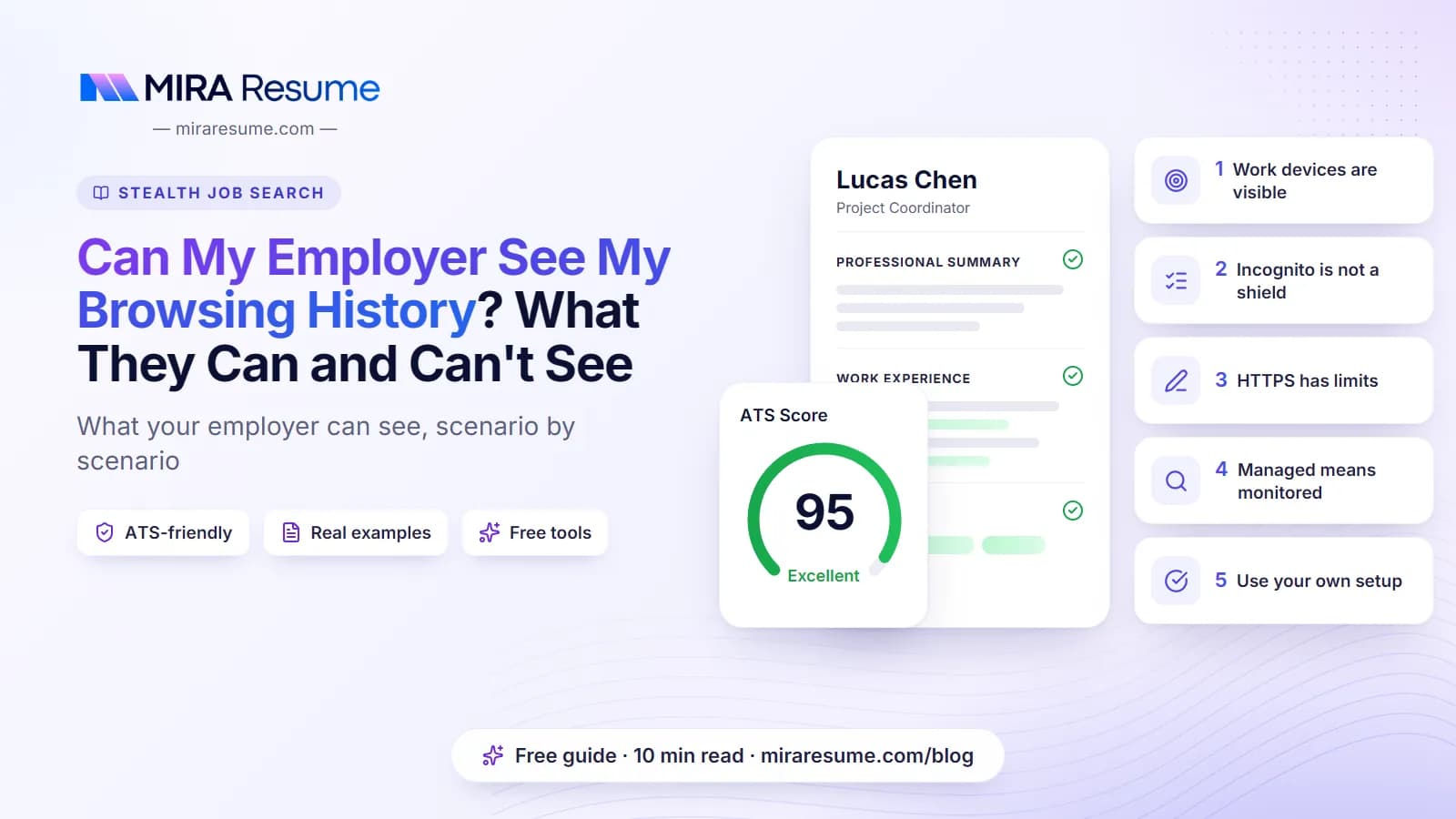
Can My Employer See My Browsing History? What They Can and Can't See
On a work laptop, a work phone or the office network, assume your employer can see at least which websites you visit, and on managed devices possibly much more. Incognito mode does not change that. On your own device and your own internet connection, an employer typically has no view at all, which is why job searching belongs there.
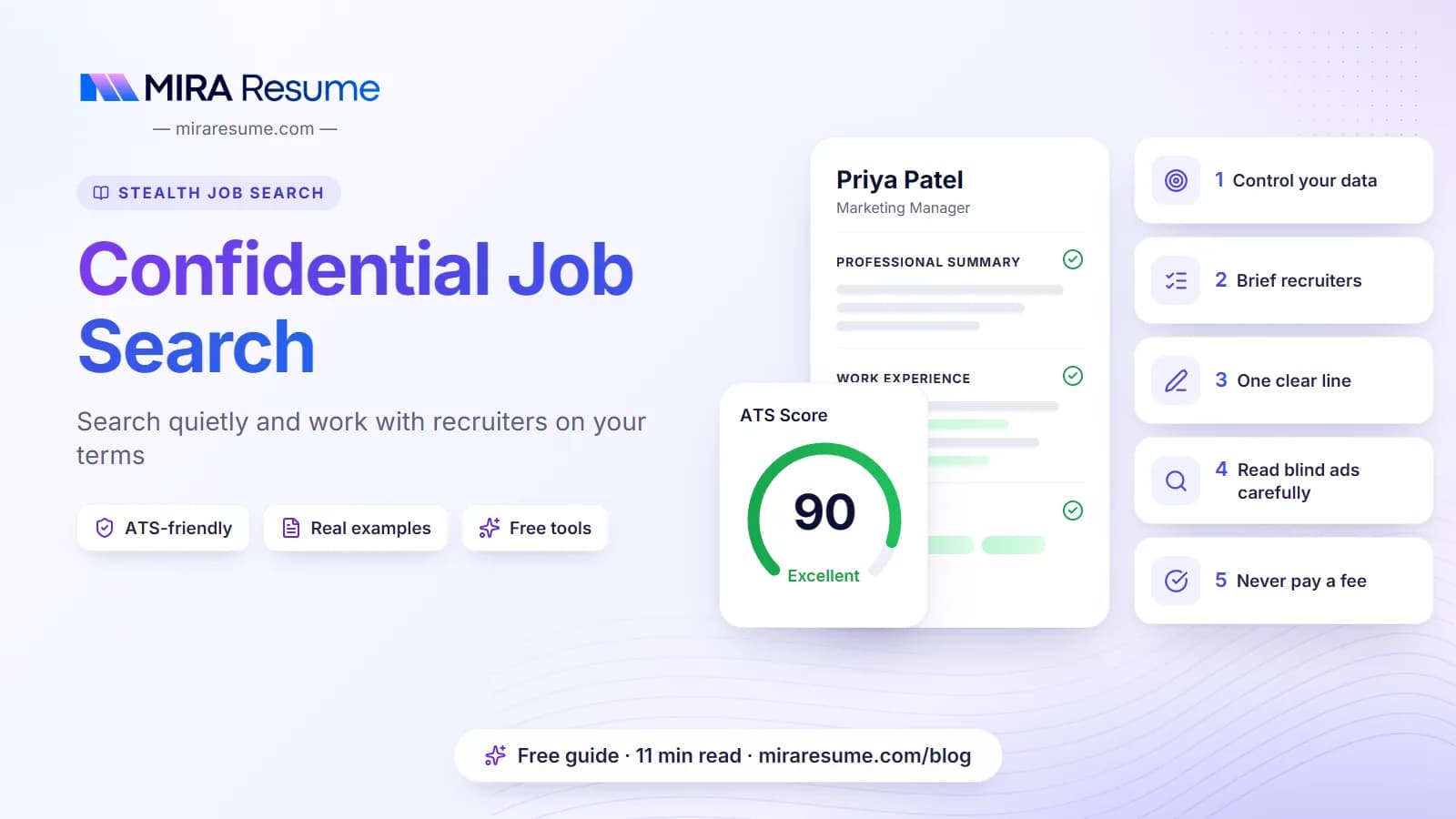
Confidential Job Search: How to Look Quietly and Judge Confidential Job Postings
Running a quiet search means using your own devices and time, briefing recruiters so they never contact your employer or send your resume without your OK, adding one confidentiality line to cover letters, and keeping job board resumes private. Confidential job postings hide the employer's name for good reasons, but never pay a fee and always verify the recruiter before sharing details.
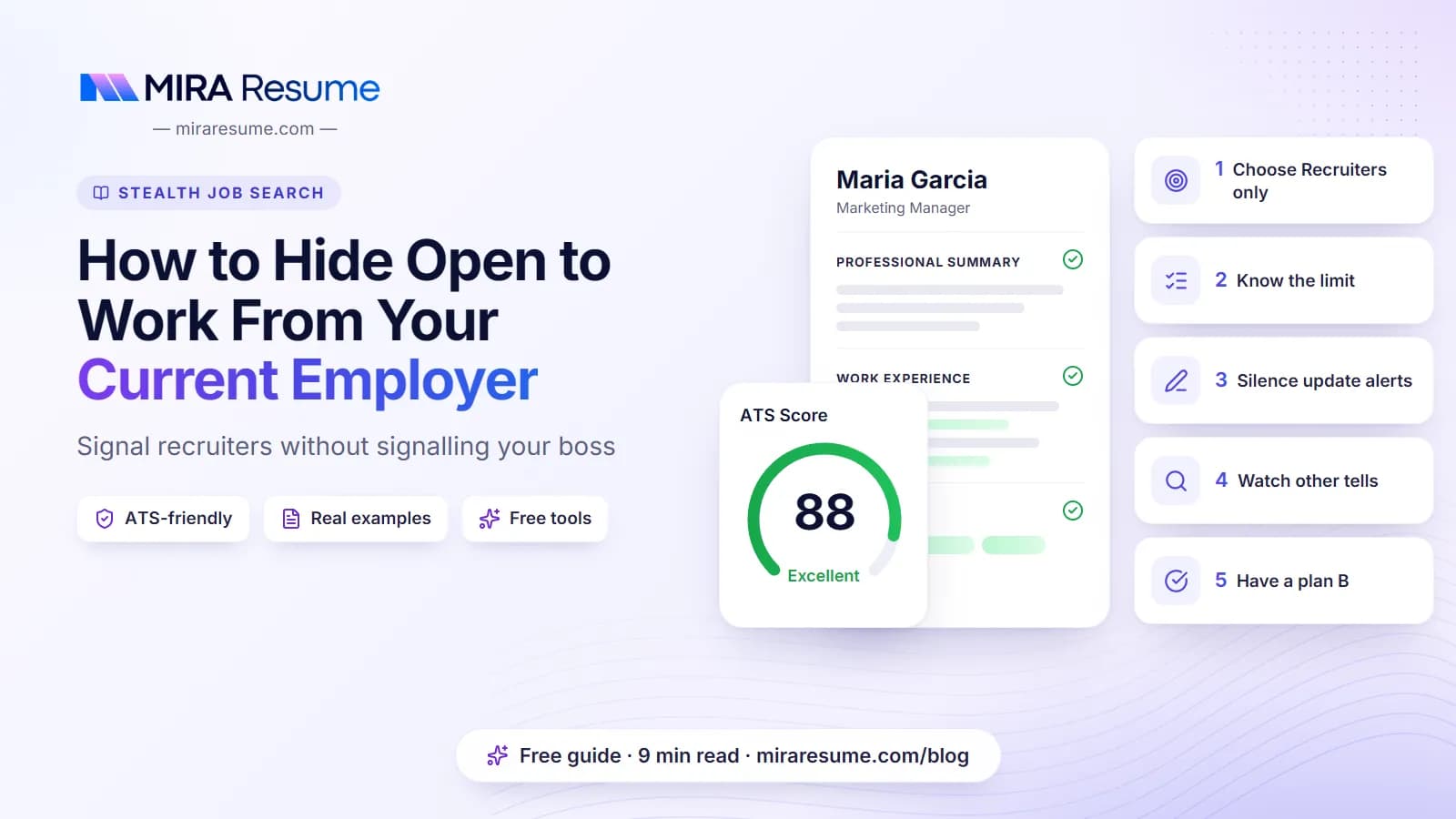
How to Hide Open to Work From Your Current Employer
Set LinkedIn's Open to Work visibility to Recruiters only. That removes the green photo frame and shows your interest to recruiters using LinkedIn's recruiting tools, and LinkedIn takes steps to hide it from recruiters at your current company. It cannot guarantee that, so also turn off profile-update sharing and avoid other obvious signals.
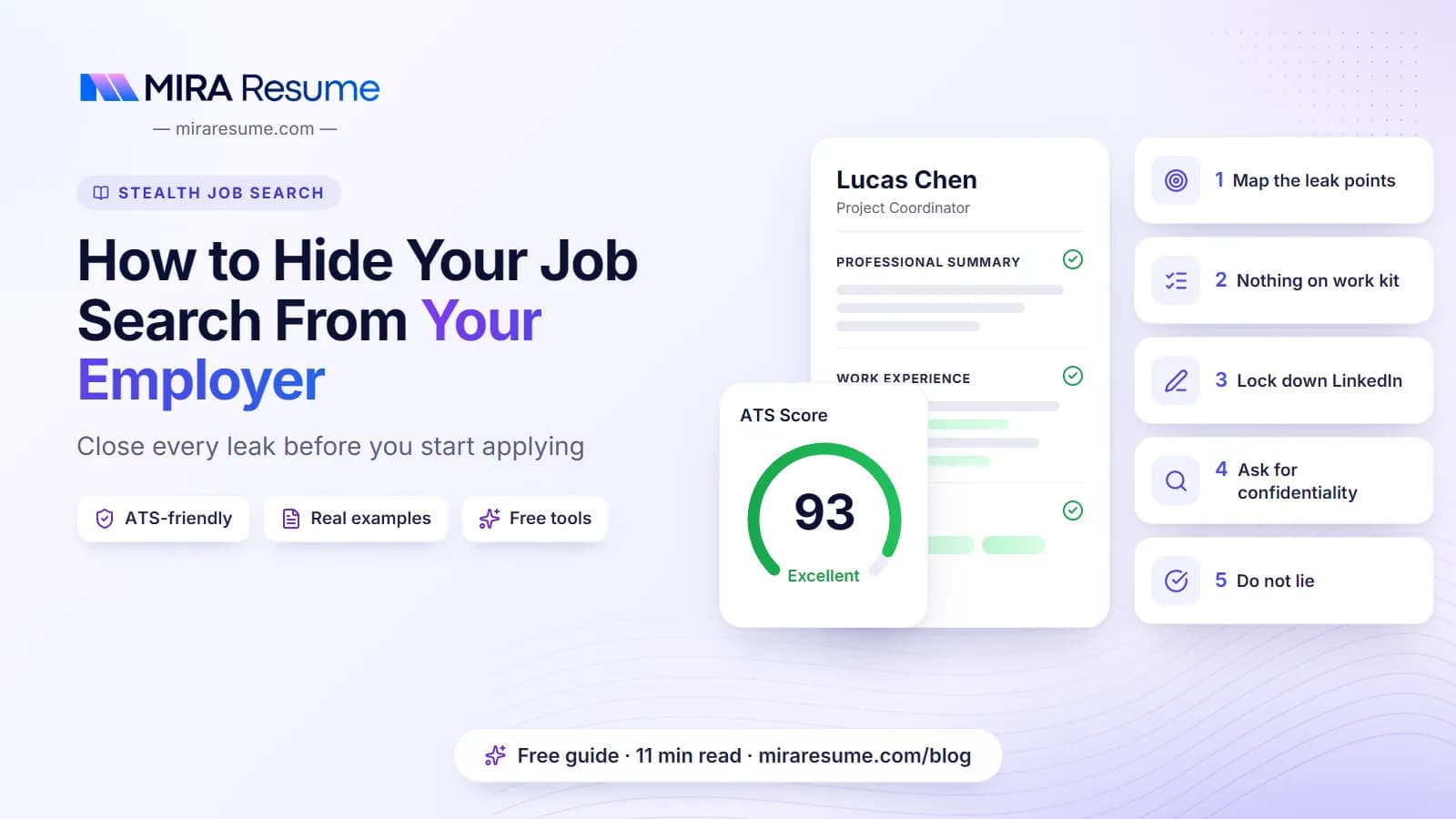
How to Hide Your Job Search From Your Employer
Most job searches are found out through a handful of leak points: work devices and networks, LinkedIn notifications, open job-board profiles, references, chatty colleagues and sudden changes in behaviour. Keep the search on your own device, network and time, ask recruiters and employers for confidentiality, and never lie if you are asked directly.
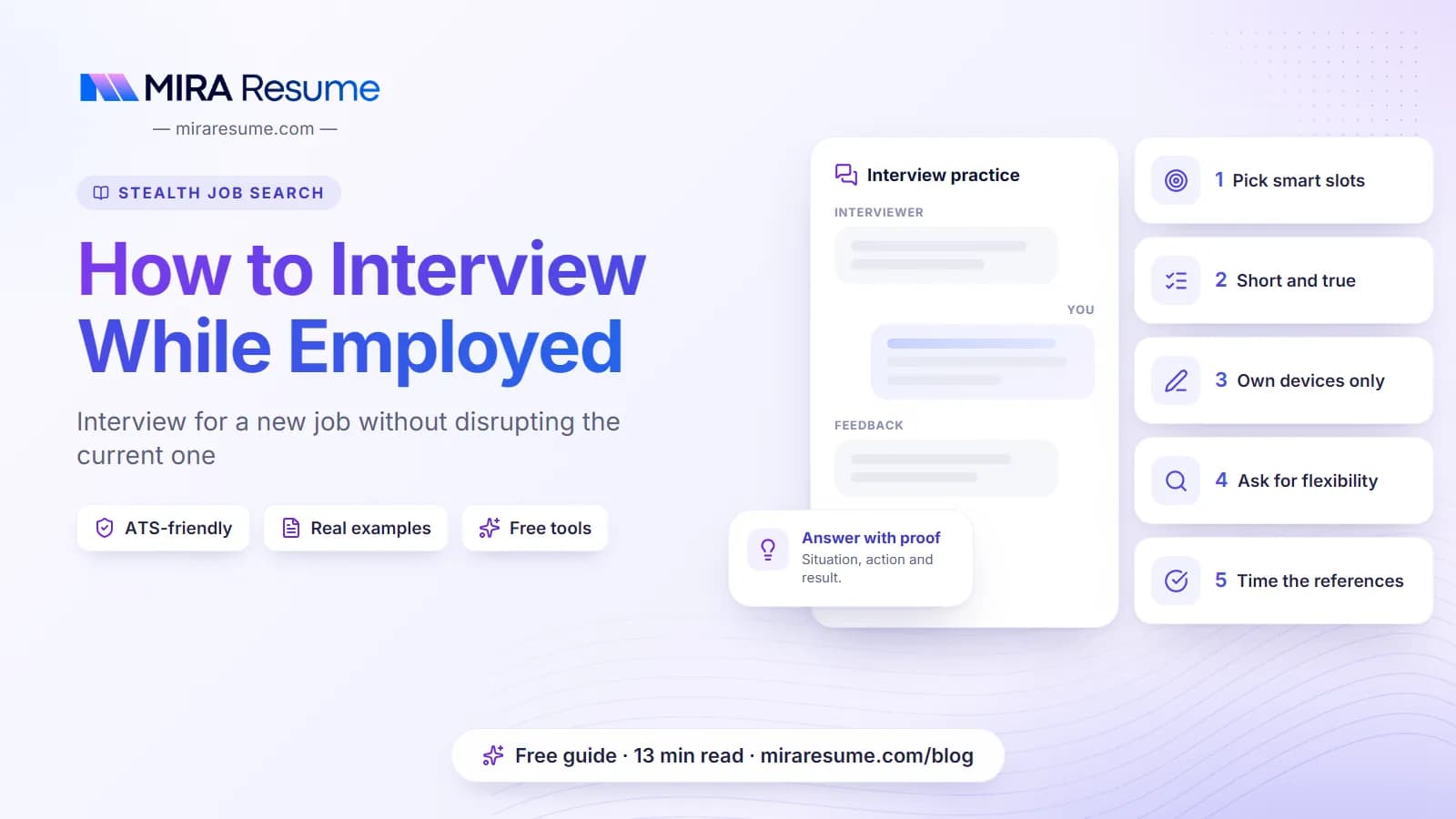
How to Interview While Employed: Scheduling, Excuses and Video Calls
Book interviews before or after work, at lunch, or on planned leave. Tell your manager something short and true, such as "I have an appointment", and never fake an illness or emergency. Use your own phone, laptop and accounts for every call, ask the new employer for flexibility and confidentiality, and agree when references and checks will happen before anyone contacts your current employer.
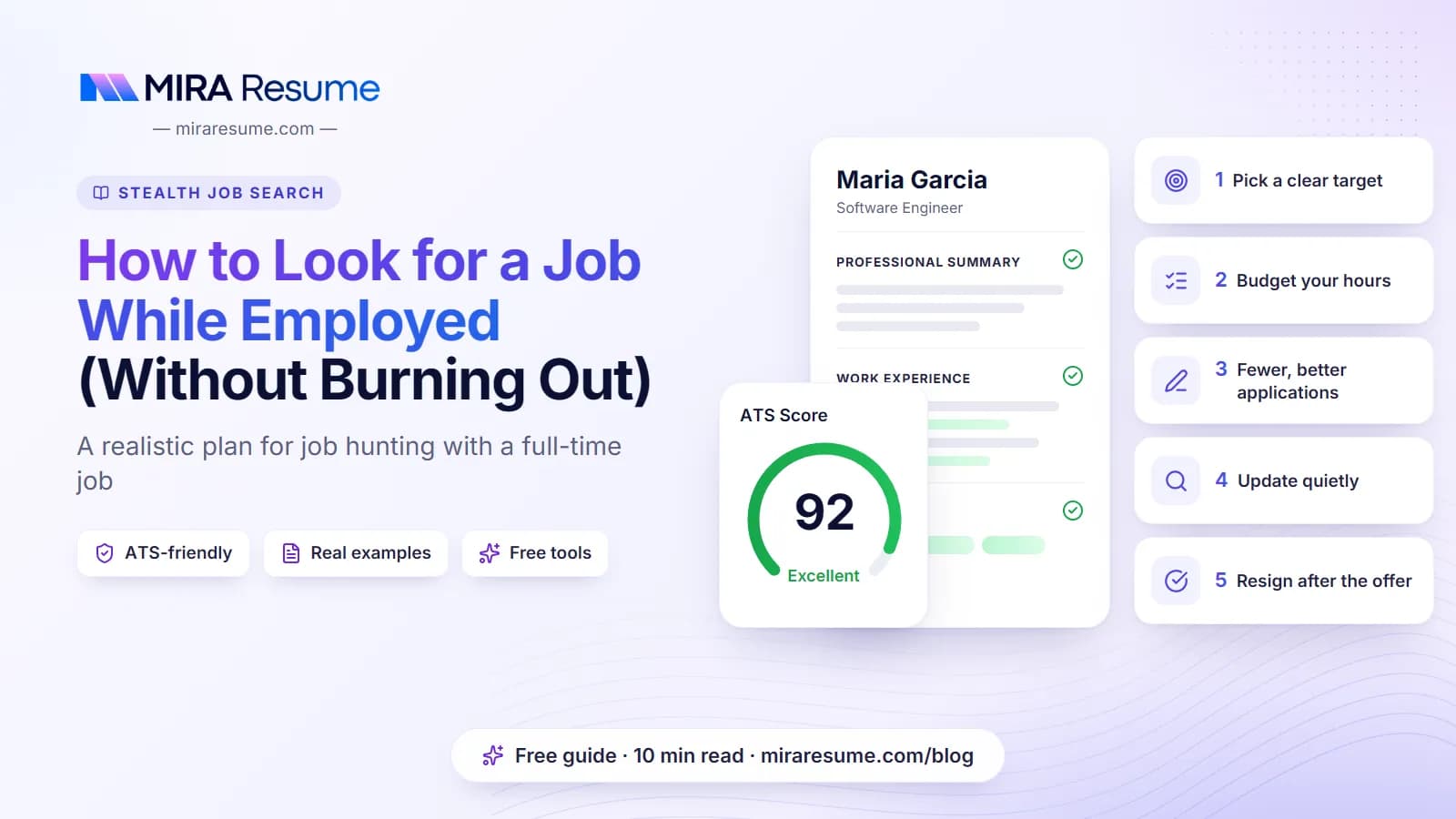
How to Look for a Job While Employed (Without Burning Out)
To look for a job while employed, set a clear target, budget about five to seven hours a week on your own time and device, and send fewer, tailored applications. Update your resume and LinkedIn quietly, network discreetly, schedule interviews outside core hours, and resign only after a signed offer.
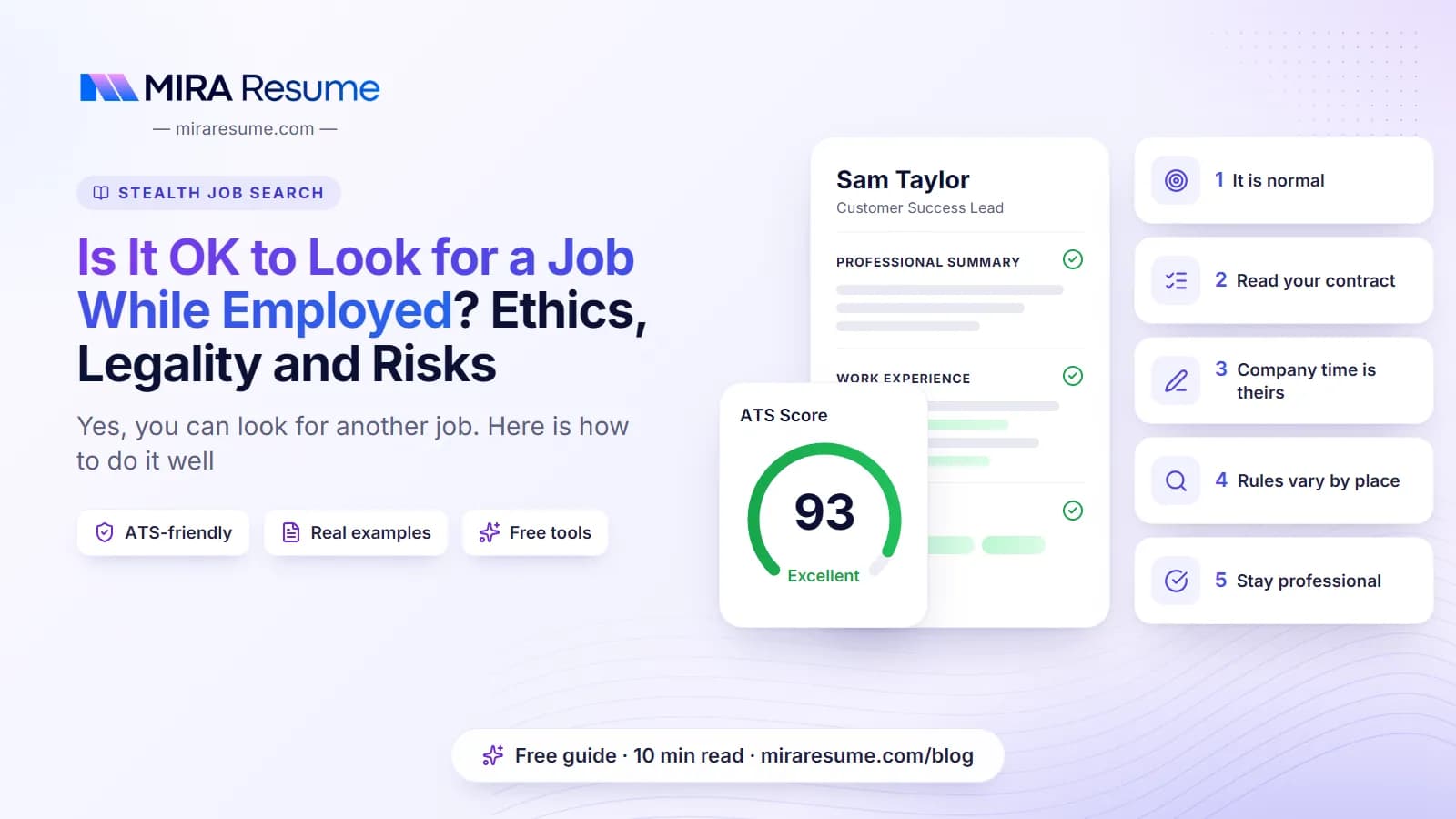
Is It OK to Look for a Job While Employed? Ethics, Legality and Risks
Yes, it is OK to look for a job while employed. It is normal, ethical and generally lawful. The limits come from your contract and your conduct: notice periods, non-solicit and confidentiality terms, and not using company time or devices. Rules vary by country, state and contract, and this is not legal advice.
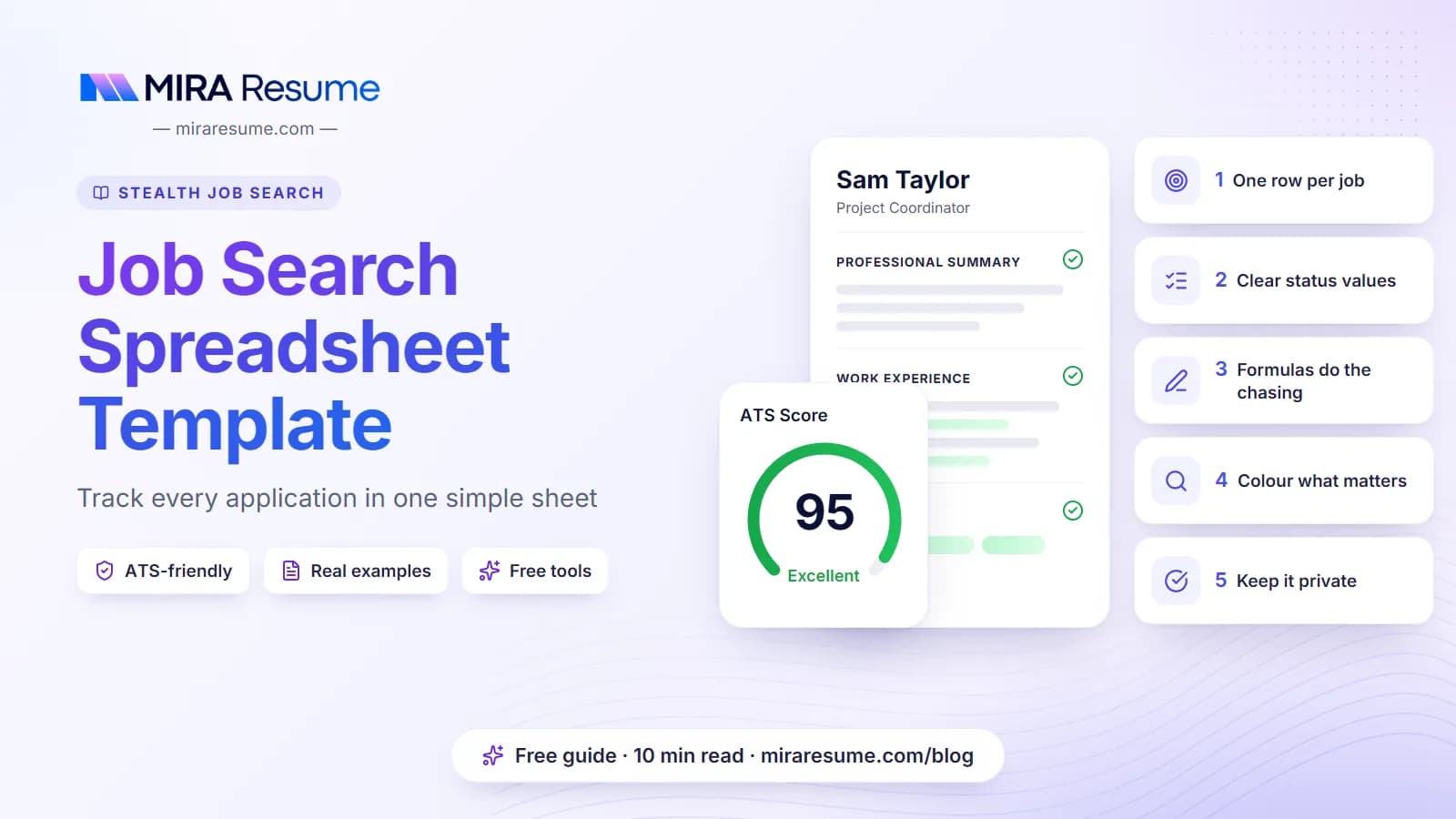
Job Search Spreadsheet Template: Free Download, Columns and Formulas
Download our free CSV template, open it in Excel or Google Sheets, and give every job its own row. Fourteen columns cover the company, role, dates, status, contact and next step. A few simple formulas flag follow-ups after seven days, and colour rules highlight overdue tasks. Keep the file in your own account, never on a work drive.
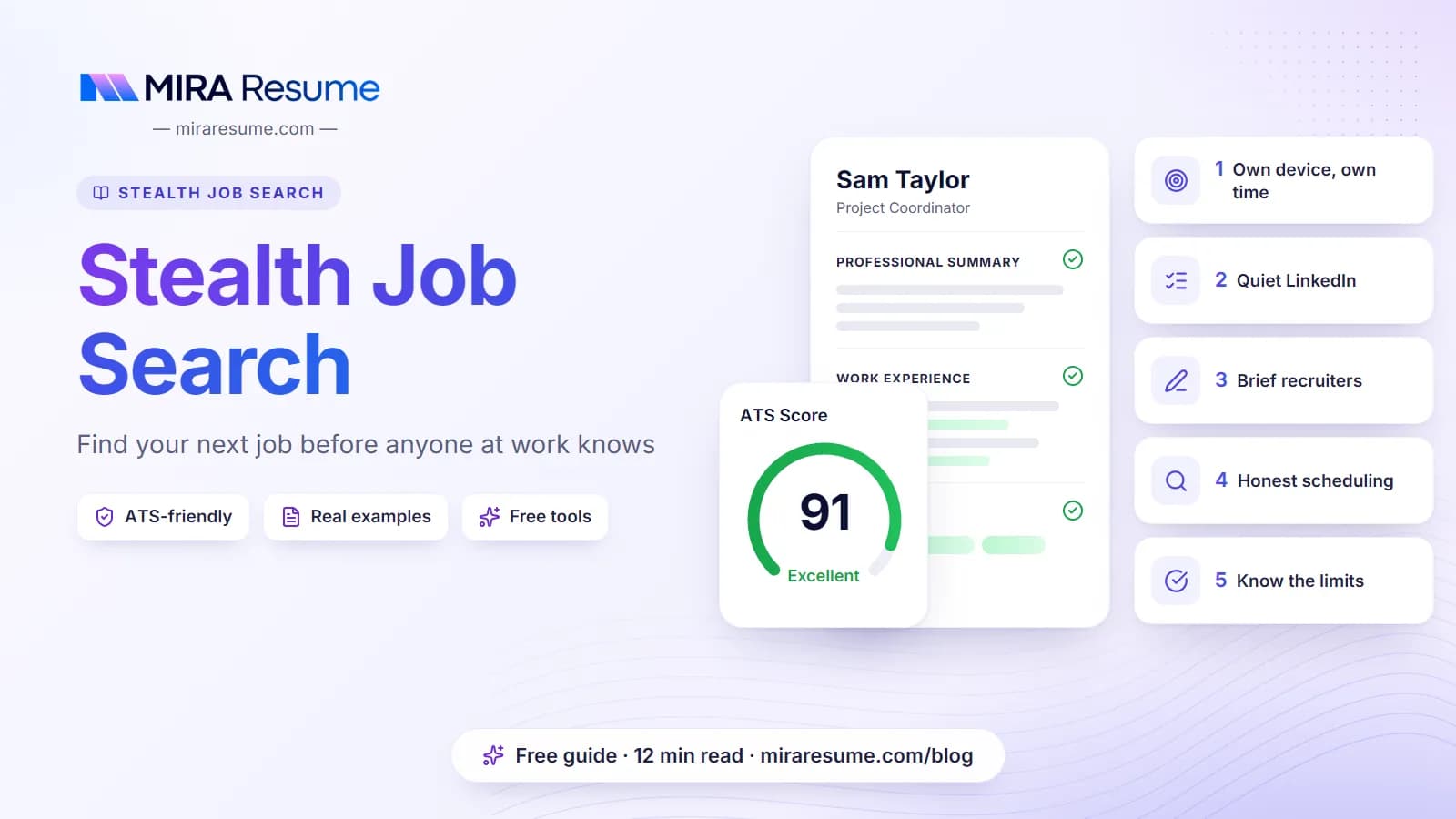
Stealth Job Search: How to Find a New Job Without Your Boss Knowing
A stealth job search is looking for a new job while employed, without your employer finding out before you are ready. Use your own device, network and time, keep LinkedIn changes quiet, brief recruiters and references, and schedule interviews with short, honest wording. Tools like Stealth Mode change what is on your screen, not what your company's network can see.