Coming soon
AI Resume Tools

Mira Scout vs LazyApply: Which One Fits Your Job Search?

Mira Scout vs LazyApply compared: both automate applying, but Mira Scout is designed around match thresholds, daily limits and review. See the trade-offs.

Mira Resume Editorial Team · Career content team Published Updated 7 min read
Mira Scout vs LazyApply: cover image for the Mira Resume guide, with an example resume and the 0 main points

Mira Scout vs LazyApply is a question about what you want software to do for you. LazyApply is generally described as a browser extension that automates applications on boards such as LinkedIn and Indeed, often at high volume. Mira Scout, coming soon to Mira Resume Pro and Elite, also automates applying but is designed around match thresholds, daily limits and review.

Both can send applications for you. What matters is how many, to which jobs, and who stays in charge. This guide compares them side by side, explains where each fits, and covers the trade-offs honestly. Mira Resume is not affiliated with LazyApply. The Mira Scout screens shown below are illustrations with sample data, because the feature has not launched yet. Mira Scout was previously called AI Career Ops; only the name has changed, and the plans and rules described here are the same.
The short answer

Both tools sit in the auto-apply category, so the comparison is really about philosophy. Volume-first tools aim to send as many applications as possible. Mira Scout is designed around the opposite instinct: send fewer, better-matched applications, inside limits you set, with a log you can review.

Neither approach is magic. The honest question is whether your applications are good enough that sending more of them helps.

What LazyApply is

LazyApply is generally described as a Chrome extension that automates applications on job boards including LinkedIn Easy Apply, Indeed and others. You enter your details, set filters, and it fills in and submits forms. Its own site and third-party reviews describe plans with daily application allowances, and pricing reports differ, so verify the current terms on its website.

Reviews also raise cautions worth taking seriously: generic answers that are not tailored to each role, form fields filled incorrectly in some cases, and concerns that heavy automation on some platforms can conflict with their terms or lead to account restrictions.

What LazyApply does well

The appeal of bulk automation is obvious: it replaces hours of repetitive clicking. Volume-first tools are good at:

  • Saving time on simple, standard applications. Short Easy Apply flows are quick to automate.
  • Casting a wide net. In some markets and roles, more applications can mean more replies.
  • Keeping consistent effort. The tool keeps applying even on days you have no energy.

The weak spot is quality control. If a generic resume and generic answers go to hundreds of jobs, the problems repeat at the same scale.

Where Mira Scout is different

Mira Scout is designed so automation works for a considered job search rather than a bulk one. You set a minimum resume match, so weak fits are skipped. You set a daily limit, so volume stays sensible. You list companies to skip, and there is a pause switch. Each application is meant to use a resume and cover letter tailored to the role, and every one is logged in the Job Tracker with a morning summary of what was sent and what was skipped.

The aim is fewer, better applications, with a record you can act on. It is also designed to start conservative, and you can keep a review step in your workflow while you build trust in the results.

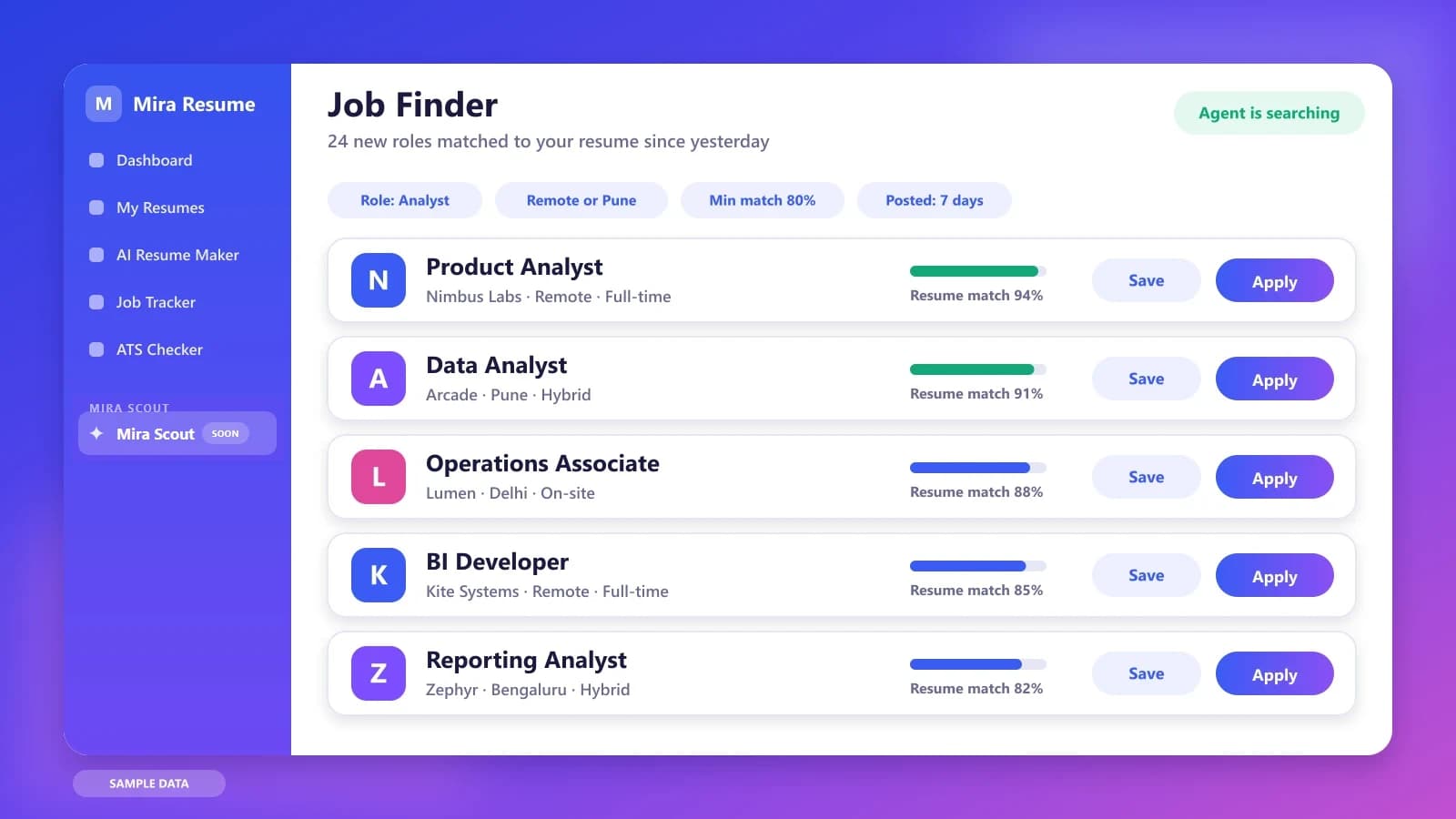
Illustration of the Mira Scout job finder listing roles that match your resume with a match percentage for each
Illustration with sample data: the Job Finder ranks new roles by how well they fit your resume.

Mira Scout vs LazyApply: side-by-side comparison

This table describes what each tool is designed for. LazyApply details come from its own published pages and third-party reviews, and may have changed, so check its website directly. Mira Scout details describe our plan and may change before launch.

QuestionLazyApplyMira Scout (coming soon)
PhilosophyVolume: apply to as many roles as possibleFit: apply within match thresholds and limits
Job selectionFilters you set, then bulk applyingAgent ranks jobs against your resume first
TailoringOften generic answers, per reviewsResume and cover letter tailored per role
ControlsFilters and daily allowanceMin match, daily limit, skip list, pause switch
ReviewDepends on your setupMorning summary and Job Tracker log
Platform riskSome boards restrict automationYou decide where to automate, and apply by hand elsewhere
AvailabilityAvailable nowPro and Elite members, launching soon

The real risks of mass auto-apply

Automation magnifies whatever you put into it. A strong, honest resume sent sensibly can save time. A weak resume sent at volume just creates a lot of rejections faster. Before turning any bulk tool on, consider these points:

  • Quality beats quantity. Recruiters can tell a templated application from a considered one, and so can screening software. See how AI resume screening works.
  • Accuracy matters. A wrongly filled field, such as the wrong salary or work authorisation, can disqualify you automatically.
  • Platform rules differ. Some boards limit or forbid automated applications, and breaking their terms can put your account at risk.
  • Replies still need you. An application is not an interview. You must respond quickly and follow up, as covered in following up on a job application.
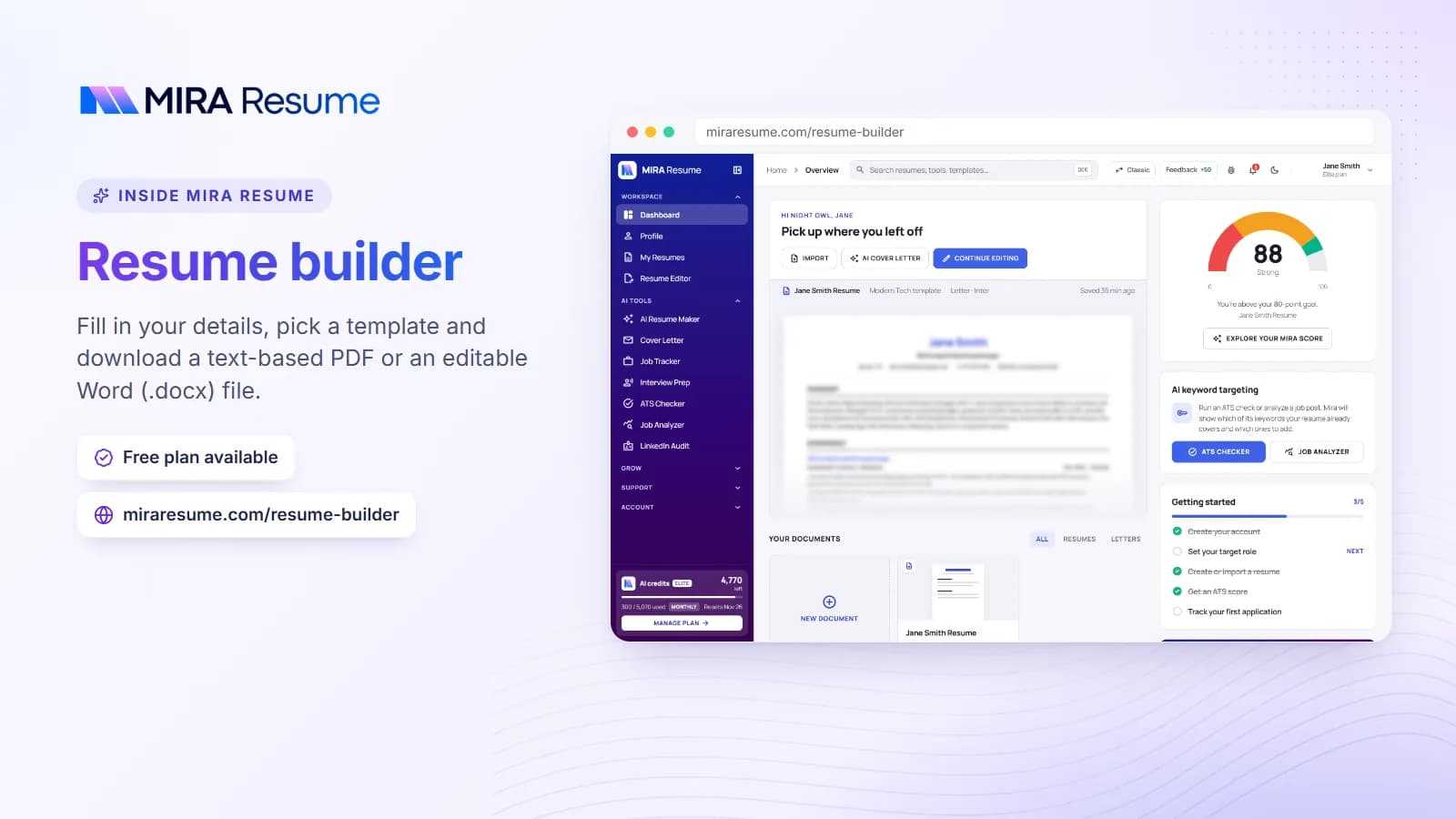
Screenshot of the Mira Resume resume builder (Fill in your details, pick a template and download a text-based PDF or an editable Word (.docx) file.)
Screenshot: Resume builder: Fill in your details, pick a template and download a text-based PDF or an editable Word (.docx) file.Try it
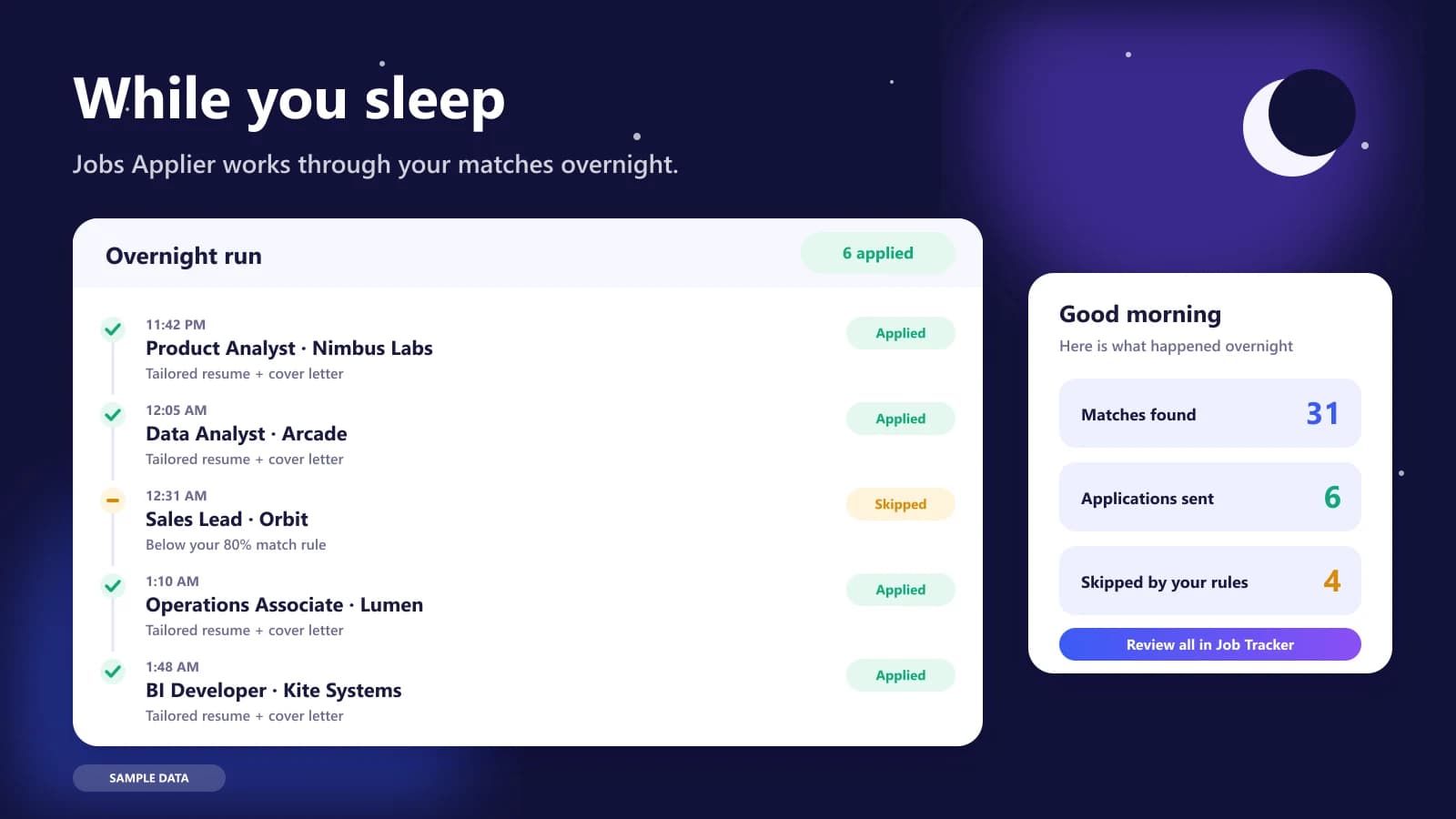
Illustration of the Jobs Applier overnight run: a timeline of tailored applications sent and a morning summary
Illustration with sample data: an overnight run, with a morning summary of what was sent and what was skipped.

Fifty applications versus ten: what the numbers can look like

Consider two approaches over a week. The volume approach sends fifty generic applications, most to roles that are only loosely related to the candidate's experience. Even a small reply rate produces a handful of responses, many of them poor fits that waste time on screening calls.

The rules-based approach sends ten applications to roles that clear a high match threshold, each with a tailored resume. Fewer applications go out, but a larger share is relevant, and the log makes follow-up easy. This is an illustration of the trade-off, not a promise: results vary by field, region and experience, and no tool can guarantee replies.

Three job seekers, three different attitudes to automation

Victor, an experienced operations manager, has a strong resume and clear targets. He wants automation, but only for roles that clear a high match bar, and he wants to see every application afterwards.

Nadia, a new graduate, is tempted to blast hundreds of applications because she feels she has nothing to lose. Her time is better spent improving her resume first and sending fewer, better-matched applications, since weak applications at volume rarely help.

Greg, a freelancer returning to full-time work, wants hands-off help but is worried about account safety on job boards. He prefers a tool that lets him control where automation runs and apply manually elsewhere.

Questions to ask before using any auto-apply tool

  • Can I set a minimum match and a daily limit, and does the tool respect them?
  • Are resume and cover letter tailored per role, or the same every time?
  • Do the job boards I target allow automated applications?
  • Can I pause everything instantly if something looks wrong?

Limits to keep in mind about bulk automation

Bulk tools cannot fix a weak resume, and they cannot judge a job's real fit the way you can. Reviews of tools in this category mention incorrectly filled fields and generic answers, and some platforms discourage automation. Treat any promise of "hundreds of applications a day" with caution and check LazyApply's own site for current pricing and terms.

Which should you use?

  • Choose a volume-first tool only if you understand the platform risks and are comfortable with generic applications at scale.
  • Choose Mira Scout (after launch) if you want automation but also want match thresholds, daily limits and a clear log.
  • Whichever you pick, start with a low daily limit, check the first results by hand, and fix your resume before you scale anything.

The bottom line

The temptation of bulk automation is to equate effort with applications sent. A better measure is relevant conversations started. Mira Scout is designed to bias towards the second: a match threshold, a daily limit, a skip list and a log you can read. That makes it slower than a tool that fires off hundreds of applications, and that is intentional. Whichever tool you choose, protect your accounts, read each board's rules, and put your first hour into the resume rather than the settings. A strong, honest resume is the multiplier on every application that follows.

Whichever way you lean on LazyApply, the groundwork is the same:

  1. Finish one master resume. Every matcher, agent and tracker works better from a clean, honest document.
  2. Run an ATS check. Use the free ATS checker to catch formatting and keyword gaps.
  3. Write down your rules. Roles, locations, salary floor, companies to avoid and a daily number you are comfortable with.
  4. Check your plan. Mira Scout is for Pro and Elite members, so compare options on the pricing page. The Mira Scout section is already visible in the V2 dashboard, with a launch countdown.

One last tip: whichever tools you choose, review the results weekly. Count applications sent, replies received and interviews booked, then adjust your resume, your rules or your targets based on what the numbers show. Small, regular adjustments usually beat one big change made in a panic.

Keep reading in the Mira Scout series. Start with Mira Scout: the complete guide, then compare it with other kinds of tools:

Frequently asked questions

How is Mira Scout different from LazyApply?

Both automate applying, but Mira Scout is designed around rules: a minimum resume match, a daily limit, companies to skip and a pause switch, with tailored resumes and a log in the Job Tracker. Volume-first tools tend to emphasise sheer application counts.

Is auto-applying against job board rules?

It depends on the board. Some restrict or forbid automated applications, so read each site's terms. Where automation is not allowed, apply by hand. Keep daily limits modest and avoid anything that could put your accounts at risk.

Does applying to more jobs mean more interviews?

Not necessarily. Well-matched, tailored applications often outperform large numbers of generic ones. More applications can help only when your resume is strong and the roles genuinely fit. No tool can guarantee interviews or offers.

Can I review applications before they go out?

Mira Scout is designed around rules and review, including a morning summary and a pause switch. Features may change before launch, so check the dashboard. Starting with strict limits and reviewing early results is sensible whichever tool you use.

What does LazyApply cost?

Reports on pricing differ between sources, and plans change. Check LazyApply's own website for current terms rather than relying on a third-party review. Mira Resume is not affiliated with LazyApply.

Found this useful? Share it

Send it to a friend who is job hunting, or save it for later.

Read this guide with AI

Get a plain-language summary and help applying it to your own resume. Pick an assistant; it opens with this article and a ready prompt.

Back to AI Resume Tools hub

All articles