Coming soon
Stealth Job Search

Confidential Job Search: How to Look Quietly and Judge Confidential Job Postings

A confidential job search guide: brief recruiters, add a cover letter confidentiality line, hide your resume on job boards and spot fake confidential job posts.

Mira Resume Editorial Team · Career content team Published Updated 11 min read
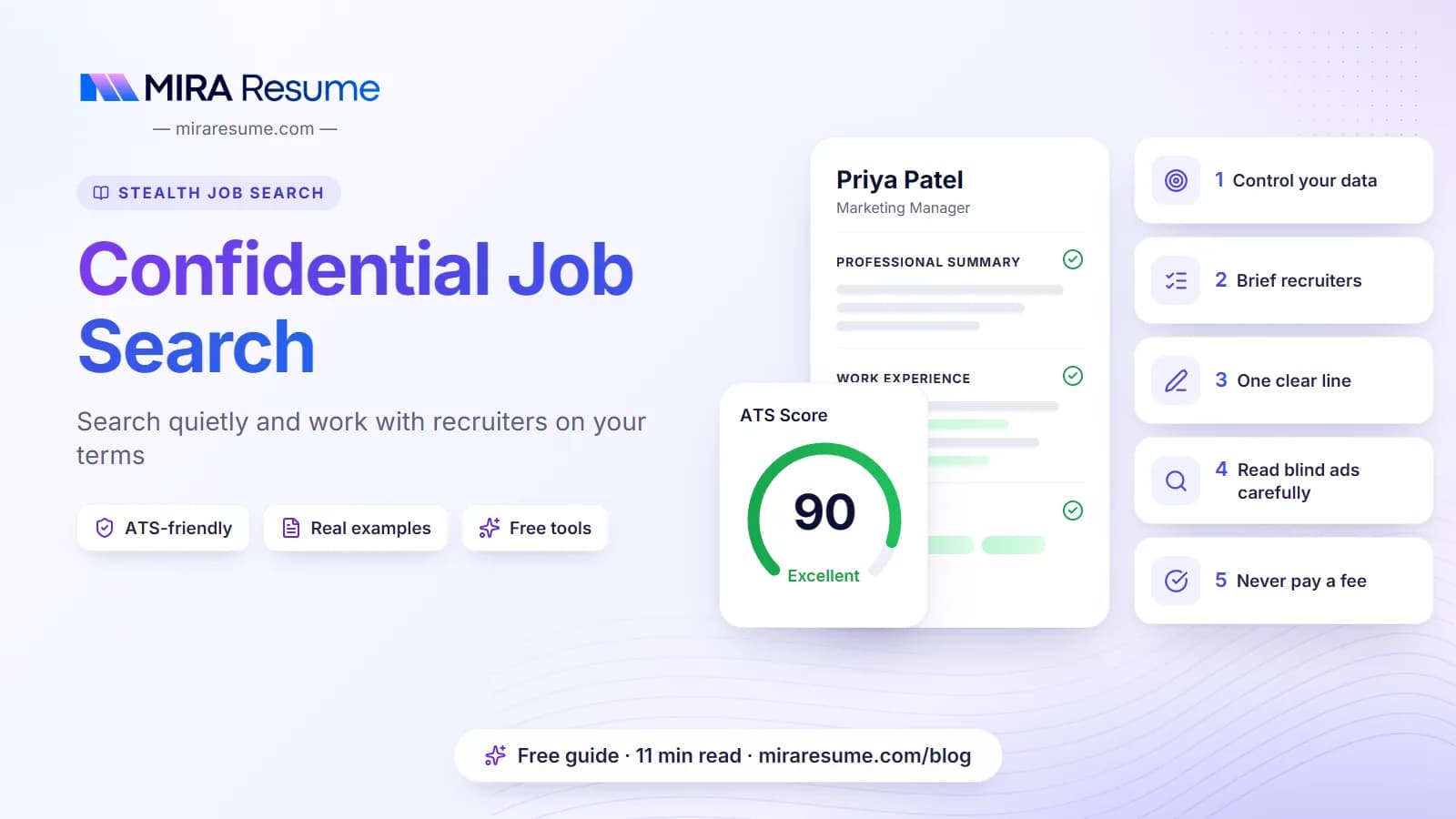
Confidential Job Search: cover image for the Mira Resume guide, with an example resume and the 5 main points

A confidential job search means looking for a new job without your current employer finding out. It is how most employed people look: quietly, on their own time, with recruiters and hiring teams who agree not to share their name until the right moment.

The phrase has a second meaning too. Employers sometimes publish job adverts that hide the company's name. Those can be perfectly genuine, but an anonymous advert is also a favourite disguise for scams. This guide covers both sides: how to run your own discreet search, how to brief recruiters, how to keep your resume private on job boards, and how to judge a posting that will not tell you who is hiring.

It is part of our stealth job search series, which covers everything from LinkedIn settings to interviews.

General guidance only. Job board settings and recruitment practices vary by site and country, so check the details for the services you use.
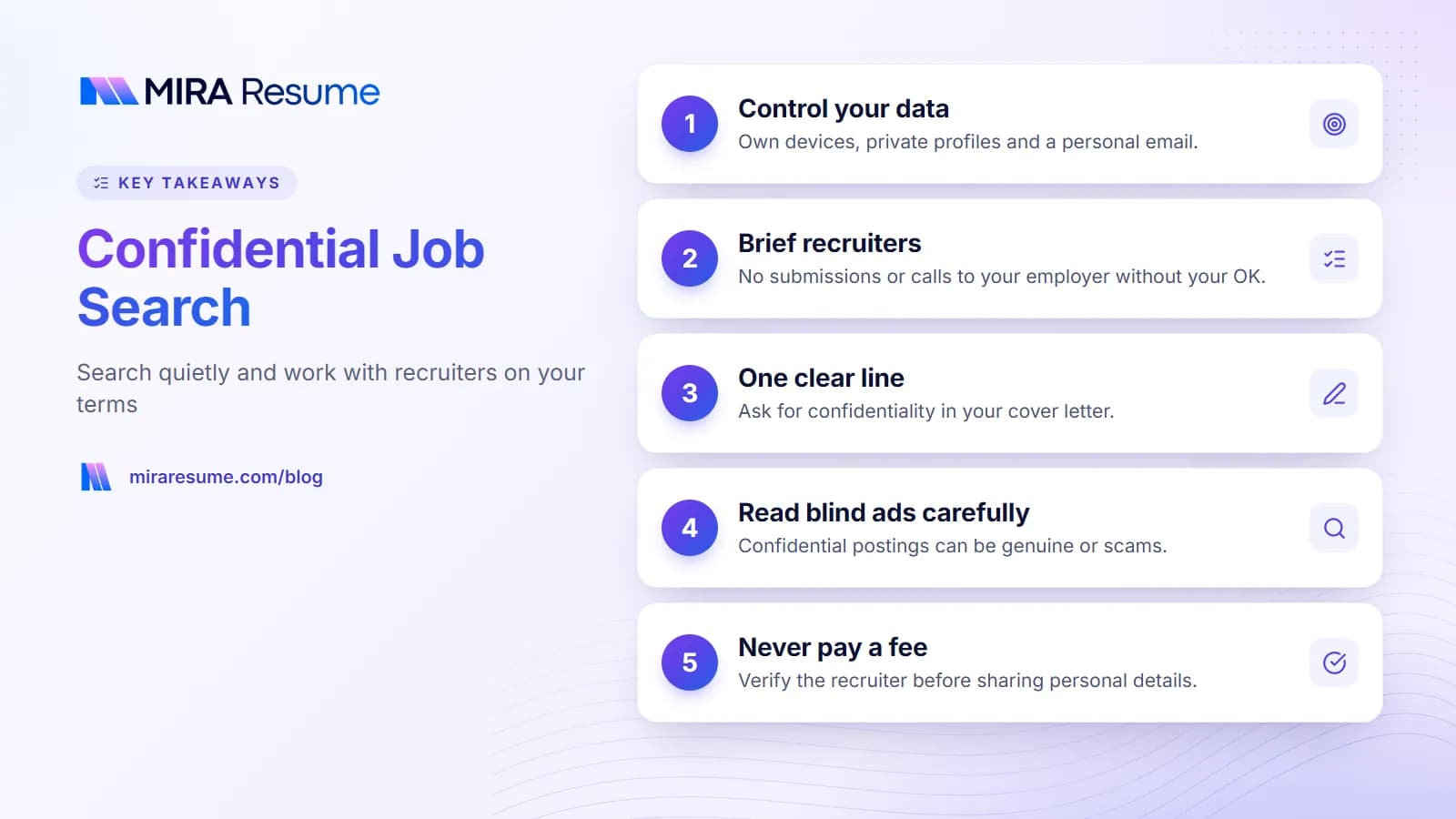
Key takeaways: 1. Control your data; 2. Brief recruiters; 3. One clear line; 4. Read blind ads carefully; 5. Never pay a fee
Key takeaways from this guide.

Two meanings, one goal: keep control of your information

Whether you are the one keeping a secret or the employer is, the question is the same: who knows what, and when? This table sets out the difference.

You run a confidential searchAn employer posts a confidential job
What is hiddenThe fact that you are lookingThe name of the company hiring
Hidden fromYour current employer and colleaguesThe public, competitors, sometimes current staff
Who usually helpsRecruiters, hiring teams, trusted referencesAn agency, search firm or in-house recruiter
Main riskYour employer hears before you are readyYou share your details with a fake recruiter or a scam
Main protectionClear instructions and your own devicesVerifying the recruiter and never paying a fee

A discreet job search starts with a few simple habits. Most leaks come from small slips, not from bad luck.

  • Use your own device and network. Search, apply and take calls on your personal phone or laptop, using home broadband or mobile data. Work devices and networks can be monitored. Our guide on whether your employer can see your browsing history explains how.
  • Use personal contact details. A personal email address and mobile number on every resume, profile and application. Never your work email or desk phone.
  • Search on your own time. Evenings, weekends and breaks, not during paid hours.
  • Tell almost no one. One trusted person outside work is plenty.
  • Change profiles gradually. A sudden flurry of profile edits can be noticed. See how to hide Open to Work from your current employer.
  • Keep performing. Doing your job well is the best cover there is, and it protects your reference.

For the full checklist, read how to hide a job search from your employer. The rest of this guide focuses on the people and platforms you share your details with.

Working with recruiters confidentially

A good recruiter can be your best ally in a quiet search. They can approach employers without naming you, give you inside knowledge about a role, and handle awkward questions about timing. But they work best when you brief them clearly from day one.

What to tell a recruiter

  • That your search is confidential. Say it in the first conversation and again in writing.
  • What you want. Target roles, seniority, locations, and whether you want on-site, hybrid or remote work.
  • Your salary expectations and notice period. Notice periods vary a lot, from two weeks to three months, and recruiters need to know.
  • Companies to avoid. Your current employer, its parent and sister companies, and any major clients or partners who know your boss.
  • How and when to contact you. Personal email and mobile only, and the times you can talk freely.

What to ask them to agree to

  1. No contact with your current employer for any reason, including references, until you have accepted an offer and resigned.
  2. No resume submission without your OK. They should name the company and role and wait for your yes before sending your resume anywhere.
  3. No references contacted without your consent, and only the people you have named.
  4. Your name kept out of any shared shortlists until you agree to go forward with a specific employer.

The second point matters more than people think. If a recruiter sends your resume without asking, it may land at your own employer, a close partner, or a company another agency has already sent you to. Two agencies submitting the same person can cause fee disputes, and some employers may simply set the application aside.

A briefing email you can copy

Subject: Confidential search: next steps

Hi [Name],

Thanks for the call today. As discussed, I am currently employed and my search is confidential. Please could you:

1. Contact me only on this email or on [mobile number].
2. Check with me and name the company before sending my resume to any employer.
3. Not contact my current employer, [Company], or its group companies.
4. Not approach any references without my agreement.

I am looking for [role] roles in [location or remote], with a notice period of [X weeks]. I look forward to hearing about anything suitable.

Best regards,
[Your Name]

In-house versus agency recruiters

An in-house recruiter works for one company and hires only for it. An agency recruiter or search firm works for many employers and is normally paid by the employer that hires you. Either can be a good confidential job search recruiter. The test is the same: do they ask before every step, and do they respect the limits you set? If a recruiter shares your details without permission once, stop working with them.

Add a confidentiality line to your cover letter

When you apply directly, one short sentence tells the employer how to treat your application. Put it near the end of your letter, before your sign-off. It should be polite and plain, not dramatic.

Lines you can use

As my current employer is not aware of my search, I would be grateful if you could treat this application as confidential.

Please contact me on my personal email or mobile, and kindly do not contact my current employer before we have discussed an offer.

I am happy to provide references from previous managers, and I can share a reference from my current role at the offer stage.

Choose one, or combine two. Our guides on how to write a cover letter and how to close a cover letter show where it fits. If you want a draft to start from, try the AI cover letter generator or one of our cover letter templates, then add your line by hand.

On application forms

Many forms ask, "May we contact your current employer?" Answering "No" or "Not until an offer is made" is normal and widely understood. If there is a free-text box, add "My search is confidential."

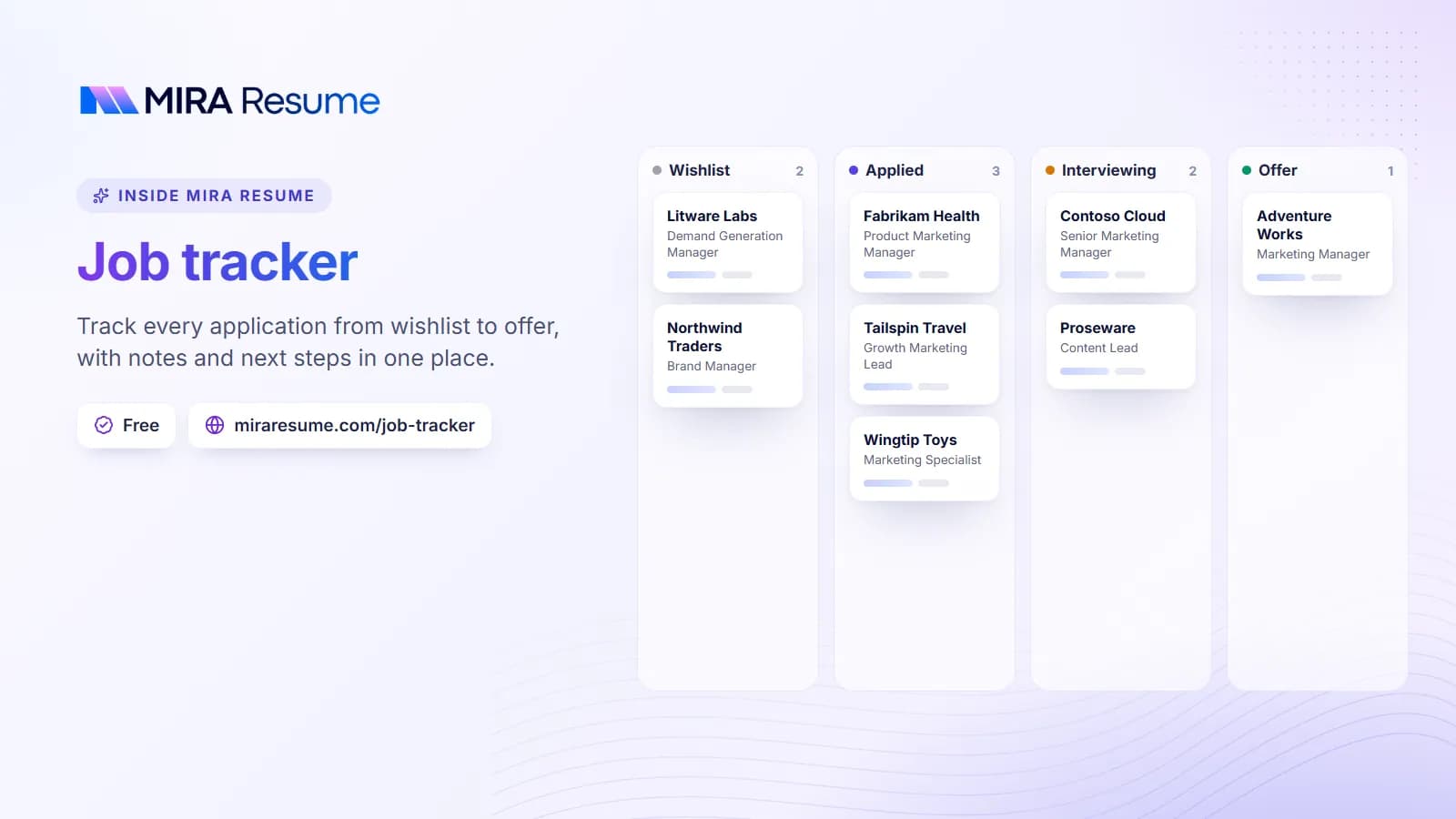
Illustration of the Mira Resume job tracker: Track every application from wishlist to offer, with notes and next steps in one place.
Illustration: Job tracker: Track every application from wishlist to offer, with notes and next steps in one place.Try it

Resume visibility settings on job boards

Many job boards let you upload a resume or profile so recruiters can search for you. That is useful, but remember who else can search the same database: your own HR team, your company's preferred agencies, and recruiters who know your manager.

Setting names differ from site to site, and they change over time. Here are the common kinds of controls and a sensible choice for a confidential search.

Setting (names vary)What it usually doesSuggested choice
Public or searchable resumeEmployers and recruiters searching the database can find youOff, or on only with company blocking and hidden contact details
Private or not searchableYou can still apply, but nobody finds you in a searchThe safest default
Block or hide from companiesSome boards hide your profile from employers you nameAdd your employer, its parent and sister companies
Hide contact detailsEmployers must message you through the platform firstOn
Job alertsEmails you matching jobsFine, sent to your personal email
Open to work or actively looking badgesSignals that you are availableOff, or recruiter-only where the site offers it

Company blocking is helpful but not perfect. It usually matches by company name, so a different spelling or a group company may slip through, and an agency that works for your employer may still see you. Treat any searchable resume as something your employer could find.

A note on "confidential" resumes

For a profile posted in a public database, some people describe their current employer generically, for example "a mid-size logistics company, Pune". That can be reasonable for a public profile, as long as you give the real name the moment you apply or a recruiter asks. Never change job titles, dates or employers to hide your search. That is no longer discretion; it is a false resume.

References are where a lot of confidential searches unravel, usually because someone made a call too early.

  • Use former managers, colleagues who have left your current company, or senior people from earlier roles.
  • Ask each person before you name them, and tell them your search is private.
  • Offer a reference from your current job only after you have a written offer and have resigned.
  • Give recruiters and employers the list yourself, so nobody goes looking for contacts on their own.

Our guide to references on a resume covers how to choose and prepare them. For interview logistics, such as booking time off without obvious excuses, read how to interview while employed.

What does a confidential job posting mean?

A confidential job posting is an advert that describes a role but hides the employer's name. Instead of a company, you might see "Confidential", "Our client", or "A leading company in the fintech sector". Often it is posted by an agency or search firm rather than by the employer itself.

So the confidential job posting meaning is simple: the company wants candidates before it wants publicity. There are plenty of legitimate reasons for that.

  • Replacing someone who has not left yet. The current person in the role may not know, or a handover is being planned.
  • A new product, market or office. Hiring for it would reveal plans competitors would like to know.
  • Restructuring. The company is reorganising a team and does not want rumours inside the business.
  • Senior or sensitive roles. Leadership hires are often handled quietly through search firms.
  • Avoiding a flood of direct contact. A well-known brand may prefer applications to go through one recruiter.
  • A small market. In a niche industry, naming the company would identify the team immediately.

None of that is suspicious. The problem is that scammers know anonymous adverts are normal, and they copy the format.

How to judge a confidential posting and spot scams

A genuine confidential posting looks like any other job, except for the company name. A scam usually gives itself away somewhere else: money, pressure, or a request for information no employer needs yet.

What to checkLooks genuineWarning sign
Who posted itA named recruiter with a real agency website and a consistent profileNo name, no agency, or only a free webmail address with no company behind it
Role detailsSpecific duties, location, seniority and often a salary rangeVague duties, very high pay for little work, "no experience needed" for a senior title
MoneyYou pay nothing at any stageA fee for registration, training, equipment, "processing" or a guaranteed placement
ProcessA screening call, then interviews with real peopleA job offer after a text chat, with no interview
Information requestedYour resume and normal contact detailsBank details, one-time passwords, or ID numbers early on, such as Aadhaar or PAN in India or a Social Security number in the US
Company nameShared after a first call, or before your resume is sentNever shared, even at the offer stage
PaceA normal timeline"Decide today", "only two seats left", urgent pressure to pay or sign

How to verify the recruiter

  1. Search for the agency by name and find its official website.
  2. Call the agency on the number listed on that website, not the one in the message, and ask whether the person works there.
  3. Check that the recruiter's profile has a history that makes sense: past roles, connections, posts.
  4. Ask for the company name before you agree to be submitted. "Before I agree to go forward, could you tell me who the client is?" is a normal question.
  5. Once you know the company, check that the role appears on its own careers page, or ask its HR team directly.

Could the posting be from your own employer?

It can. Companies do post confidential adverts for roles inside their own teams. This is one more reason to ask for the company name before you send a resume, and to tell recruiters which employers to exclude.

If something feels wrong

Stop replying, do not pay, and do not share documents. Report the advert to the job board. If you have lost money or shared bank details, contact your bank straight away and report it to the authorities, such as India's National Cyber Crime Reporting Portal or the Federal Trade Commission in the US.

Even on your own laptop, a job board on screen in a shared space can start a conversation you did not plan to have. Mira Resume's Stealth Mode shows real job listings inside a page that looks like an ordinary spreadsheet, with column letters, row numbers, a formula bar and sheet tabs. You search by typing in the formula bar, for example =JOBS("data analyst", "Bengaluru"), or in plain words. The browser tab shows a neutral file name, and pressing Esc twice jumps to a decoy budget sheet.

It works without an account. Jobs come from the same pool as Mira Scout: public company career boards, remote-job feeds and Adzuna. Applying opens the employer's original posting, so you deal with the employer directly.

Be clear about the limits. Stealth Mode changes what is visible on your screen. It does not hide your browsing from your employer's network, proxy or monitoring software, so use your own device and your own network.

To keep track of every recruiter, submission and reference you have agreed to, use our free job search spreadsheet template.

Frequently asked questions

What does confidential mean on a job posting?

It means the employer's name is hidden, usually because the company is replacing someone, entering a new market, restructuring, or hiring for a senior role. Confidential postings are often handled by agencies or search firms. They can be genuine, but verify the recruiter and never pay a fee to apply or be placed.

Will a recruiter tell my employer I am looking for a job?

A professional recruiter should not, but say it clearly anyway. Tell them your search is confidential, ask them not to contact your current employer or its group companies, and ask them to name each company and wait for your agreement before sending your resume. Confirm these points in a short email.

Should I mention confidentiality in my cover letter?

Yes, in one polite sentence near the end. For example: as my current employer is not aware of my search, I would be grateful if you could treat this application as confidential. You can also ask them to contact you on your personal email and not to approach your employer before an offer.

Are confidential job postings scams?

Most are not, but scammers copy the format. Warning signs include fees of any kind, requests for bank details or ID numbers early on, offers made without an interview, pressure to decide quickly, and a company name that is never revealed. Verify the agency on its official website before sharing your details.

How do I stop my employer finding my resume on job boards?

Set your resume to private or not searchable where the site allows it, hide your contact details, and use any company-blocking feature to exclude your employer and its sister companies. Blocking is not perfect, so treat any searchable resume as something your employer could find, and use personal contact details throughout.

Should I pay a recruiter or placement agency to find me a job?

Be very cautious. Reputable recruiters and agencies are normally paid by the employer that hires you, not by candidates. A request for a registration, training or placement fee is one of the most common warning signs of a job scam. If anyone asks you to pay before you are hired, walk away.

Found this useful? Share it

Send it to a friend who is job hunting, or save it for later.

Read this guide with AI

Get a plain-language summary and help applying it to your own resume. Pick an assistant; it opens with this article and a ready prompt.

Back to Stealth Job Search hub

All articles