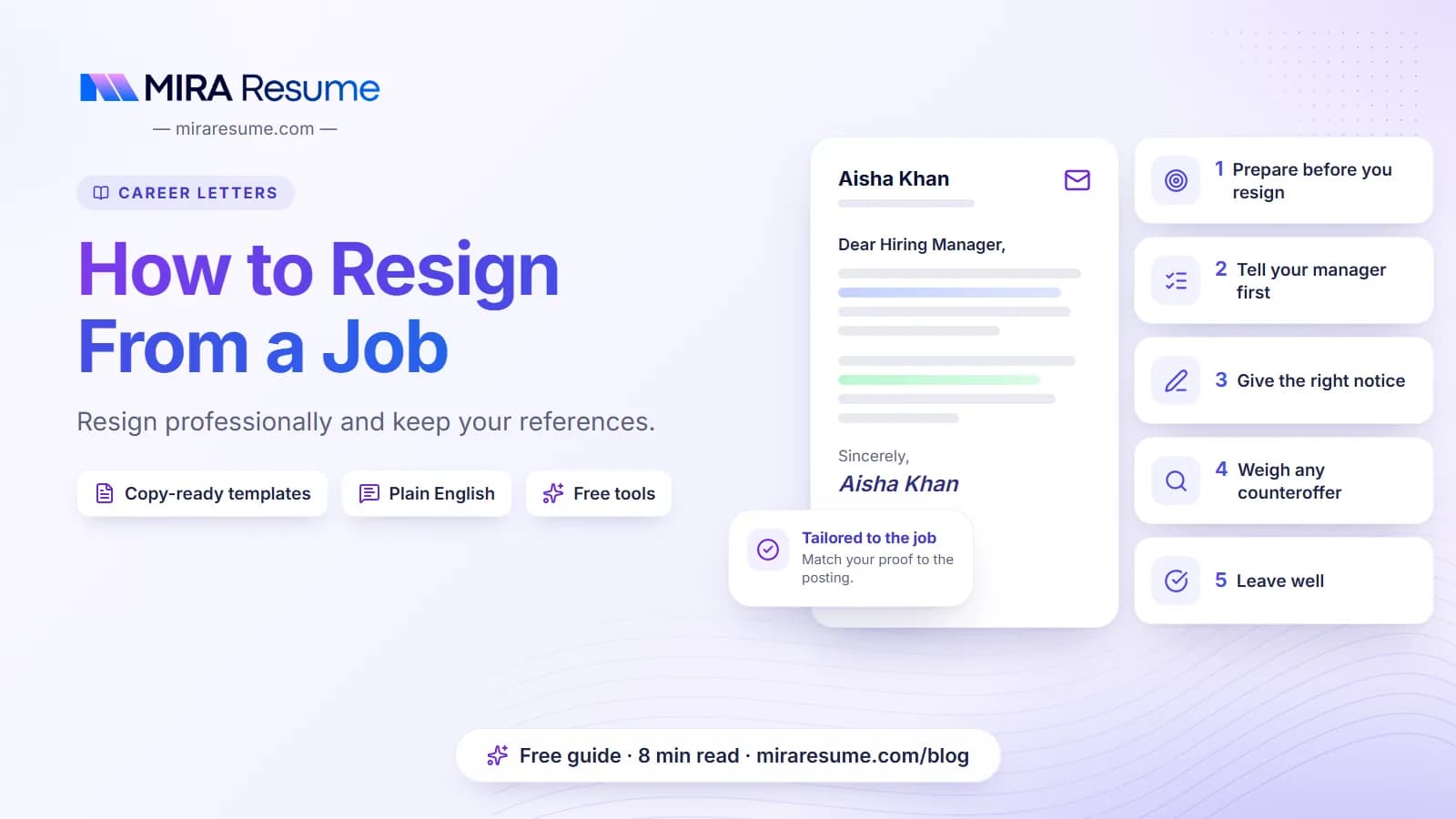

Knowing how to resign from a job can save you stress, protect your references and keep your final paycheck on track. The process is not complicated, but the order of steps matters. Most problems come from rushing, venting, or skipping a check of the contract.
This guide walks you through the whole path. It starts with the decision, then covers the conversation with your manager, the written notice, the weeks that follow, counteroffers, and what to do if you cannot give notice. It is written for beginners, so each step is plain and short.
When you reach the writing stage, use our 2 week notice letter template or the two weeks notice email examples. For wording by situation, see the resignation letter samples.
This article is general information, not legal advice. Employment rules differ by country, state and contract, so check yours.
Before you resign: get ready
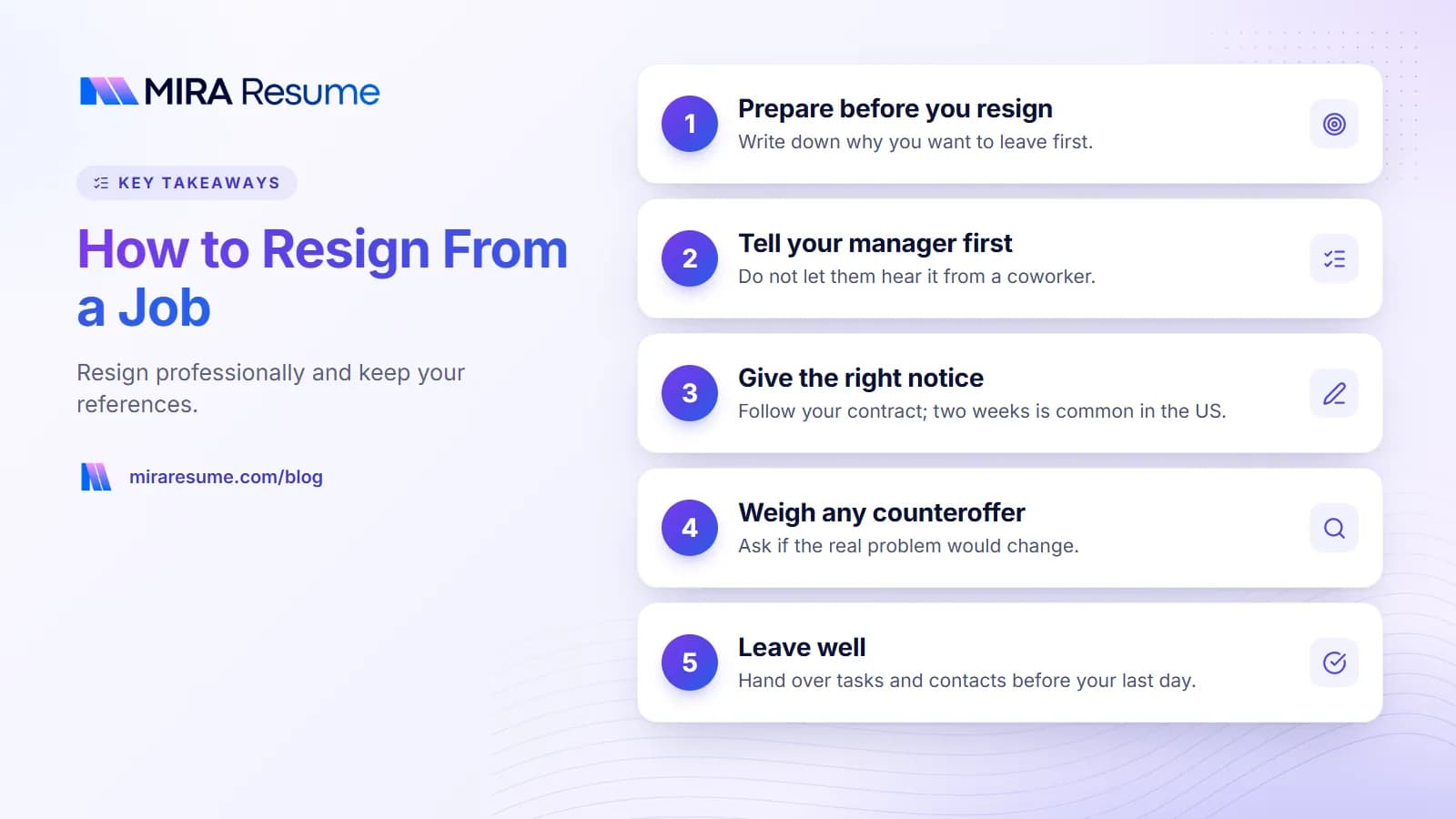
Good resignations start before anyone is told. A little preparation prevents most regrets.
Make sure you really want to leave
Write down why you want to go. Is it pay, growth, your manager, hours, travel, or something else? If the problem could be fixed, you might try to fix it first. If not, you have a clear reason and can leave with confidence.
Have the next step secured
If you are moving to another job, wait for a signed offer. Make sure any checks are done. If you are leaving for school, travel or family reasons, plan your money for the gap. Our guide on resumes with gaps in employment may help if you expect a break.
Read your paperwork
- Your contract or offer letter for notice period and rules about leaving.
- The employee handbook for steps such as who to tell and how.
- Any bonus, commission or relocation rules, because leaving early can change what you receive.
- Rules about competing work or client contact after you leave.
Prepare your own documents
Save personal contacts, a list of your results and sample work you are allowed to keep. Do not copy private company data. Then update your resume, so you are ready for the next step. The AI resume builder can help turn your results into clear bullet points.
| Check | Where to look | Why it matters |
|---|---|---|
| Notice period | Contract, offer letter | Sets your earliest last day |
| Bonus rules | Pay plan, handbook | Leaving early might lose payments |
| Unused time off | Handbook, local rules | May or may not be paid out |
| Benefits end date | HR portal | Plan health cover for the gap |
Step-by-step: how to give your notice
Here is the path in order. Follow it from top to bottom.
- Decide your last day. Use the notice period from your contract. If none is set, two weeks is a common custom in many places.
- Tell your direct manager first. Do not let them hear it from a coworker. Ask for a private meeting.
- Say it clearly and kindly. Short is best.
- Follow with written notice. Send a short letter or email the same day.
- Tell HR if needed. Ask your manager who should do it.
- Plan the handover. Work with your manager on what must be done before you go.
- Tell coworkers when your manager says it is okay.
Words you can use in the conversation
"Do you have a few minutes? I wanted to tell you first. I have accepted a new role, and I am resigning. My last day will be the 20th. I want to make the handover as easy as I can."
Do not apologize more than once, and do not over-explain. If your manager asks why, a short, true answer is enough: "It is a step in a direction I want to grow in."
Remote or hybrid jobs
Ask for a video call. If time zones make this hard, send a short message asking for a time and keep the resignation itself for the call.
If your manager reacts badly
Some managers get upset or ask hard questions. Stay calm. You can say "I understand this is a surprise. I am committed to a smooth handover." Then end the meeting and send the written notice.
How much notice should you give?
There is no single answer. It depends on where you live, your contract, and your role.
Common patterns
- Two weeks is a common custom in many US workplaces, especially for at-will jobs.
- One month or more is common in many other countries and for senior roles.
- Longer notice may apply for jobs with long handovers or legal duties.
- Shorter notice may apply during a trial or probation period.
What if the new employer wants you sooner?
Be honest with them about your contract. A good new employer will respect that you are leaving your old job well. They may even see it as a sign you will treat them fairly later. If possible, ask your current employer if you can leave a little early, but do not promise a date the contract does not allow.
What if your employer wants you to stay longer?
They can ask, and you can decide. If you have a start date, you might offer a few extra days of availability by phone or email, but you do not have to agree.
| Situation | Typical approach |
|---|---|
| At-will role, no contract limit | Two weeks is a polite custom |
| Contract says one month | Follow the contract or negotiate in writing |
| Senior or client-facing role | Offer extra time for handover if you can |
| Probation period | Check for a shorter notice rule |
| Seasonal or temporary job | Follow the end date and tell them early |
What to do about a counteroffer
A counteroffer is when your employer tries to keep you with more pay, a better title or other perks. It can feel flattering. It can also be a trap if the real problem stays the same.
Questions to ask yourself
- Why did I want to leave in the first place?
- Does more money fix that reason?
- If I stay, will this company really change, or only for a few months?
- How would the new employer feel if I changed my mind?
- What would I do in a year if nothing improved?
When staying may make sense
If your main reason was pay or a clear gap such as a missing promotion, and the offer fixes it in writing, staying could be a fair choice. Ask for the details in an email so you have a record.
When leaving may still be better
If the problem is culture, management, growth, or the work itself, a pay bump rarely changes it. Many people who accept counteroffers end up looking again later, but that is not a rule. It depends on your situation.
How to answer
"Thank you. I am grateful that you would like me to stay. I have made my decision, and I am going to move forward with my plan. I want to make sure the transition goes well."
If you need time, say "Thank you. May I think about it until tomorrow?" Do not use the offer as a way to push your new employer for more unless you honestly intend to stay.
What if you cannot give notice?
Sometimes giving two weeks is not possible or safe. This is a serious topic, so be honest with yourself and careful about the details.
Common reasons
- A health problem or an emergency in your family.
- A work environment that is unsafe or abusive.
- A sudden move you could not delay.
- A contract that allows shorter notice.
What to do
- Check your contract and local labor rules. Some places allow leaving without notice in certain cases, and some do not.
- Tell your manager or HR as soon as you can.
- Put it in writing, even if it is just two sentences.
- Offer what help you can, such as a handover note you write in one evening.
- Ask in writing about final pay and returning equipment.
Dear [Name],
Because of [a family emergency / a health matter / an urgent personal reason], I am unable to work a full notice period. I am resigning, effective [Date]. I am sorry for the short notice. I will send a handover note by [Date] and return all equipment as you direct.
Thank you for your understanding.
[Your Name]
If you believe your workplace is unsafe or unlawful, think about getting advice from a local labor office, a union, or a legal professional before you act. That is a different situation from a normal resignation. For related situations, see our guide on how to quit a job you just started.
| Possible consequence | How to lower the risk |
|---|---|
| Unhappy manager or no reference | Be honest, brief and polite; offer a handover note |
| Delay in final pay or paperwork | Ask in writing for a timeline |
| Contract penalty or bonus loss | Read the contract first |
| Gap in your work history | Prepare a short, true explanation |
Exit steps: how to leave well in your last weeks
Your last weeks are the part people remember. A strong finish can turn a boss into a future reference.
Hand over your work
- Write a list of all open tasks and their status.
- Note who to contact for each client, vendor or system.
- Store files in shared folders, not on your laptop.
- Offer to train the person taking over.
Keep working well
Do not coast. Show up, stay polite, and complete what you promised. People often form their final opinion of you from the last few days.
Say thanks the right way
Write short personal notes to a few people who helped you. Ask whether you may use them as references later, and whether they would write a LinkedIn recommendation.
Exit interview
Some companies hold an exit interview. You can be honest, but stay calm and specific. Talk about processes, not people. You are never required to share more than you want.
Protect your career records
- Save your results, such as projects, numbers and praise, in a personal file.
- Update your resume while the work is fresh. Our guide on action verbs for your resume helps with wording.
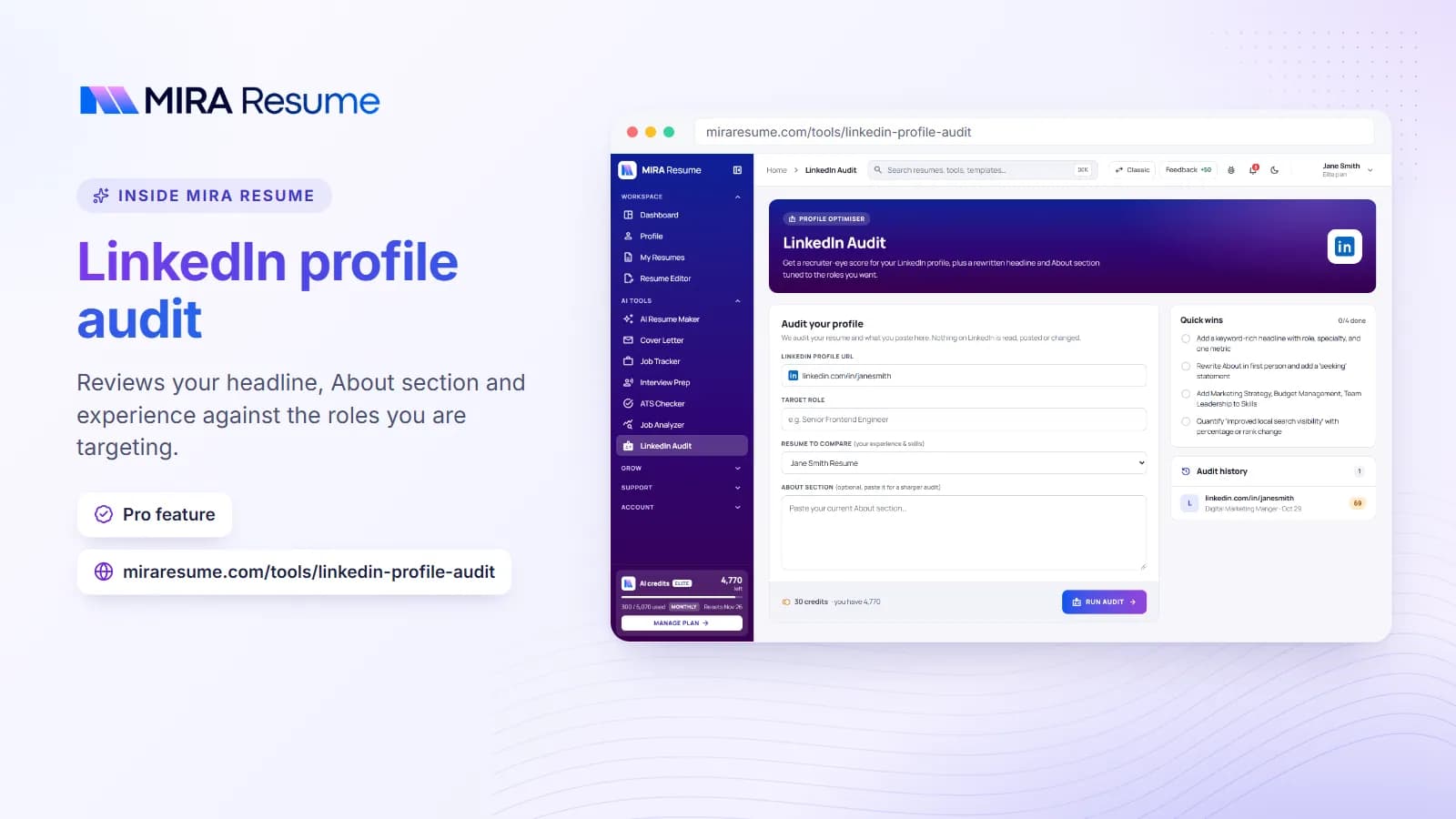
- Run your profile through the LinkedIn audit to see what to fix.
- Collect contact details for references. See references on a resume.
Common mistakes when you resign
- Resigning before the offer is final. Wait for the signed paperwork.
- Telling coworkers before your manager. News travels fast.
- Venting in the letter or at the meeting. You may need a reference later.
- Skipping the contract. A missed notice period or bonus rule can cost you.
- Accepting a counteroffer on impulse. Give yourself a night to think.
- Doing nothing on your last day. Finish clean. Return items and say thanks.
- Taking company data. This can create legal problems.
- Badmouthing the old company at the new one. It makes new teammates wary.
A simple timeline
| When | What to do |
|---|---|
| Before notice | Secure the offer, read the contract, update your resume |
| Day of notice | Tell your manager, send the written notice |
| Week 1 | Write handover notes, tell the team when approved |
| Week 2 | Train others, collect references, return equipment |
| Last day | Say thanks, confirm final pay and benefits details |
If you are still searching, use the job tracker to keep interviews and follow-ups organized, and prepare with interview prep so you are ready for the next conversation.