
A high-paying job with high stress is a trade. You give extra energy, time or risk, and the employer gives extra money or status. Some people enjoy that trade. Others regret it. The right answer depends on you, not on a rule.
This guide does not tell you to stay or quit. It helps you look at the trade clearly. You will learn what "high stress" really looks like, how to count the true cost, how to set limits, and how to plan an exit if the price is too high. We use no invented numbers, because pay and stress differ across jobs and places.
If you are looking for the opposite, a calmer path, read our guide on low stress high paying jobs.
This is career guidance, not medical or mental health advice. If stress is affecting your health, speak with a qualified professional.
What makes a high-paying job high stress?
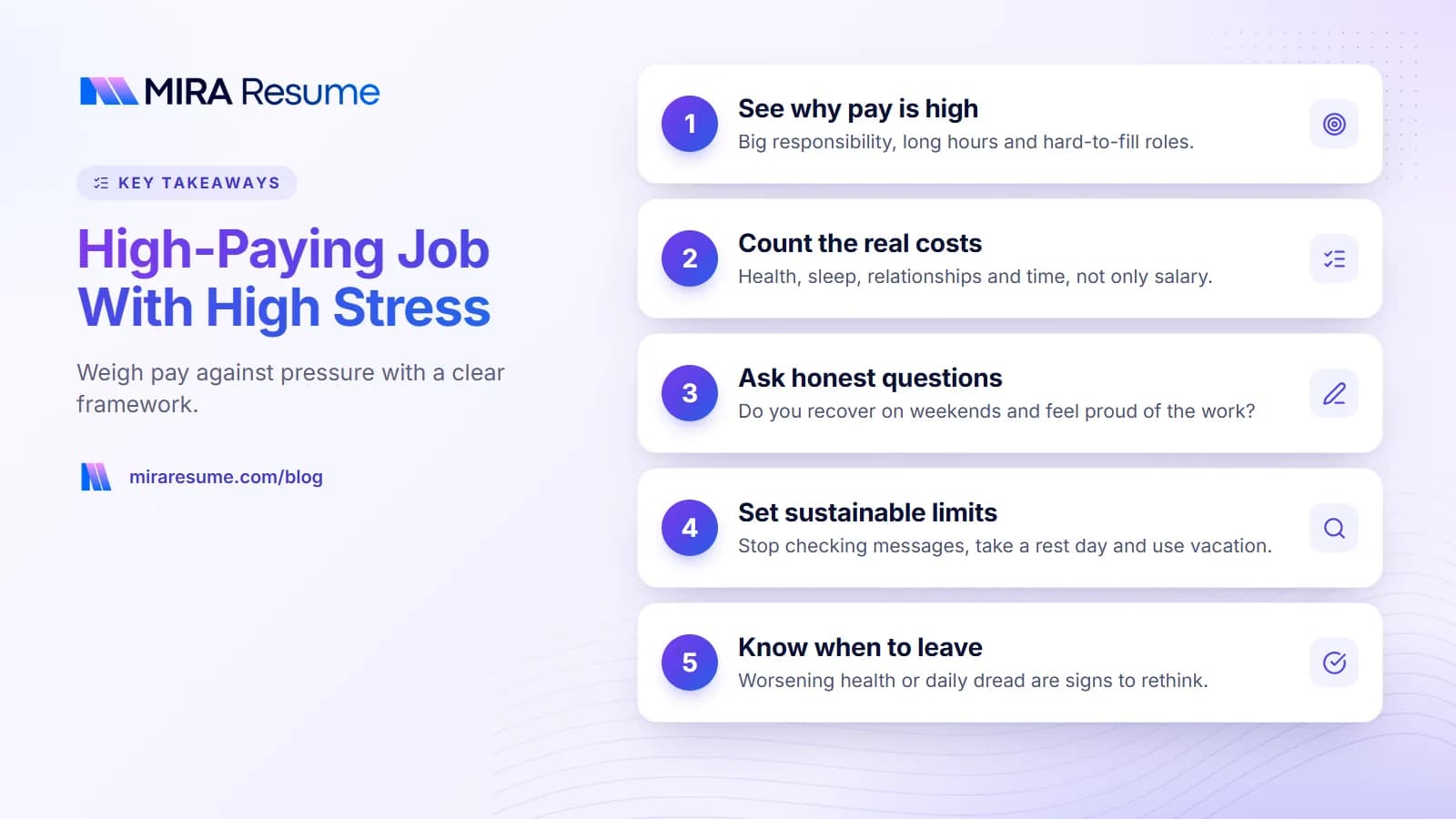
Companies often pay more when a job is hard to do, hard to fill, or carries more risk. Many high-pay roles share a few traits.
Typical features
- Big responsibility: decisions that affect many people, money or safety.
- Long or unpredictable hours: evening calls, weekends, travel.
- Tight deadlines: pressure to deliver fast and well.
- Constant evaluation: targets, ratings or public results.
- High competition: many people want your seat.
- Emotional load: working with people in hard moments.
Different from a bad job
A demanding job is not the same as a toxic one. A demanding job asks a lot but treats you fairly, gives support and rewards effort. A toxic job adds stress through unclear goals, unfair treatment or disrespect. You may accept the first for a good reason. You should rarely accept the second.
| Demanding job | Unhealthy job |
|---|---|
| Stress comes from the work itself | Stress comes from people or unfair rules |
| You get tools and support | You are left to cope alone |
| Effort is noticed and rewarded | Effort is ignored or taken for granted |
| You can say no sometimes | Boundaries are punished |
| You can see a path forward | There is no growth or end in sight |
The real cost of a stressful job
Salary is easy to count. The costs of stress are quieter, so people forget them. Make a list that includes both sides.
Costs to think about
- Health: poor sleep, constant tiredness, headaches or low mood can be signs that the load is too heavy. See a health professional if you notice them.
- Time: long hours reduce time for family, friends and rest.
- Relationships: work worries can spill into home life.
- Interests: you may stop doing the things you love.
- Money you spend to cope: takeout, travel and quick fixes can eat into pay.
Benefits worth counting
- Higher income that helps you pay debt, save, or support family.
- Skills and experience that raise your future value.
- Contacts, status and doors that open later.
- A sense of purpose, if you care about the work.
Work out your hourly pay
Estimate your total yearly pay. Then estimate the hours you truly spend on work, including late emails, travel and thinking about work at home. Divide pay by hours. The result is a rough hourly rate. Compare it with a calmer job. You may find the gap is smaller than you thought. We are not giving any number here, because it is different for everyone.
| What to measure | How |
|---|---|
| True weekly hours | Track them honestly for two weeks |
| Energy after work | Rate it from 1 to 5 each day |
| Time off you can really take | Count days you actually used |
| Money saved per year | Look at your actual savings, not your salary |
Questions to decide if it is worth it for you
Be honest and write your answers down. If your answers surprise you, that is useful.
About the present
- Do I feel proud of the work most weeks?
- Do I recover on weekends and holidays?
- Do I have people I can talk to about work?
- Is my health the same or better than a year ago?
About the purpose
- What is the money for? A house, debt, saving, family support?
- How much is enough? Do I have a number or a date?
- Would I do this job if it paid a little less?
About the future
- Will this job lead to something better, or just more of the same?
- What would I do next if I left?
- If this is temporary, when does it end?
People who feel good about a hard job often have a clear reason, some control and a way to rest. People who feel stuck often have none of those.
A quick scorecard
| Statement | If you agree | If you disagree |
|---|---|---|
| I have a clear money goal | Good sign | Define one |
| I can rest and recover | Good sign | Warning sign |
| I am learning and growing | Good sign | Ask what you gain |
| My manager respects my limits | Good sign | Warning sign |
| My health is stable | Good sign | Take it seriously |
How to make a high-pressure job more sustainable
You may not be able to change the job, but you can often change how you work in it.
Set limits you can explain
- Pick a time when you stop checking messages, and tell your team about it.
- Protect at least one day each week without work.
- Take your vacation days. They exist for a reason.
Manage the work
- List your top three priorities each morning.
- Ask your manager what matters most when everything feels urgent.
- Say "I can do A or B by Friday, not both" when you are overloaded.
- Delegate or share work where you can.
Protect your body and mind
- Keep regular sleep, food and movement habits.
- Keep a few people outside work you can talk to.
- Think about talking to a doctor, counselor or employee assistance service if stress feels too heavy.
Build your options
Having a way out lowers stress, even if you never use it. Keep your resume fresh using the resume builder. Save your results with numbers. Keep your network warm. A simple habit of tracking wins each month makes updates easy. See action verbs for your resume for clear phrasing.
| Habit | Why it helps |
|---|---|
| Daily top-three list | Reduces overwhelm |
| Fixed stop time | Protects rest |
| Monthly win log | Keeps your resume ready |
| Regular check-in with a friend or mentor | Gives perspective |
Signs it may be time to leave
Staying in a hard job is a choice. Leaving is also a choice. These signs suggest you should think hard about the second one.
- Your health is getting worse and you cannot find a fix.
- You dread work every day, not just busy weeks.
- You feel numb, angry or hopeless about the work.
- Your relationships are suffering.
- The promised reward keeps moving further away.
- Your manager or company ignores serious concerns.
- You see or face unfair or unsafe treatment.
Plan the exit calmly
- Decide what you want next: less pressure, a new field, or a slower pace.
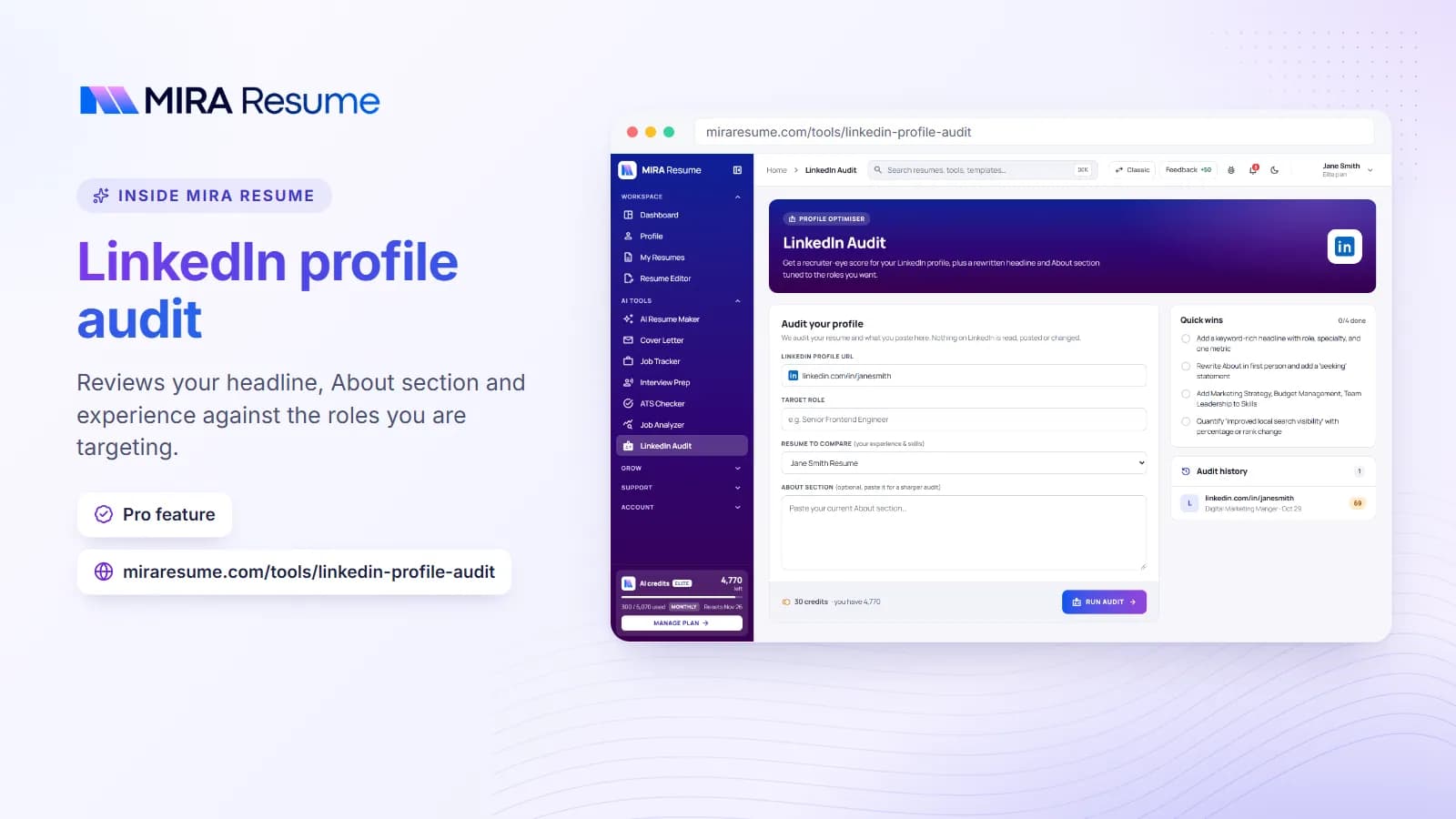
- Update your resume and LinkedIn. Use the LinkedIn audit to spot gaps.
- Start applying while you are still employed, if you can. Track each application with the job tracker.
- Practice your story for interviews with interview prep.
- When you have an offer, follow the steps in how to resign from a job.
How to explain why you left a high-pressure job
Keep it positive and honest. You might say, "I learned a lot and delivered strong results. I am looking for a role with a more sustainable pace." Do not blame the former employer.
If you need a break before the next job, our guide on resumes with gaps in employment can help you present it clearly.
How to show high-pressure experience on your resume
If you have worked in a demanding role, you have real strengths that employers value. Show them with facts, not with dramatic words.
Strengths to highlight
- Working to deadlines and handling several priorities at once.
- Staying calm and clear when things changed fast.
- Making decisions with limited information.
- Working with difficult stakeholders or customers.
Write it with proof
Instead of "thrived in a high-stress environment", write what you did and what happened, using your own real results. For example, "Led a team of 6 through three product launches, each delivered on the planned date." Only use numbers that are true.
Keep it readable
Short bullets, clean design and action verbs help. Our guides on resume summary examples and how to show a promotion on a resume are good places to start.
If you want help turning your experience into strong lines, try the AI resume builder. Check the result with the ATS checker before you apply.
| Weak line | Better line |
|---|---|
| Worked under pressure | Closed 20 client requests per week within agreed deadlines |
| Handled stress well | Kept service levels steady during a staff shortage by re-planning shifts |
| Responsible for many tasks | Managed budgeting, reporting and vendor contact for a department |
Replace the sample numbers with your own. Do not invent results.
Common mistakes when weighing pay against stress
- Only looking at salary. Count hours, health and happiness too.
- Telling yourself it is only for a year, again and again. Set an end date.
- Comparing yourself with others. Their trade may fit them, not you.
- Ignoring early signs. Small warning signs are easier to fix than a breakdown.
- Quitting in anger. Plan the exit when you can.
- Thinking a calm job pays nothing. Many calmer roles pay fairly. Check real data.
- Hiding from the numbers. Work out your savings goal and what you really need.
When you are ready to look at calmer options, read low stress high paying jobs.
A two-column test you can do tonight
Take a sheet of paper and draw a line down the middle. On the left, write everything the job gives you: money, skills, contacts, pride. On the right, write everything it takes: hours, sleep, patience, time with people you love. Be specific. "Missed three family dinners this month" is better than "no balance".
| Gives you | Takes from you | Can it be changed? |
|---|---|---|
| Income for a specific goal | Evenings and weekends | Maybe, by setting limits |
| New skills and a stronger resume | Sleep and energy | Sometimes, by changing habits |
| Respect and status | Time for hobbies | Rarely, without a role change |
Look at the last column. If most of the "takes" can be changed, you may only need new boundaries. If most cannot, the job itself is the issue. Repeat the exercise in three months. Your answer may change as your life changes, and that is normal.
Talk to someone you trust
A partner, friend or mentor often sees your stress more clearly than you do. Ask them, "How have I seemed lately?" Their answer can be useful information.