
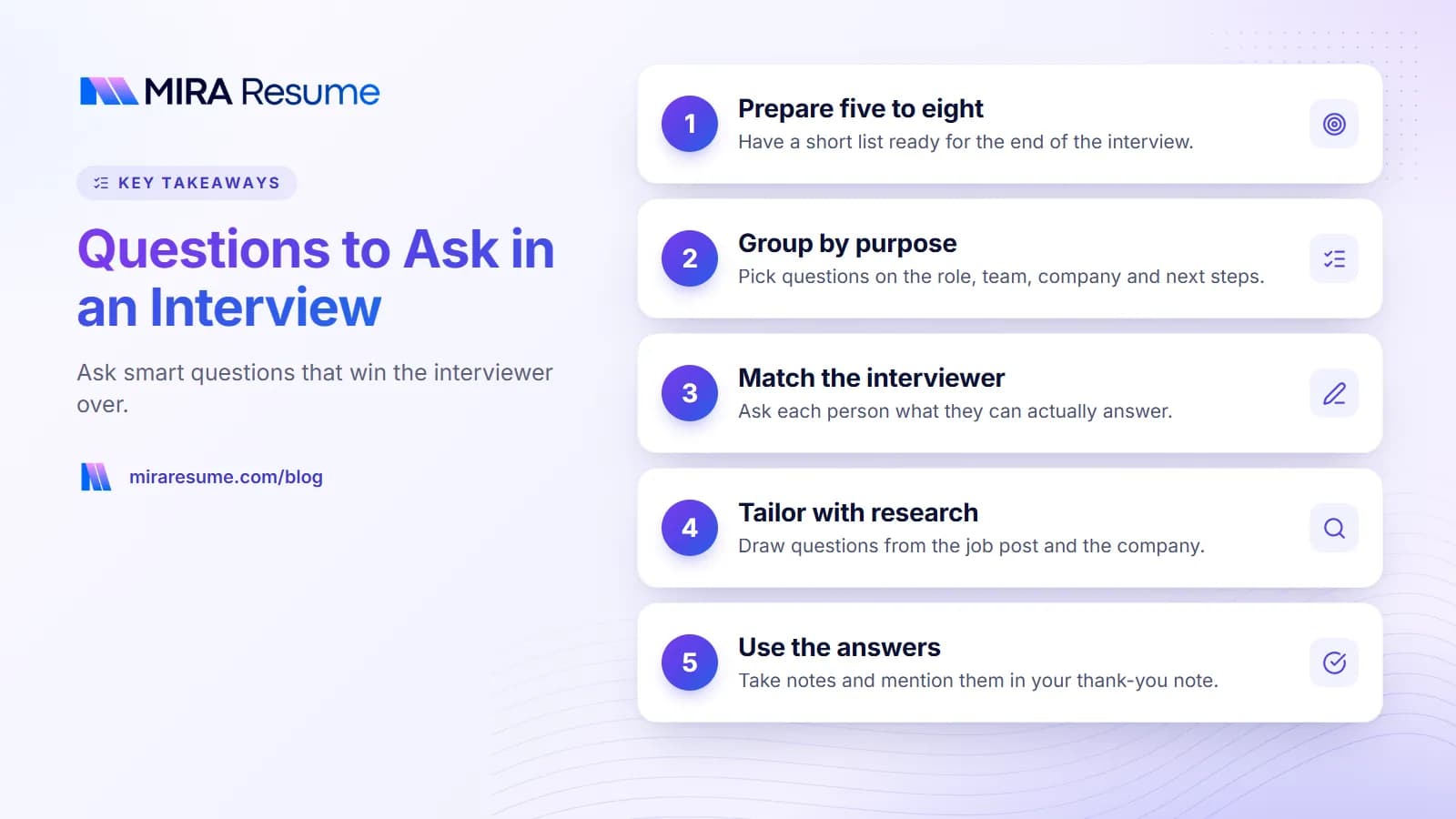
The best questions to ask in an interview help you decide whether the job is right for you while showing the interviewer you have thought seriously about the role. Prepare five to eight, aimed at what success looks like, how the team works, and the next steps, and ask two or three that fit the conversation.
Nearly every interview ends with some version of "Do you have any questions for us?" Saying "No, I think you covered everything" wastes one of the few moments you control. A thoughtful question shows interest, and the answer gives you real information you cannot get from the job post.
Below you will find 38 questions grouped by purpose, a table of which questions suit which interviewer, questions to hold back early on, how to tailor your list, and how to turn the answers into a stronger thank-you note.
Why the questions you ask matter
An interview is a two-way conversation. The employer is checking whether you can do the job. You are checking whether you want it. Your questions serve both goals.
- They show preparation. A question that references the job post or the company's recent work shows you did your homework.
- They show how you think. Asking how success is measured suggests you care about results, not just duties.
- They uncover deal-breakers. You may learn about workload, management style or team changes that matter to you.
- They give you material for later. Specific answers make your thank-you note and follow-up far more personal.
The goal is not to impress with clever wording. It is to have a real conversation about the work. Plain, sincere questions usually land better than ones that sound rehearsed.
How many questions to prepare
Prepare more than you will ask, because some will be answered during the interview. A simple rule of thumb:
| Interview type | Prepare | Plan to ask |
|---|---|---|
| Recruiter or phone screen | 3 to 5 | 1 to 2 |
| Hiring manager interview | 6 to 8 | 2 to 4 |
| Peer or team interview | 4 to 6 | 2 to 3 |
| Executive or final round | 3 to 5 | 1 to 2 |
| Panel interview | 6 to 8 | 2 to 3, aimed at different people |
Watch the clock. If the interviewer says there are five minutes left, ask your single most important question and one about next steps. If they have plenty of time and seem happy to talk, ask more. Avoid repeating the same questions in every round. Each interviewer sees a different part of the job, so vary your list.
38 good questions to ask the interviewer, grouped by purpose
Pick the questions that matter to you, and change the wording so it sounds natural in your voice. You do not need one from every group.
About the role and what success looks like
- What does a typical day or week look like in this role?
- What would success look like in the first 90 days?
- What are the most important things you would want me to achieve in the first six months?
- What is the biggest challenge someone in this role will face?
- How will performance in this role be measured?
- Is this a new position, or would I be stepping into an existing one?
About the team
- Who would I work with most closely day to day?
- How is the team structured, and where does this role fit?
- How does the team divide work and make decisions?
- What do you enjoy most about working with this team?
- Which other teams does this role work with most often?
- How does the team handle competing priorities or deadlines?
About the manager's style
- How would you describe your management style?
- How often do you meet one-on-one with people on your team?
- How do you prefer to give and receive feedback?
- What have past people in this role done that you really valued?
- How do you help someone new get up to speed?
About growth and learning
- What does onboarding or training look like for this role?
- How have people in this role grown or moved on within the company?
- Are there chances to learn new skills or take on stretch projects?
- How does the company support development, such as courses or certifications?
- How are promotions or role changes usually decided?
About culture and ways of working
- How would you describe the team's culture in a few words?
- What kind of person tends to do well here?
- How does the team work across locations or hybrid schedules?
- What has changed about how the team works over the past year?
- How does the company recognize good work?
About the company's direction
- What are the company's biggest priorities for the next year?
- How does this team contribute to those goals?
- What challenges is the company working through right now?
- I read about [recent launch or news]. How does that affect this team?
- What sets the company apart from others in the same market?
- What are you most excited about in the company's future?
About next steps
- What are the next steps in the hiring process?
- When do you expect to make a decision?
- Is there anything about my background you would like me to clarify?
- Is there anything else I can share that would help your decision?
- Who should I contact if I have more questions later?
Which questions to ask which interviewer
Each person in the process knows different things. Aim your questions at what they can actually answer. A recruiter may not know the details of the daily work, and a teammate may not know the hiring timeline.
| Interviewer | What they know best | Good questions to ask them |
|---|---|---|
| Recruiter or HR | Process, timeline, benefits, pay range, logistics | What are the next steps? What is the timeline? What is the pay range for this role? What does the hybrid or on-site policy look like? |
| Hiring manager | Goals, expectations, team, how success is judged | What would success look like in 90 days? What is the biggest challenge in this role? How do you prefer to give feedback? |
| Peer or future teammate | Daily work, tools, team habits, workload | What does a typical week look like for you? How does the team share work? What do you enjoy most about working here? |
| Executive or senior leader | Strategy, company direction, priorities | What are the company's biggest priorities this year? How does this team support them? What are you most excited about? |
| Panel | A mix of the above | Ask one question to the manager about success and one to a peer about the day-to-day work. |
These are the most useful questions to ask the hiring manager in particular, because they are the person whose expectations decide whether you will thrive. Use your time with them to understand what they need most.
Good questions to ask at the end of an interview
When the interviewer asks "Any questions for me?" near the end, you have time for one to three. These work well as closers because they are useful and easy to answer briefly:
- "What would success look like in the first 90 days?"
- "Is there anything about my experience you would like me to expand on?"
- "What are the next steps, and when should I expect to hear from you?"
The middle question gives you a chance to address a concern before you leave the room. If the interviewer raises something, answer briefly and calmly with a real example. If they say there is nothing, you have lost nothing.
The last question matters because it tells you when to follow up. Write the date down. If that date passes with no news, our guide to the follow up email after interview shows what to send.
Questions to avoid early in the process
Some questions are fine to ask eventually but can land badly too early, or are better asked of a different person. Others are best skipped entirely.
| Question type | Why to be careful | A better approach |
|---|---|---|
| What does your company do? | Suggests you did no research. | Ask about something specific you read: "I saw you launched X. How is it going?" |
| How much does this pay? (to the hiring manager in round one) | Can shift focus from fit to money before mutual interest is clear. | Ask the recruiter about the range, or check the post first. |
| How much vacation will I get? | Fine to know, but better asked of the recruiter or once an offer is close. | "Could you share an overview of the benefits?" to the recruiter. |
| How soon can I be promoted? | Can sound like you want to leave the role before starting. | "How have people in this role grown here?" |
| Did I get the job? | Puts the interviewer on the spot. | "What are the next steps?" |
| Questions already answered | Shows you were not listening. | Build on the answer: "You mentioned X. Could you say more about Y?" |
| Yes or no questions | Produce short answers and little insight. | Start with "how" or "what". |
A balanced view on salary
Pay is a fair and important topic, and you should not feel embarrassed to raise it. Timing and audience are what matter. In a recruiter screen, asking about the pay range is often normal and can save both sides time. Some states and countries require pay ranges in job posts, so check the listing first. With a hiring manager in an early round, it is usually better to let them or the recruiter raise it. If the topic comes up and you are asked for your expectations, have a researched range ready.
How to tailor questions from the job description and company research
Generic questions are fine. Tailored questions are better, because they show you understand this specific job. Here is a quick method.
- Highlight three to five key duties or skills in the job post. For example, "manage vendor relationships" or "improve onboarding for new customers".
- Turn each into a question. "The post mentions improving onboarding. What is not working well today?"
- Read the company's recent news, blog or product updates. Pick one item that relates to the team.
- Turn that into a question. "I read that you are expanding into the healthcare market. How will that change this team's work?"
- Check the interviewer's profile, if available. Their role and background can help you choose which questions to aim at them.
Before and after
| Generic | Tailored |
|---|---|
| What are the main duties? | The post lists vendor management first. How much of the week goes to that? |
| What is the culture like? | You mentioned the team moved to a hybrid schedule this year. How has that changed collaboration? |
| What are the challenges? | With the new product launch, what is the biggest pressure on this team right now? |
The job description analyzer can help you pull out the main skills and duties from a post. You can then use them to plan both your questions and your answers. When you prepare answers to behavioral questions, the same STAR structure used in our STAR method resume guide works well out loud.
Take notes and use the answers in your thank-you note
The answers to your questions are some of the most useful things you will hear in the interview. Capture them.
- Bring a notebook or a printed copy of your questions. It is normal to glance at it.
- Ask before you write a lot. "Do you mind if I jot down a few notes?" is polite and almost always welcome.
- Write keywords, not sentences. Keep eye contact and listen. You can fill in details right after.
- Spend five minutes after the interview writing down what you learned. Note names, the main challenge they mentioned, and the timeline.
Turning an answer into a thank-you line
Pick one answer that connects to your strengths and reference it in your note. For example:
Thank you for explaining the onboarding challenges your team is working through. Hearing that new customers often get stuck in the first week made me think of the welcome guide I built at my last job, which cut our setup questions noticeably. I would be glad to bring that experience to your team.
One specific detail like this shows you listened, and it reminds the reader why you fit. For full templates, see our thank you letter after interview guide. If the decision date passes with no word, use our follow-up email templates. A job tracker helps you keep notes and dates for each application in one place.
Asking questions in a virtual interview
Video interviews follow the same rules, with a few practical differences.
- Keep your list close but off-screen. A sticky note near your camera or a short printed page works. Avoid reading from another window, which can make your eyes drift.
- Pause before you ask. Video lag can cause people to talk over each other. A small pause after the interviewer finishes helps.
- Address people by name in a panel. "Priya, this one is for you" makes it clear who should answer when several people are on screen.
- Ask about remote working if it applies. "How does the team stay connected across locations?" is a natural question in a video call.
- Take notes on paper. Typing can be loud on a microphone and looks like you are distracted.
- Confirm next steps clearly. Calls can end abruptly when a meeting runs over. Ask about the timeline before the last minute.
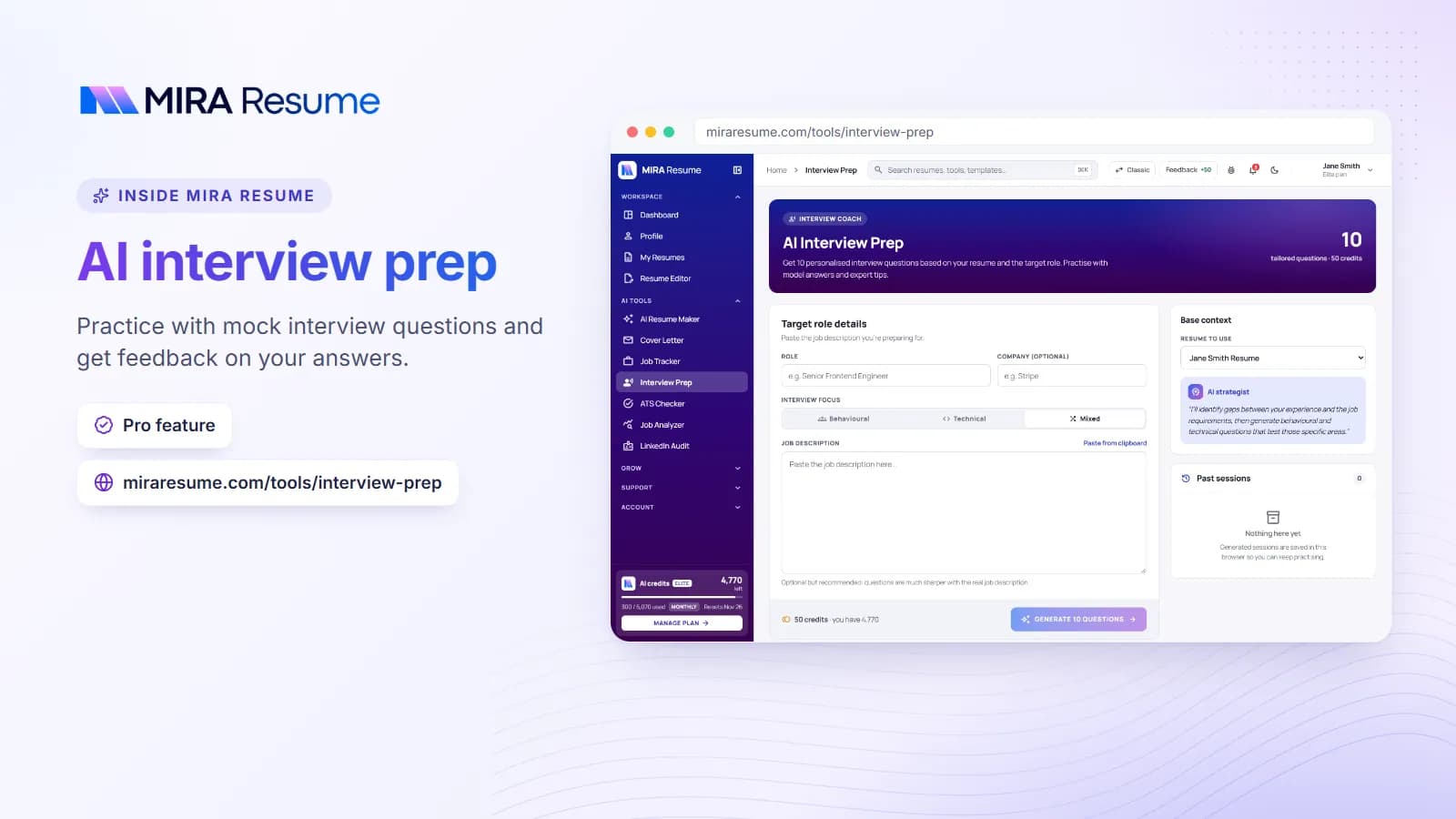
Your questions are only half of the interview. To rehearse your answers to the questions they are likely to ask you, the AI interview prep tool turns a job description and your resume into a practice set. If you already have an account, you can jump straight into the interview prep workspace.
A simple prep worksheet
Use this quick plan the day before each interview.
- Write down who you are meeting and their role.
- Choose two questions about the role and success.
- Choose one question about the team or manager style.
- Choose one tailored question from the job post or company news.
- Choose one next-steps question.
- Cross out any that the job post or website already answers.
- Order them by importance, so the best one comes first if time runs short.
That gives you five strong questions in job interview settings of any kind, and room to adapt if the conversation goes somewhere unexpected. Listen carefully, follow up on interesting answers, and treat the interviewer's replies as useful information for your decision, not just a box to tick.