Coming soon
AI Resume Tools

Mira Scout vs Final Round AI: Which One Fits Your Job Search?

Mira Scout vs Final Round AI compared: Final Round AI helps in interviews, while Mira Scout handles finding jobs and applying before the interview.

Mira Resume Editorial Team · Career content team Published Updated 7 min read
Mira Scout vs Final Round AI: cover image for the Mira Resume guide, with an example resume and the 0 main points

Mira Scout vs Final Round AI is a question about what you want software to do for you. Final Round AI is generally described as an interview assistant, built around live answer suggestions and mock interviews. Mira Scout, coming soon to Mira Resume Pro and Elite, works earlier: it finds matching jobs and can apply within your rules. They cover different stages.

These tools are less rivals than neighbours. One helps you get the interview; the other helps you perform in it. This guide compares them side by side, explains where each fits, and covers the trade-offs honestly. Mira Resume is not affiliated with Final Round AI. The Mira Scout screens shown below are illustrations with sample data, because the feature has not launched yet. Mira Scout was previously called AI Career Ops; only the name has changed, and the plans and rules described here are the same.
The short answer

A job search has a before and an after. Before: finding roles and getting applications in. After: interviews and offers. Mira Scout works on the before. Final Round AI is generally positioned around the after, with interview practice and in-the-moment help.

That makes this less a head-to-head and more a question of which stage is your bottleneck. If you are not getting interviews, work on the front half. If you are getting interviews but not offers, work on the back half.

What Final Round AI is

Final Round AI describes itself as an AI interview assistant. Its own pages and third-party reviews point to a live Interview Copilot that can transcribe questions and suggest answers during a call, mock interviews with feedback, and supporting tools such as a resume builder. Some reviews also mention optional add-ons for job applications.

Pricing and plans vary widely between sources, and the free options are limited, so confirm everything on the vendor's own site. Also check an employer's rules before relying on live AI help during a real interview, as some prohibit it.

What Final Round AI does well

Interviews are stressful, and practising out loud helps. Interview assistants are good at:

  • Mock interviews. Practising with realistic questions builds confidence and exposes weak answers.
  • Feedback on structure. Frameworks like STAR make answers clearer. See our guide to the STAR method for how to shape results-focused stories.
  • Preparing a bank of stories. A few strong examples can be reused across many questions.

The caution is the live-assist use case. Relying on real-time prompts during an actual interview can backfire if you sound scripted, and some employers consider it unacceptable.

Where Mira Scout is different

Mira Scout is the opposite end of the timeline. The AI Job Search Agent and Job Finder brings you roles worth applying to, and the Jobs Applier can send tailored applications within rules you control, logging each one in the Job Tracker. Its job is to turn your resume into more of the right interviews.

Mira Resume also includes interview preparation tools in the dashboard, so you can practise answers there too. The honest summary: Mira Scout helps you get in the room, and interview practice helps you do well once you are there.

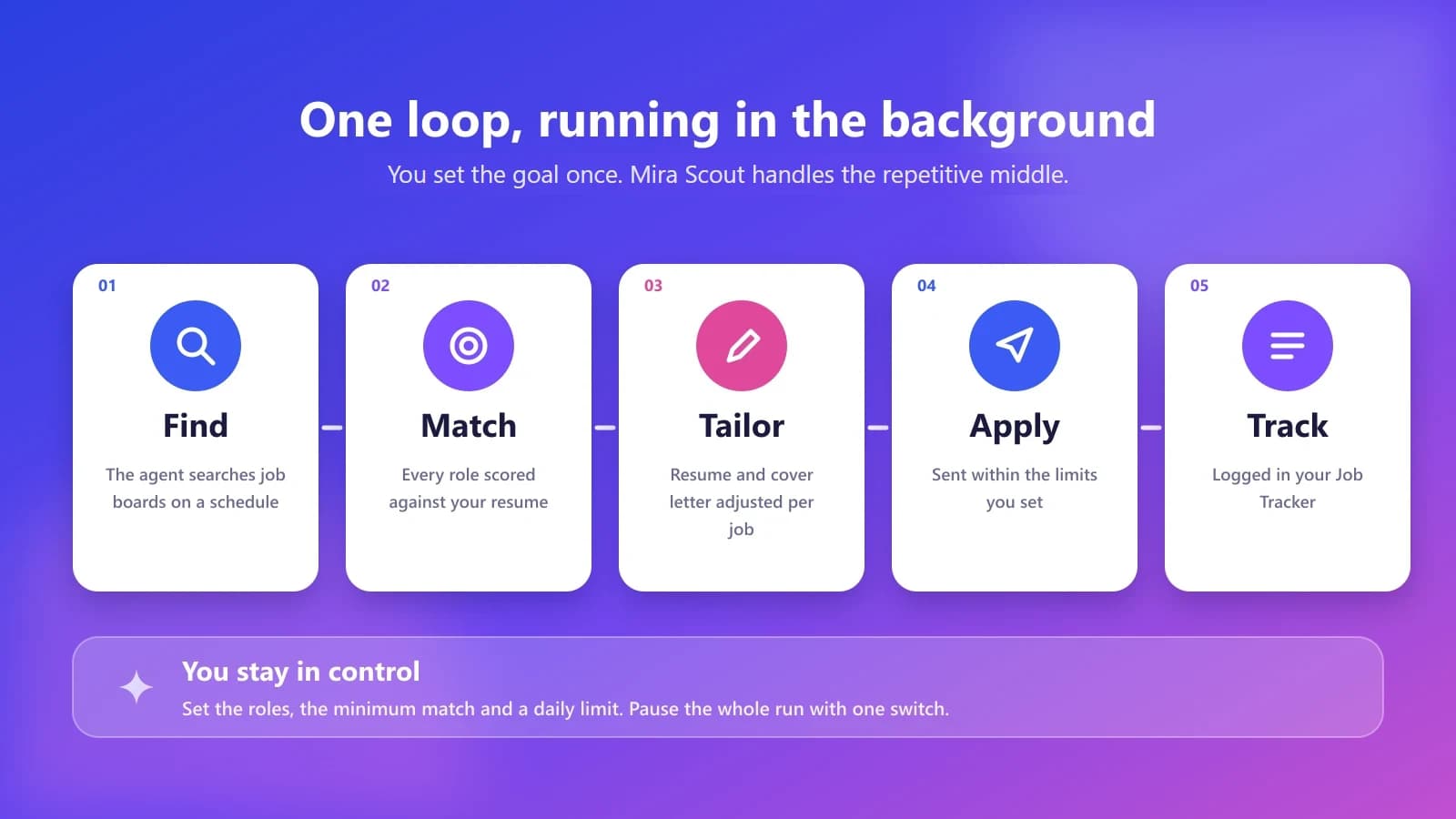
The Mira Scout loop in five steps: find, match, tailor, apply and track
Illustration: the Mira Scout loop. You set the goal once, and the repetitive middle runs in the background.

Mira Scout vs Final Round AI: side-by-side comparison

This table describes what each tool is designed for. Final Round AI details come from its own published pages and third-party reviews, and may have changed, so check its website directly. Mira Scout details describe our plan and may change before launch.

QuestionFinal Round AIMira Scout (coming soon)
Main jobInterview practice and live helpFind jobs and apply before the interview
Stage of searchAfter you have an interviewBefore: search and applications
Core featureInterview copilot, mock interviewsJob agent, finder and applier
Starting pointAn interview question or mock sessionYour resume and preferences
Risk to manageEmployer rules on live AI assistanceQuality of applications at volume
OutputSuggested answers and feedbackRanked matches and a log of applications
AvailabilityAvailable nowPro and Elite members, launching soon

Where to spend your effort: interviews or applications

It helps to diagnose before you buy anything. If you send many applications and hear nothing, the problem is upstream: the resume, the targeting or the volume. A clean resume, the right keywords and applications aimed at fitting roles matter most. Use the ATS checker and our guide on how an ATS works to look for formatting and keyword problems.

If you do get interviews but no offers, the problem is downstream: preparation, stories and follow-up. There, mock interviews, a good set of examples and a thank-you note do more than more applications. Match your tool to your actual bottleneck.

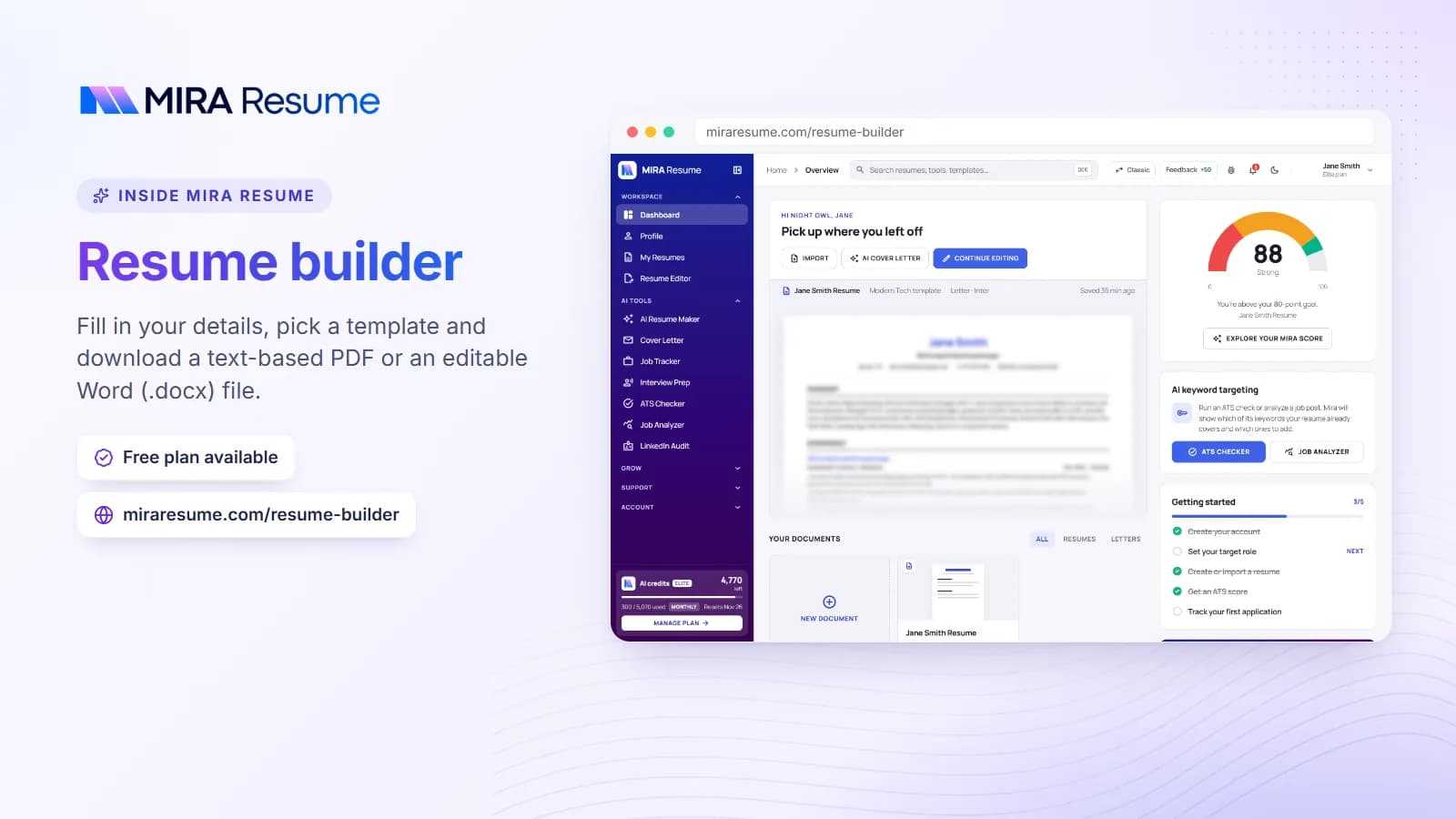
Screenshot of the Mira Resume resume builder (Fill in your details, pick a template and download a text-based PDF or an editable Word (.docx) file.)
Screenshot: Resume builder: Fill in your details, pick a template and download a text-based PDF or an editable Word (.docx) file.Try it
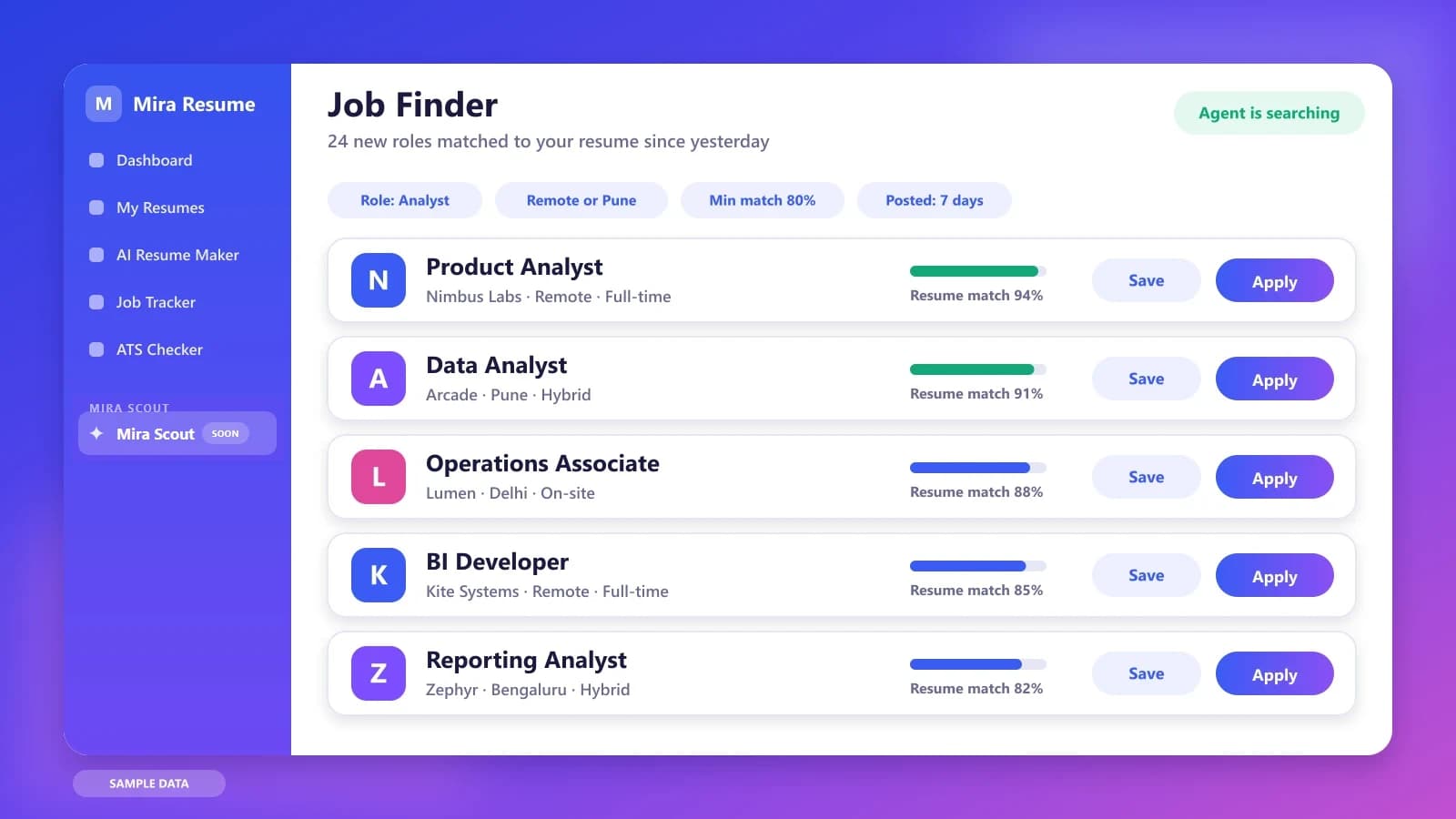
Illustration of the Mira Scout job finder listing roles that match your resume with a match percentage for each
Illustration with sample data: the Job Finder ranks new roles by how well they fit your resume.

A realistic search: where each tool earns its keep

Imagine two job seekers. One sends thirty applications and gets two interviews. The other sends fifteen well-matched ones and gets five. The first has a funnel problem at the top, and more interviews would be the biggest win. The second already converts decently, so interview practice would be the better investment.

Mira Scout targets the top of that funnel by finding better-matched roles and applying consistently. Interview practice tools target the bottom. Looking honestly at your own numbers, applications sent, replies and interviews, tells you which stage deserves your next hour.

Three job seekers, three different needs

Kenji, a product designer, gets plenty of interviews but struggles to turn them into offers. His weak point is how he tells his stories, so mock interviews and feedback on structure are his best investment.

Aisha, a data analyst, is sending dozens of applications and hearing very little back. Her problem is upstream: her resume, her targeting and her volume. A job finder and a clean, well-matched application process will help her more than interview practice.

Tom, a returning professional, needs both. He uses an agent to widen his funnel and practises answers out loud before each call. Different tools for different stages, used in sequence.

Questions to ask about any interview assistant

  • Is it for practice before the interview, or live help during it?
  • Would the employer accept AI assistance in the real interview?
  • Does the feedback improve my actual stories, or just my phrasing?
  • Do I know my own funnel numbers well enough to know where to improve?

Limits to keep in mind about interview tools

No tool can supply the experience behind an answer; it can only help you present it. Live assistance during a real interview carries a risk of sounding scripted and may be disallowed by the employer. Prices and plans for interview assistants vary widely between sources, so check the vendor's own site and any trial limits before paying.

Which should you use?

  • Pick an interview assistant if you are already landing interviews and want to practise answers and build confidence.
  • Pick Mira Scout (after launch) if you need more of the right interviews and the search itself is eating your time.
  • Use both in sequence: Mira Scout to widen the funnel, interview practice to convert it.

The bottom line

Treat the search as a funnel: applications, replies, interviews, offers. Mira Scout is meant to widen and sharpen the top of that funnel, and interview tools are meant to improve the bottom. Do not buy for the stage that is already working. Count how many applications turn into conversations, and how many conversations turn into offers, then spend your effort where the drop-off is largest. Preparation you do honestly, with real stories from your own experience, will always beat any prompt you read during a live call.

Whichever way you lean on Final Round AI, the groundwork is the same:

  1. Finish one master resume. Every matcher, agent and tracker works better from a clean, honest document.
  2. Run an ATS check. Use the free ATS checker to catch formatting and keyword gaps.
  3. Write down your rules. Roles, locations, salary floor, companies to avoid and a daily number you are comfortable with.
  4. Check your plan. Mira Scout is for Pro and Elite members, so compare options on the pricing page. The Mira Scout section is already visible in the V2 dashboard, with a launch countdown.

One last tip: whichever tools you choose, review the results weekly. Count applications sent, replies received and interviews booked, then adjust your resume, your rules or your targets based on what the numbers show. Small, regular adjustments usually beat one big change made in a panic.

Keep reading in the Mira Scout series. Start with Mira Scout: the complete guide, then compare it with other kinds of tools:

Frequently asked questions

Is Mira Scout a Final Round AI alternative?

Not directly. Final Round AI is generally described as an interview assistant, while Mira Scout finds jobs and can apply within your rules. They address different stages, so many people could reasonably use tools from both categories.

Does Mira Resume help with interviews?

Yes. The Mira Resume dashboard includes interview preparation tools where you can practise answers and shape your stories. Mira Scout is a separate section focused on the search and the applications, which all happen before the interview.

Is it okay to use AI during a live interview?

Rules vary by employer, and some prohibit it. Check the instructions you are given and be honest about what you use. Preparing in advance with mock interviews is a safer and generally more effective way to improve.

Which should I try first?

Look at your funnel. Few interviews means focus on your resume and applications. Plenty of interviews but few offers means focus on interview preparation. Choose the tool that fixes the weakest stage.

Will Mira Scout help me prepare for interviews?

Its focus is finding and applying to jobs. For interview practice, use the interview preparation tools already in the Mira dashboard, and write answers using real examples from your own experience.

Found this useful? Share it

Send it to a friend who is job hunting, or save it for later.

Read this guide with AI

Get a plain-language summary and help applying it to your own resume. Pick an assistant; it opens with this article and a ready prompt.

Back to AI Resume Tools hub

All articles